














Editor, In December 2023, the government of Uganda through the minister of energy and mineral development, Hon. Ruth Nankabirwa launched Uganda’s Energy Transition Plan at COP28 in Dubai. The launch signalized Uganda’s commitment to achieving carbon neutrality by 2050 and ensuring universal access to electricity by 2030.
In rural Uganda, studies estimate that 26 million people live without electricity as the grids are often limited to towns. Also, access to clean cooking remains a critical challenge in the country, where over 90% of households rely on traditional mass fuels, which has worsened environmental degradation, gender disparities and health risks.
A 2021 report by the World Health Organization (WHO) emphasized that air pollution from utilization of inefficient stoves powered by biomass, coal, kerosene or open fires contributed to approximately 3.2 million deaths in 2020.
As Uganda grapples with the challenge of climate change and energy access, the government needs to rethink its approach to energy transition. When developing the Energy Transition Plan, the government put a number of targets such as clean energy access targets, clean cooking targets, industrial energy targets and transport sector targets which are supposed to be achieved by 2030, 2040 and 2050.
However, some of the targets are likely not to be achieved. For-instance, the one of having more than one-third of the population gain access via LPG stoves. This is because many Ugandans especially in rural areas cannot afford to buy and refill the gas?
Secondly, LPG stoves are not as clean as mentioned in the Energy Transition Plan (ETP). They produce emissions that can harm human health and the environment. More so, the grid power which the energy transition plan aims to promote remains expensive and unreliable.
The policy makers should therefore look at affordability as a key element in achieving the set targets in the energy transition plan. Failure to acknowledge that, affordability may become an obstacle to many Ugandans hence resisting change.
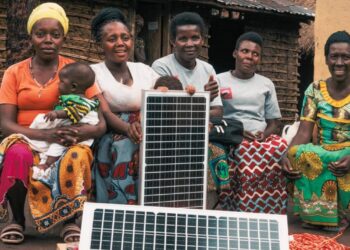
The government of Uganda through the Ministry of Energy and Mineral Development (MEMD) should work closely with the clean energy entrepreneurs to extend clean cooking services to rural areas. This will not only help in reducing pressure on forests but also protecting the environment.
Finally, the government of Uganda should give tax incentives and grants to clean energy entrepreneurs to manufacture clean cooking technologies locally instead of importing them. This will not only facilitate the transition but also create jobs for millions of Ugandans especially youth who are unemployed.
By Hildah Nsimiire,
E-mail: hildansimiire@gmail.com