









By Doreen Asasira
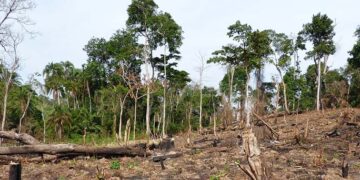
Bugoma Central Forest Reserve has once again found itself at the center of a storm this time over the reopening of its boundaries. As a Ugandan concerned about environmental justice, transparency, and the rule of law, I write to express deep unease about the latest developments surrounding the demarcation of this critical ecosystem.
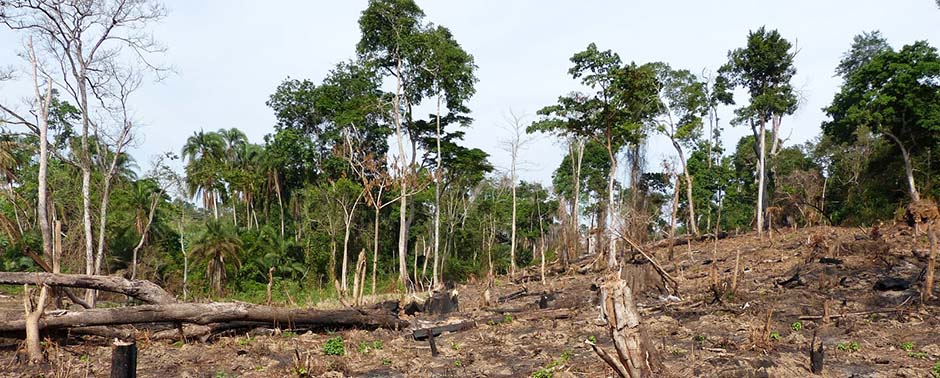
Bugoma Forest, located in Kikuube District, is one of Uganda’s most biodiverse tropical forests, a home to endangered chimpanzees, hundreds of bird species, and provides critical ecological services to surrounding communities. For years, it has been the subject of controversy following the allocation of 22 square miles to Hoima Sugar Limited for sugarcane growing.
The most recent concern stems from reports that the National Forestry Authority has commenced another boundary reopening exercise in Bugoma. This development comes despite the fact that the August 2022 boundary reopening report conducted by the Ministry of Lands, Housing and Urban Development has never been publicly released. Transparency demands that Ugandans first see the findings of the previous exercise before any new demarcation is undertaken.
What makes the situation even more troubling is the apparent contradiction between government institutions. In September 2022, the National Environment Management Authority (NEMA) conducted an environmental review and determined that 13 of the 22 square miles claimed by Hoima Sugar Limited were environmentally sensitive and unsuitable for sugarcane cultivation. NEMA directed that those areas be preserved. The approved land use plan limited sugarcane growing to 9.24 square miles of grassland, allocated 1.26 square miles for an urban center, 1.97 square miles for eco-tourism, and required restoration of 3.13 square miles of forest reserve.
These figures are not activist inventions; they are regulatory decisions made by a statutory authority. If NEMA has formally restricted the company’s operational scope, then any public posture suggesting access to the entire 22 square miles directly contradicts that directive. That contradiction cannot simply be brushed aside as bureaucratic misunderstanding. It strikes at the integrity of environmental governance.
The National Forestry Authority (NFA) is reported to have commenced or confirmed another boundary-related exercise within Bugoma. If true, Ugandans deserve clarity. Is this exercise different from the August 2022 reopening? Does it rely on new technical findings? Or does it risk reopening settled questions without first publishing the previous findings? Transparency is not optional when dealing with gazetted forest reserves held in trust for the public.
Bugoma is not an ordinary woodland. It is a critical habitat for chimpanzees and other wildlife, a carbon sink of regional importance, and part of the ecological fabric of the Albertine Graben—an area already under immense pressure from oil and gas developments including the East African Crude Oil Pipeline project. As Uganda pursues energy ambitions, the temptation to quietly reclassify or fragment forest land will only grow stronger. That is precisely why institutional consistency is essential.
This is not an argument against development. It is an argument for lawful, evidence-based development. When one government agency restricts land use on environmental grounds while another appears to endorse broader claims, citizens are left wondering which position reflects official policy. Investors, too, benefit from clarity; conflicting signals create long-term legal and reputational risks.
Civil society coalitions under the Save Bugoma Forest Campaign formally raised concerns with the Ministry of Lands and called for the immediate release of the August 2022 boundary report, though no action has yet been taken. Their central demand is simple, make the findings public and clarify the official position on any new boundary activities. That is not obstructionism; but rather good governance.
If the government is confident in its decisions, it should have no difficulty publishing the technical basis for them. If there are errors or overlaps between agencies, they must be reconciled openly. What is unacceptable is a situation where public forests are effectively negotiated through press statements and administrative ambiguity.
As citizens, we must insist that Bugoma’s boundaries are not redrawn in the shadows. The forest does not have a voice in cabinet meetings or district security briefings. But it is a national asset, and its protection is a constitutional obligation. The question before us is straightforward, will Uganda’s institutions act coherently and transparently to protect Bugoma, or will silence and contradiction define the future of one of our most contested forests?