










By Leonard Kamugisha Akida,
KAMPALA
The government has been urged to widen the country’s tax base and strengthen oversight of state enterprises, warning that persistent revenue gaps and losses in public entities are straining Uganda’s fiscal space.
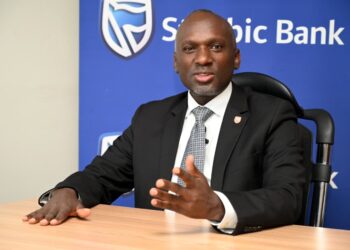
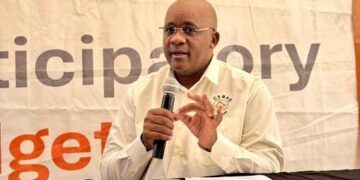
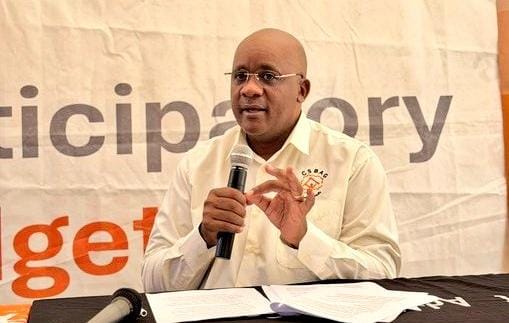
The call was made by the executive director of the Civil Society Budget Advocacy Group (CSBAG), Julius Mukunda, during a media engagement on CSOs perspectives to findings in the latest report by the Office of the Auditor General at CSBAG offices in Ntinda, Kampala, on Sunday.
Although the AG reported that tax collections have improved in recent years, Mukunda says Uganda is still performing below its potential compared with regional peers.
“Our revenue collections have grown by about 46% since 2021. We moved from about Shs22 trillion in FY 2021/22 to roughly Shs32.3 trillion in the last financial year, which is good news,” Mukunda said.
“However, when you compare Uganda with regional peers, we are still stuck. Our revenue collection stands at about 13.4% of GDP, yet many countries in the region are collecting close to 18%, far below the 23% global average.”
Mukunda noted that while the tax register has expanded to about 5.3 million taxpayers, nearly half of those registered do not actually pay taxes.
He said this shows government has not effectively brought more citizens into the taxation system.
“If more people were in the taxation bracket, government would collect more revenue, but it would also strengthen accountability because more taxpayers would demand proper use of public funds,” he said.
Mukunda also highlighted the limited contribution of the agricultural sector to government revenue despite its significant role in the economy.
According to him, agriculture contributes more than 26% of Uganda’s Gross Domestic Product but accounts for only about 1% of total tax revenue.
He suggested that the government imposes tax on commercial farmers within the agricultural value chain, part of its move to grow revenue collections.
“When farmers sell their produce, someone is buying it in bulk. We (CSBAG) are not advocating taxation of smallholder farmers, but the off-takers who transport milk, coffee, cattle and bananas. These are visible businesses and they should be registered and brought onto the tax register,” he said.
Nevertheless, Mukunda further cautioned government against increasing domestic borrowing, saying it is becoming a major pressure on the economy.
He said domestic debt has grown from about Shs39.16 trillion (30%) of total public debt to roughly Shs59.02 trillion (51%), meaning government is increasingly borrowing from local banks.
“Domestic borrowing is more expensive and crowds out private sector access to credit,” he said.
Mukunda added that nearly a quarter of the revenue collected by the Uganda Revenue Authority is currently used to service debt.
“We are deeply concerned about the rising debt burden. Debt servicing alone will consume Shs26.84 trillion which is about 37% of the budget, more than the combined allocations to health and agriculture,” he said. “This reduces the money available for essential services such as health, infrastructure and other development priorities.”
Meanwhile, the country’s public debt also increased from Shs69.2 trillion in FY 2020/21 to Shs115.4 trillion in FY 2024/25, representing a 66.7% increase in five years. Payments to domestic revenue ratio has also risen to 23.66%, almost double the national benchmark of 12.5%.
“This means that for every Shs100 collected in domestic revenue, approximately Shs24 is spent on interest alone,” Mukunda explained, adding that such unnecessary expenditure reduces fiscal space for significant sectors like education, health, agriculture and infrastructure.
He urged government to exercise fiscal discipline and reduce its appetite for borrowing to protect the country’s long-term economic stability.