













By Doreen Asasira,
OPINION
As the world marks the International Day of Forests, Uganda faces a critical turning point where the fate of its forests will determine not only ecological survival but also the future of livelihoods, climate resilience, and national stability. Forests are not just landscapes of trees, they are the backbone of Uganda’s water systems, agriculture, biodiversity, and rural economies. Despite their undeniable value, Uganda’s forests are being steadily erased, often in full public view and with far too little accountability.
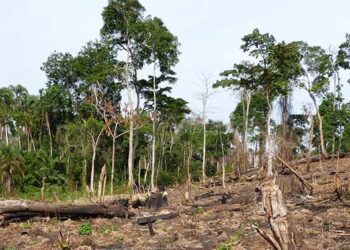
The numbers paint a deeply troubling picture that should alarm every Ugandan. Forest cover has fallen sharply from about 24 percent of the country’s land area in 1990 to roughly 12.6 percent today, with some estimates suggesting it may be even lower. In just three decades, Uganda has lost nearly half of its forests. In absolute terms, this decline is stark from approximately 4.55 million hectares in 1990 to about 2.37 million hectares in 2025. Even more worrying is the pace of loss. The country continues to lose tens of thousands of hectares each year, with recent estimates at around 38,000 hectares annually and earlier figures reaching as high as 90,000 hectares per year. Since 2001 alone, more than 1.2 million hectares of tree cover have disappeared, underscoring the scale and urgency of the crisis.
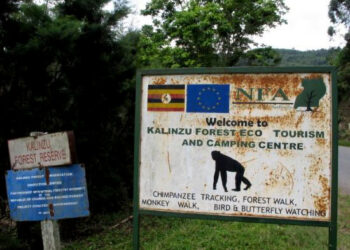
This is not a distant environmental concern but rather a present-day crisis unfolding across some of Uganda’s most critical forest ecosystems. Forest reserves such as Mabira, Budongo, Bugoma, and sections of the Albertine Rift are under relentless pressure from agricultural expansion, sugarcane cultivation, oil related developments, logging, and settlement. In Bugoma Central Forest Reserve, large swathes have been cleared for sugarcane plantations, triggering national outrage and protracted legal battles. In Mabira, Uganda’s most iconic tropical forest near Kampala, illegal logging and land pressures continue to erode its integrity despite its protected status. Budongo Forest, one of the country’s richest biodiversity hotspots and a vital habitat for chimpanzees, is increasingly threatened by surrounding human activity and charcoal production.
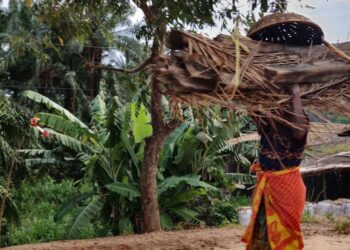
The drivers of this destruction are well known and largely man-made. Uganda’s heavy reliance on biomass energy means charcoal and firewood account for a significant share of forest loss, responsible for up to 60 percent of annual deforestation. Rapid population growth, expanding agriculture, weak enforcement of environmental laws, and the commodification of land have turned forests into frontiers of exploitation rather than assets to be safeguarded. More troubling still is that this loss is not merely incidental or poverty driven, mounting evidence points to the role of powerful actors and commercial interests in large-scale forest degradation, often at the expense of vulnerable communities.
The consequences are already unfolding. Uganda’s forests serve as critical carbon sinks, yet their destruction is driving greenhouse gas emissions and undermining the country’s capacity to adapt to climate change. Between 2000 and 2020 alone, deforestation contributed hundreds of millions of metric tonnes of carbon emissions. At the same time, shrinking forest cover is disrupting rainfall patterns, increasing the frequency and intensity of floods and droughts, and threatening water sources that millions depend on. In regions such as Bunyoro and the Albertine Graben, where oil development intersects with fragile ecosystems, forest loss is compounding already serious environmental and social risks.
This International Day of Forests must not be reduced to ceremonial tree planting and speeches. Uganda does not lack policies, strategies, or commitments. Institutions such as the National Forestry Authority have clear targets to restore forest cover to at least 20 percent. Yet the gap between policy and practice remains dangerously wide. Protected areas continue to be encroached upon or degazetted, enforcement is inconsistent, and community voices are too often excluded from decisions affecting their natural resources.
What Uganda needs now is not more promises, but decisive action. The government must enforce forest protection laws without fear or favor, ensuring that encroachment whether by small-scale actors or powerful investors carries real consequences. There must also be a deliberate shift away from over reliance on charcoal and firewood through investment in affordable clean energy alternatives. Communities living around forests should be empowered as custodians rather than treated as obstacles, evidence consistently shows that where communities have secure rights and tangible benefits, forests are better protected. Equally, development projects, including those in oil producing regions, must be subjected to rigorous environmental safeguards that prioritize long-term sustainability over short-term gain.
Uganda’s forests are not yet lost but the window to save them is closing rapidly. If current trends continue, some projections warn that the country could lose much of its forest cover within a few decades. That would not only be an environmental catastrophe but a national crisis. On this International Day of Forests, Uganda must confront an uncomfortable truth, the greatest threat to its forests is not a lack of knowledge, but a lack of political will. The choice is stark and urgent protect what remains, or preside over the quiet disappearance of one of the country’s most vital natural lifelines.