












By Olivia Atuhaire,
OPINION
Editor, the International Day of Forests is celebrated every year on March 21, to raise awareness on the importance of all types of forests where countries are encouraged to undertake local national and international efforts to organize activities such as tree planting campaigns. This year’s theme is “Forest and economies” for the day, which means celebrating the essential roles of forests in driving economic prosperity.
These roles go well beyond income and jobs from forest production and the trade of renewable raw materials, and safeguard healthy watersheds. With many countries seeking to move toward a sustainable bioeconomy, forest products offer nature-based solutions as replacements for carbon-intensive materials while generating new economic opportunities.
Forests are a vital source of energy, providing wood for cooking, playing a key role in agriculture by hosting pollinators and acting in soil enrichment, climate stabilization and biodiversity conservation, cultural or recreational roles among others. In addition, forested watersheds supply freshwater to more than 85% of the world’s major cities and in crisis situations, forests become an economic and food lifeline, providing up to 20% of family income in rural areas, guaranteeing healthy diets. Forests are indispensable for healthy economies, today and for future generations.
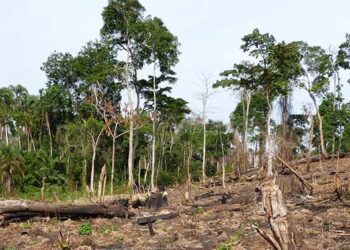
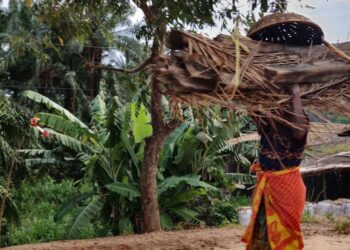
However, much forests are importance in many ways most especially in mitigating climate change and providing food, they continue to be destructed due human activities such charcoal production, timber loggings and poverty among others and this is brought by the increased population growth which drives deforestation by increasing demand for farmland, housing and infrastructure leading to forest clearance.
Despite the 2021-2030 restoration plan, the country loses roughly 122,000 hectares of forest annually, prompting an urgent reforestation campaign. The global watch indicates that in 2020, Uganda had 2.44 million hectares of natural forest extending over ten percent of its total land area. However, by 2023, the country had lost 37.6% Kilo hectares of natural forest equivalent to 44.5 million tonnes of carbon dioxide emissions. According to the reports, over 90% of Ugandans rely on charcoal and wood as their most accessible and affordable fuels, harvested from national forests or the private lands of impoverished farmers. with electricity being prohibitively expensive.
 While efforts have been made to restore the forest cover, the population has not been adequately involved in this restoration process. It is against this background that we address deforestation as a global problem that require a global response.
Goal 15 of the SDGs advocates for Protecting, restoring and promoting sustainable use of terrestrial ecosystems, sustainably manage forests, combating desertification, halting and reversing land degradation and halt biodiversity loss. In order to mitigate this, Uganda must consider embracing renewable energy and prioritizing forest restoration as envisaged in existing targets provided in vision 2040, subsequent National Development Plans I & II, and the National Forest Plan (2011/11-2021/22), in which the target is to restore cover to 24% (1990 levels) in regard to the National Forestry and Tree Planting Act 2003, it advocates for practicing afforestation and re-afforestation practices for degraded forest resources.
Uganda has been in a number of partnerships to restore forests, As i remember, from 2017 to 2021 Uganda received forest carbon funding partnership – additional funding amounting to us$3.75m for investing in forests and protected areas for climate smart development project activities. In 2020, World Bank invested $148.2 million in forests and protected areas as ell for climate smart development project support focusing on the albertine region. This project was implemented by ministry for water and environment with support from NFA and Uganda wildlife authority. In April 2024, Uganda received 165b from European Union to protect forests by tackling deforestation and promote sustainable economic development.
Despite all the number of partnerships Uganda has been in, committing to restore forests, as well as calling for action to reduce deforestation, then the president’s directives, the forest cover continue to reduce at high rate for example Bugoma forests which are under a threat of human activities such as charcoal burning among others. Destruction of forests is worsening climate change every day by increasing the global temperatures which defects Uganda’s target of 1.5 degrees.
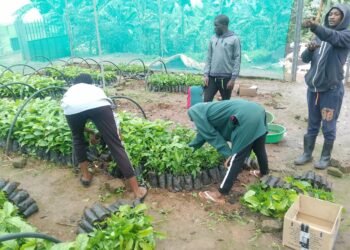
Therefore, as we celebrate International Day of Forests, I call upon the government to empower people to plant, protect, monitor reforestation on large and support community agroforestry to reduce pressure on existing forests. Agro forestry practices provide importance to the community among which is the provision of food to homesteads, fodder for livestock, combating climate change through carbon dioxide sequestration and environment.
Moreso, the government through the Ministry of Water and Environment must use the funds received appropriately to ensure forest covers are increased up to at least 21% by 2030 as committed in the Memorandum of Understanding on a Forest Partnership between the European Union and the Republic of Uganda. The government should also work hand in hand with NEMA to restore all the degraded forest reserves by stopping all the destructive activities in all forests to protect the environment.
The writer is a research associate at AFIEGO
E-mail: atuhaireolivia72.ao@gmail.com