
















By Ahirirwe Leticia,
OPINION
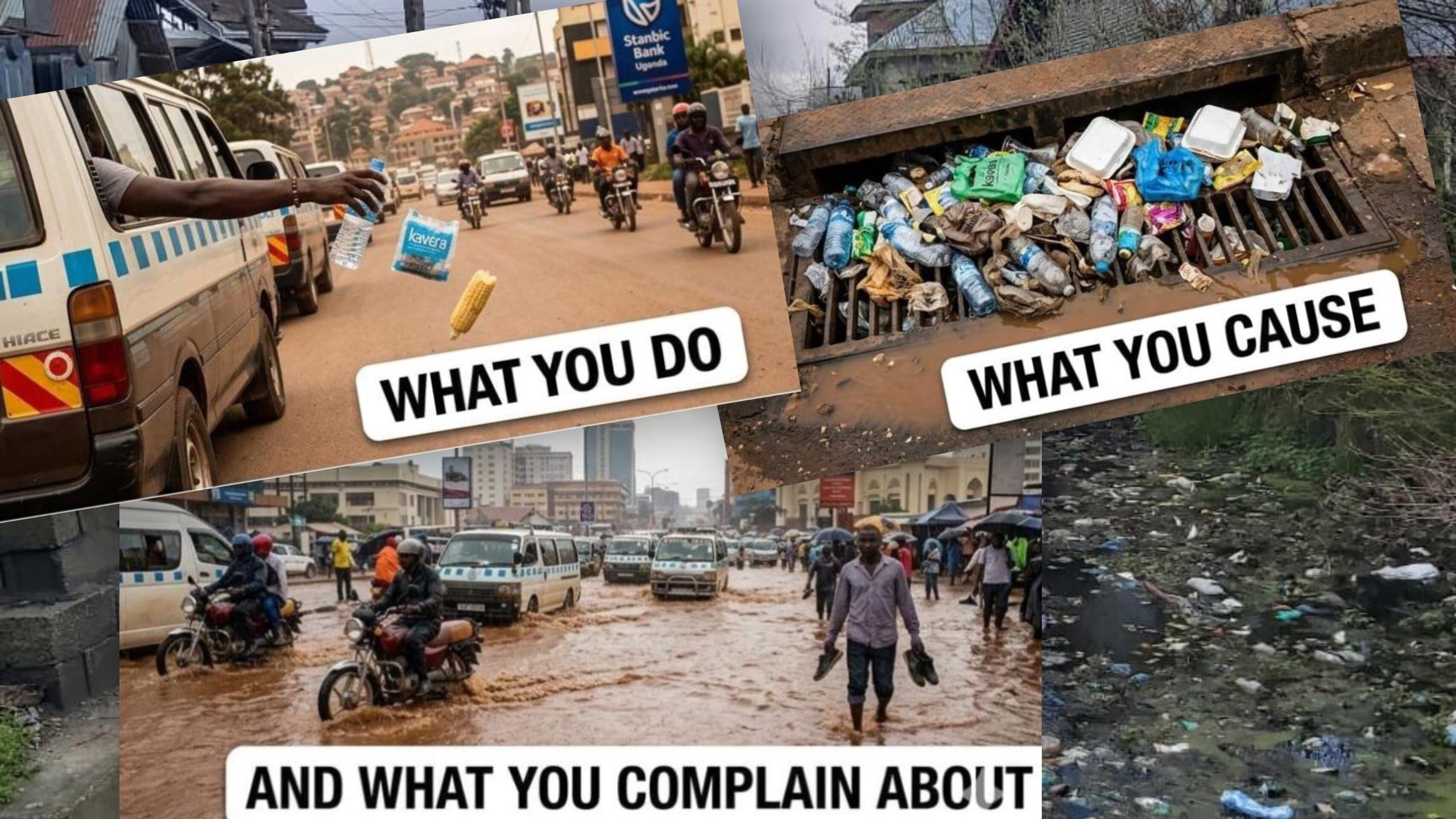
Walk through any street in Kampala after a heavy downpour, and the reality becomes impossible to ignore. Flooded roads, clogged drainage channels, and piles of floating plastic waste tell a stark story of climate crisis in Uganda’s capital city.
Kampala is not just facing a waste problem, it is facing a plastic crisis.
According to NEMA, Uganda generates approximately 600 tonnes of plastic waste every day, yet only about 40% is collected. The remaining 60% ends up in the environment, blocking drainage systems, contaminating water sources, and threatening public health.
In Kampala alone, the scale is staggering, with hundreds of thousands of tonnes of plastic waste generated annually. NEMA says 150 tonnes are generated from Kampala alone on average daily basis. Waste generation per capita is estimated at one kilogram in Urban areas, while Formal recycling remains low, with only about 6% to 9% of plastic waste being recycled nationally.
This is not just about litter. It is about systems failing,and people paying the price.
A City Choked by Its Own Waste
The widespread use of single-use plastics, locally known as buveera, has overwhelmed Kampala’s already fragile waste management systems. Plastic bags and bottles clog major drainage systems like Nakivubo Channel, turning what should be infrastructure into disaster zones. When rain falls, water has nowhere to go.
The result? Flooded homes, destroyed businesses, deaths, and disrupted livelihoods. Plastic pollution has transformed ordinary rainfall into a recurring urban crisis.
And while flooding may seem like a seasonal inconvenience to some, for many urban poor communities, it is a matter of survival.
The Hidden Cost of Plastic
Plastic pollution is not only visible in our streets, it is silently entering our bodies. Studies show that humans are exposed to microplastics through air, food, and water, raising serious health concerns.
Burning plastic waste,a common practice in many communities releases toxic fumes linked to respiratory diseases and other long-term health risks.
Even more troubling is the inequality embedded in this crisis. Low-income communities, often with limited access to waste collection services, bear the greatest burden of plastic pollution.
This is not just an environmental issue. It is a social justice issue.
We Cannot Blame Citizens Alone. It is easy to point fingers at individuals for littering. But the truth is more complex. Kampala’s plastic crisis is driven by a combination of weak enforcement of regulations, inadequate waste infrastructure, and a production system that prioritizes convenience over sustainability. Single-use plastics are cheap, accessible, and everywhere, while sustainable alternatives remain limited or unaffordable.
We must ask ourselves
Why is plastic so easy to produce, yet so difficult to manage? Until producers are held accountable for the lifecycle of their products, this crisis will persist.
A Call for Systemic Change
Solving Kampala’s plastic crisis requires more than clean-up campaigns. It demands bold, systemic action:
Ban or strictly regulate single-use plastics. Although the National Environment Act, 2019 bans thin polythene bags (kaveera) under 30 microns, enforcement has been inconsistent due to lobbying and economic pressures. There are visibly more recycling Gaps, especially, regarding recycling. Only about 6% to 9% of plastic waste is recycled nationally, this clearly indicates that recycling remains low, thus a need for stricter regulations.
Invest in waste collection and recycling infrastructure.The recent landfill collapse in Kitezi and continuous flash floods in Downtown Kampala are a reminder to the government and other stakeholders to invest in solid waste management. This will not only help in addressing waste management challenges, but also job creation for many jobless Ugandans and promoting renewable Energy among others.
Other systematic actions may include enforcement of environmental laws without compromise, promoting a circular economy where waste becomes a resource and empowering communities, especially women and youth, as agents of change.
Encouragingly, innovative solutions are already emerging, from youth-led recycling initiatives to enterprises turning plastic waste into usable products. But these efforts need scale, support, and policy backing.
Kampala cannot afford to normalize plastic pollution. Every blocked drainage channel, every flooded street, and every polluted wetland is a warning sign.
We are not just managing waste, we are shaping the future of our city.
If we continue on this path, plastic will define Kampala’s environment, economy, and public health for generations to come. But if we act decisively, we can turn this crisis into an opportunity—for innovation, sustainability, and justice.
Because in the end, the question is not whether we can solve the plastic problem. The Time for Action Is Now!