









KAMPALA
Uganda’s hopes of hosting the 2027 Africa Cup of Nations (AFCON) have hit a significant snag after a Confederation of African Football (CAF) inspection report revealed that none of the country’s proposed stadiums currently meet the required Category 4 standards.
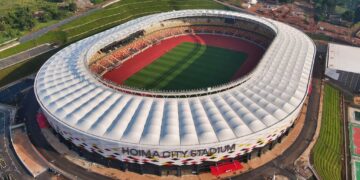
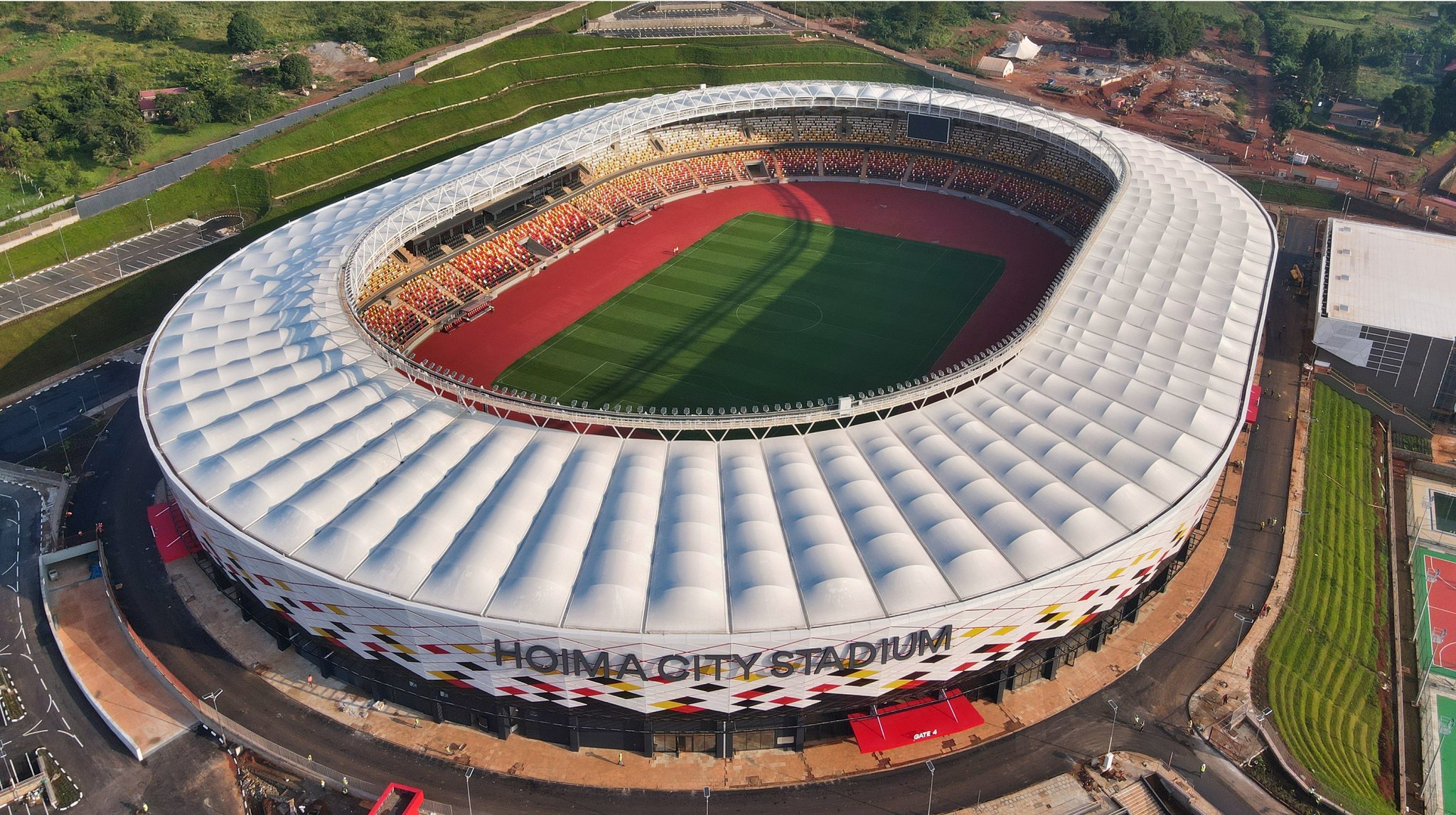
The report, following an inspection mission in February 2026, indicates that even the newly commissioned Hoima City Stadium, which was celebrated as a “world-class” facility upon its completion in December 2025, has been flagged for “multiple operational deficiencies.”
Hoima’s “World-Class” status questioned
Despite being completed five months ahead of schedule by Turkish contractor Summa, the 20,000-seater Hoima Stadium failed to impress inspectors on several technical fronts. According to the report seen by Daily Monitor, key issues include:
• View Obstructions: Team benches are positioned in a way that blocks the view of spectators in the stands—a flaw that became apparent during the recent Kitara FC vs. Buhimba fixture.
• Poor Segregation: There is no clear separation between spectator categories, allowing general fans to spill into VIP areas.
• Media Facilities: The current media tribune accommodates fewer than 20 journalists, far below the AFCON requirement.
• Logistical Flaws: The “mixed zone” for player interviews is wrongly placed inside the competition area and must be relocated.
Namboole and Akii-Bua lag behind
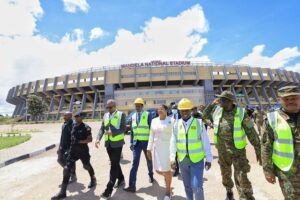
The iconic Mandela National Stadium (Namboole), currently undergoing its second phase of renovation, faces even “graver challenges.” CAF has demanded that at least 50% of the planned structural upgrades be visible before the next inspection in August. Specific concerns were raised regarding the stadium’s under-designed air conditioning in VIP lounges and insufficient drainage systems.
Meanwhile, the Akii-Bua Olympic Stadium in Lira remains in the early stages of construction, with CAF noting a lack of compliant training grounds in the region and pending electricity and water connections at the site.
Government dismisses “leaked” findings
In a defiant response, the State Minister for Sports, Peter Ogwang, dismissed the leaked snippets of the report circulating online.
“I am the authority here. Hoima Stadium meets European and five-star African standards,” Ogwang stated, urging the public to wait for the official communication from CAF.
However, the continental body has set a strict deadline for August 2026, by which time Uganda must not only fix stadium flaws but also prove it has at least five five-star hotels in Hoima to accommodate teams and officials.
What needs to be fixed by August
Hoima Stadium: Redesign spectator circulation, relocate mixed zone, upgrade dressing rooms.
Namboole: Finalize contractor confirmation, reach 50% construction progress.
General: Lighting certification (≥500 lux), pitch rehabilitation, and road connectivity. 
The ‘Ready’ Fallacy
For months, the narrative from the National Council of Sports (NCS) and the Ministry of Education and Sports has been one of “mission accomplished” regarding Hoima City Stadium. However, the CAF report has effectively burst that bubble.
The revelation that a brand-new, Shs480b facility has “view obstructions” from the team benches and “insufficient media capacity” points to a deeper issue: architectural oversight. In the rush to beat deadlines and showcase political wins, the fine print of CAF’s Category 4 requirements, which are non-negotiable for AFCON, appears to have been glossed over.
A Region in the Red
Uganda isn’t alone in this predicament, which ironically might be its only saving grace. The report indicates a “construction and corrective phase” across all three nations.
Kenya is currently battling a financial crisis, with contractors at Kasarani and Nyayo stadiums reportedly laying down tools over Shs6b in unpaid dues.
Tanzania has been told to provide a “validated architectural redesign” for its primary venues or risk them being downgraded to mere training grounds.
This systemic failure across the “Pamoja” trio places CAF in a corner. Stripping three nations of hosting rights simultaneously would be a logistical and diplomatic nightmare for CAF President Patrice Motsepe. However, CAF’s “zero-tolerance” policy on safety and lighting (demanding ≥500 lux) means sentiment won’t keep the lights on in 2027.