










By Leonard Kamugisha Akida,
KAMPALA
Universities across the country have stepped up preparations to implement the Competence-Based Education and Training (CBET) curriculum, with Clarke International University (CIU) affirming its readiness ahead of the 2027/2028 academic year deadline.
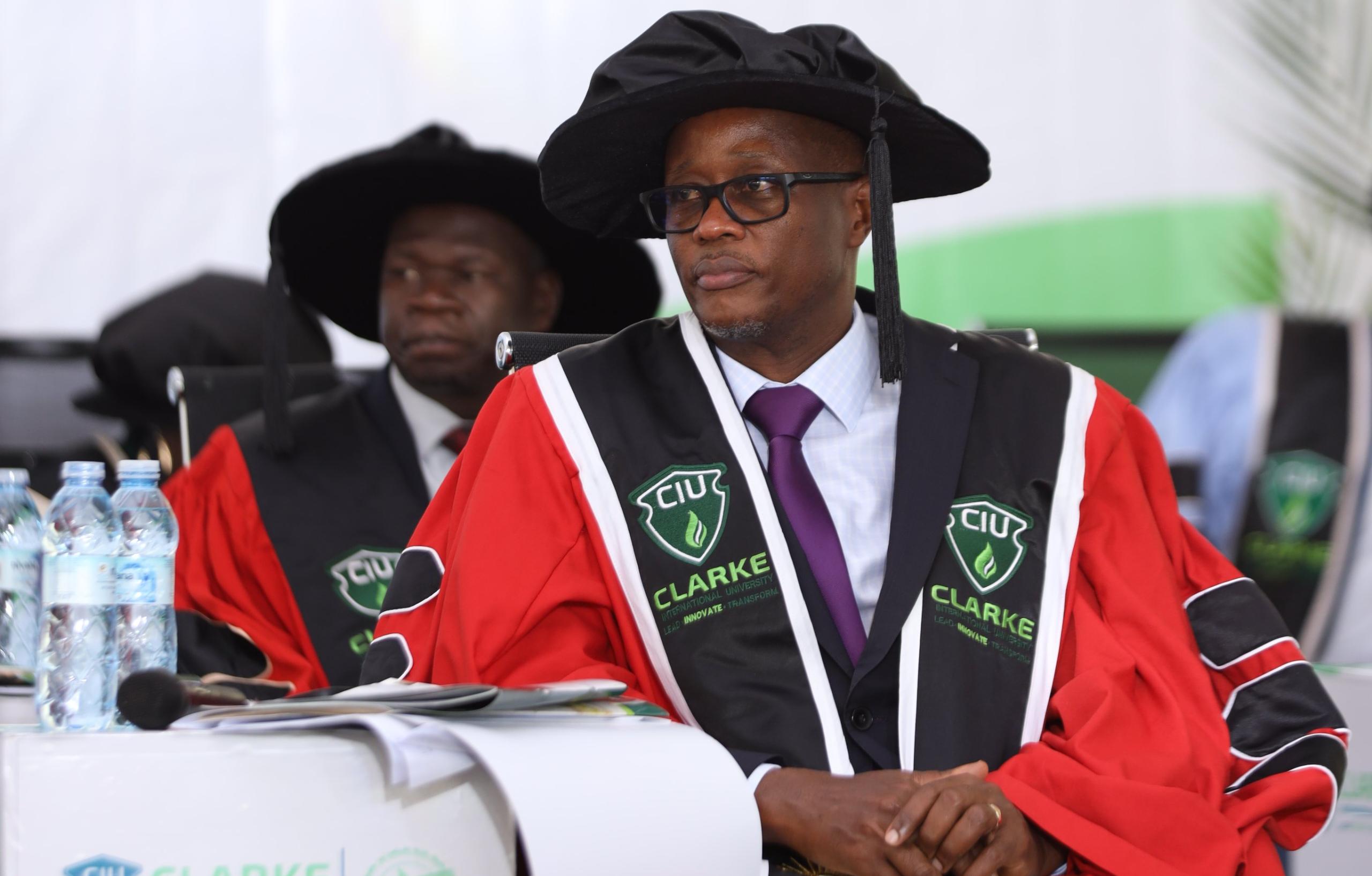
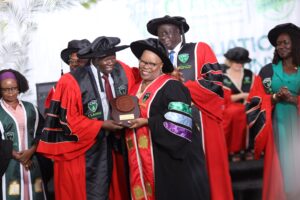
Speaking during the university’s 16th graduation ceremony on Friday, the Vice Chancellor, Dr Rose Clarke Nanyonga, said the institution is already aligning its programmes to meet the new government directive.
 “We are now amplifying readiness and re-looking at our curricula so that they are ready and so that we can receive students come 2027,” she said.
Dr Nanyonga noted that CIU has already embraced competence-based training, particularly in medical programmes, where students spend up to 60% of their learning time in clinical placements.
“The competence-based education is part of the curriculum for medical learning, especially clinical medicine. We have a number of memorandums of understanding where students spend a huge component of their learning in clinical settings,” she explained.
She added that the university is collaborating with other institutions to strengthen its capacity to accommodate incoming students under the new system.
The shift follows a July 2025 directive by the Ministry of Education requiring all universities and tertiary institutions to adopt CBET by the 2027/2028 academic year. The approach is aimed at producing graduates with practical, employable skills aligned to labour market demands.
In a communication to institutions, Education Minister Janet Museveni stressed the urgency of the transition, warning that institutions that fail to align their programmes will not be allowed to admit first-year students.
“The purpose of this letter is to emphasize the urgency with which all Higher Education Institutions must adapt their academic programmes to competence-based learning, starting with the first-year intake of the 2027/2028 academic year,” she stated.
Under the directive, all Higher Education Institutions are required to align their programmes with the revised O-Level and A-Level curricula, which emphasise learner-centred teaching, practical application of knowledge and behavioural change.
Meanwhile, the National Council for Higher Education (NCHE) has announced a nationwide re-accreditation exercise for all institutions ahead of the rollout of the new curriculum.
NCHE chairperson Prof Mary Okwakol said the council is working to ensure compliance, although limited funding remains a key challenge.
At the same ceremony, a total of 501 students graduated in disciplines including Nursing and Midwifery, Public Health, Business, Applied Technology, Allied Health Sciences and Education.
The function was officiated by the Irish Ambassador to Uganda and Rwanda, HE Margaret (Mags) Gaynor, urged graduates to uphold integrity and professionalism in their careers.
“In healthcare, education and business, integrity is not optional, it is essential. When you act with honesty, fairness and accountability, you not only uphold your profession, but you elevate it,” she said.
Gaynor also decried corruption in recruitment processes, revealing that some qualified health professionals are forced to pay bribes to secure government jobs.
“Many boda boda riders I interact with say they are qualified doctors and nurses. When asked I why, they say they are required to pay between Shs10m and Shs14m to get a government job. It is tragic and a waste of talent,” she said.
She challenged the graduates to become agents of change and resist perpetuating corrupt systems.
“Be the change you want to see. Do not wait for someone else to fix the system. Act with integrity and lead by example,” she added.
The graduation comes at a time when universities are under pressure to transition from theory-based instruction to practical, skills-oriented training as Uganda reforms its education system.