













By Leonard Kamugisha Akida,
OPINION
There was a time when the church felt like the safest room in the world.
A place where tears fell freely, where voices trembled without shame, where one could kneel, whisper, confess, or simply sit in silence, unseen, yet fully known by God. It was never a stage. It was a sanctuary.
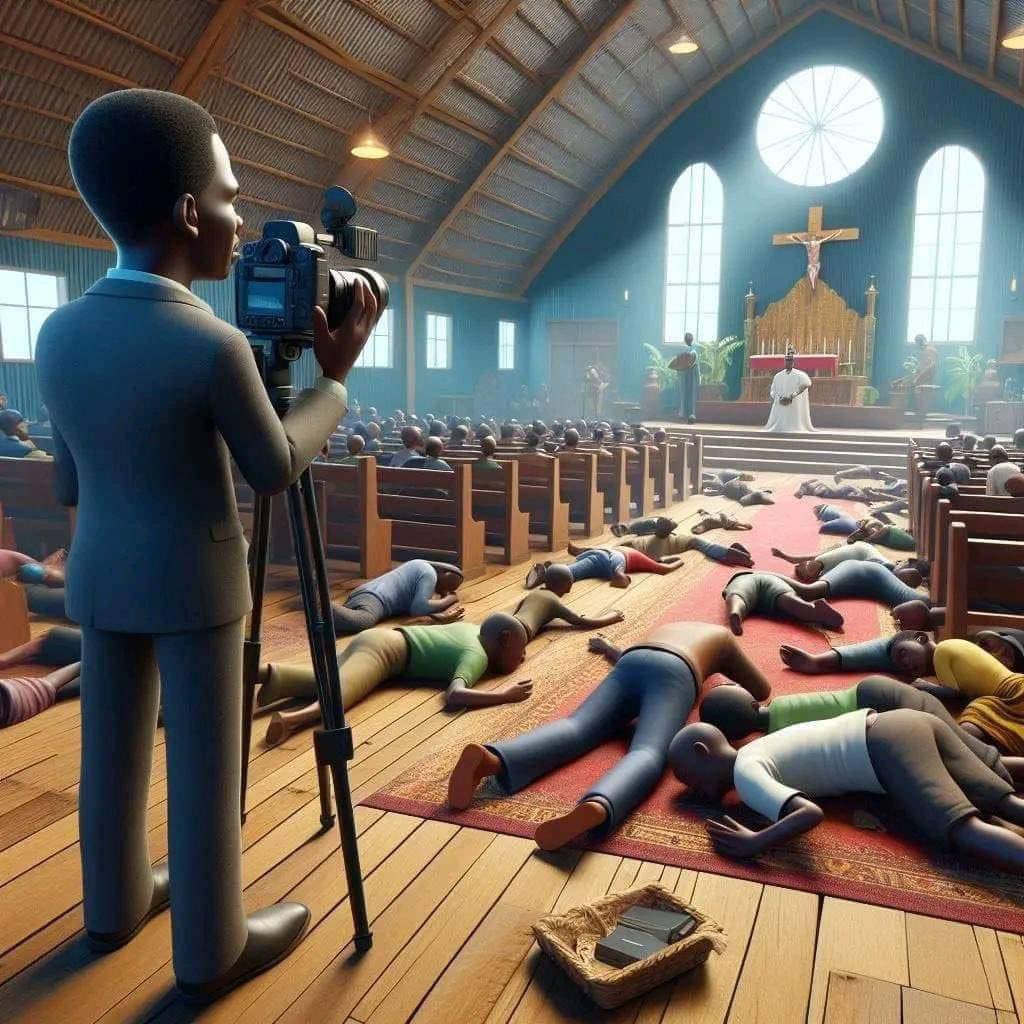
But today, things have changed! While Jesus in the scriptures instructs us to pray in seclusion, away from public view, in many churches across the world today, worship is no longer confined to the four walls of the sanctuary. “But when you pray, go into your inner room, shut your door, and pray to your Father, who is unseen” (Matthew 6:6). With the rise of livestreaming, cameras hang quietly in the corners of the houses of worship, services / Mass are broadcast in real time to audiences far beyond the pews. What was once intimate is now visible. What was once private now risks becoming public.
While this shift has expanded access, allowing the sick, the elderly and those in distant places to stay connected, it is quietly creating discomfort among some congregants.

For many, church no longer feels like a private place of refuge.
Traditionally, the house of God has been a space for deep personal expression. It is where believers weep, repent, testify and lay bare their struggles without fear of judgment. These moments are sacred, often raw and deeply emotional.
But the growing presence of cameras has altered that experience. What used to be the quiet, heart-to-heart, undistracted communion with God, is rapidly becoming showy.
Some worshippers say they now feel self-conscious during prayer or hesitant to share testimonies, aware that their most vulnerable moments could be recorded or broadcast. The fear is not just about being seen in the moment, but about permanence, where a deeply personal experience could circulate beyond its intended audience.
“How do you truly ‘pour out your heart’ when you are aware that a lens may be capturing your most vulnerable moment? How do you share a testimony born out of pain, knowing it might live indefinitely on the internet? How do you cry freely when, somewhere, someone could be watching?” These are not questions of resistance to technology. They are questions about the soul of worship.
This raises an important question: Can worship remain authentic when it feels observed?
Church leaders have largely embraced technology with good reason. During the COVID-19 pandemic, digital platforms became essential for maintaining fellowship. Even today, livestreaming continues to play a vital role in outreach and inclusion.
However, as churches modernise, there is a need to strike a balance between accessibility and sensitivity.
Not every aspect of worship is meant for public consumption. Moments such as altar calls, personal prayers and testimonies often require a level of privacy to allow genuine expression. When congregants begin to hold back, the depth of worship itself may be affected.
 “Faith, at its core, is deeply personal. Moments of repentance, grief, gratitude, and surrender are not performances, they are sacred encounters. When these moments begin to feel observed or recorded, something within us holds back,” a lawyer friend who stopped going to church said. “We stopped going to church NOT to God.”
The church must ask itself a difficult question: Can a space still be sacred if people no longer feel safe to be vulnerable within it? This is not a call to abandon technology. It is a call to use it with sensitivity.
Perhaps it means creating camera-free zones within sanctuaries. Perhaps it means switching off livestreams during altar calls, prayer sessions, or testimony time. Perhaps it means clearly communicating to congregants what is and isn’t being recorded.
Some churches have already started adapting by designating camera-free zones or limiting filming during certain parts of the service. Others clearly communicate when recording is taking place, giving members the choice to participate freely or step aside, Kudos!
Such measures, though simple, can restore a sense of trust and comfort within the congregation.
Once again, this conversation is not about rejecting technology, but about preserving the essence of worship. If the church is to remain a place of healing and openness, it must ensure that congregants still feel safe to be vulnerable. Because when people begin to withdraw, not out of lack of faith, but out of a loss of safe space – the church must pay attention!
After all, the sanctuary was never meant to feel like a studio. It was meant to feel like home.
The writer is a Ugandan Digital Journalist, CEO Parrots Media, and Co-founder The SafeTALK Space.
E-mail: kamugisha.leonardakida@gmail.com