












KAMPALA
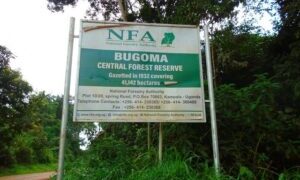
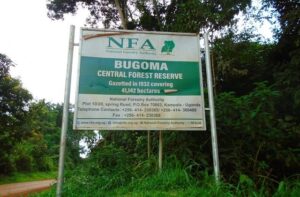
Concerns are mounting over the continued destruction of Bugoma Central Forest Reserve as government agencies delay the release of the official boundary opening report, nearly two years after the exercise was concluded.
Last week, media reports indicated that the National Forestry Authority (NFA), together with other stakeholders, was set to commence a boundary re-opening this Wednesday. However, environmental activists argue that the physical survey process was already completed in August 2022, and the Ministry of Lands, Housing and Urban Development has yet to make the final report public.
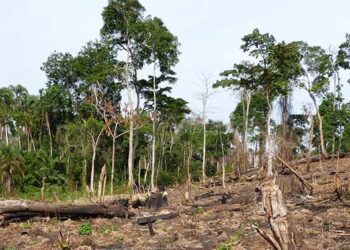
The absence of an official boundary report has created a vacuum that has fueled massive encroachment. Bugoma Forest has suffered widespread destruction from sugarcane cultivation, timber logging, charcoal burning, and subsistence farming. Land conflicts have escalated, leading to deaths and injuries among host communities.
Environmental and human rights activist Paul Kato criticized the delay, warning that continued political maneuvering could result in irreversible biodiversity loss. “If the Ministry of Lands and NFA continue with this politics, the biodiversity is likely to be finished by encroachers carrying out illegal human activities in this critical ecosystem,” he said.
Since 2016, Bugoma has been under intense pressure from Hoima Sugar Limited and other encroachers. Activists blame NFA for failing to evict illegal occupants and the Ministry of Lands for withholding the boundary report. The forest, which plays a vital role in rainfall attraction, river formation, and tourism, is also home to 24 tree species, 359 bird species, 289 butterfly species, and 130 moth species.
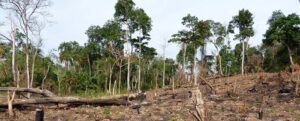
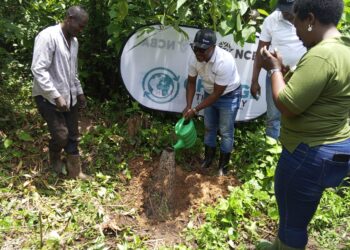
Kato urged the Ministry of Lands to immediately release the boundary report and called on NFA to use World Bank support to restore over 500 hectares lost to encroachment by planting 411,144 indigenous trees. “The forest should be protected from Hoima Sugar Limited and other encroachers because it plays a big role in the environment, the country’s economy, and people’s livelihoods,” he emphasized.
Bugoma Forest remains one of Uganda’s most critical ecosystems, but without urgent action, activists warn its survival is at stake.