













By Leonard Kamugisha Akida,
KAMPALA
Civil society leaders and mobile money agents have renewed calls for government to reduce taxes on mobile money withdrawals and lower import duties on smartphones, arguing that the current tax regime is undermining financial inclusion, digital growth and job creation.
Participants suggest that the existing 0.5% excise duty on mobile money withdrawals should be reduced to at least 0.25% to encourage usage.
The calls follow tax reforms that were recently by the ministry of finance for the upcoming financial year 2026/27, aiming to raise revenue for a debt-heavy budget. While earlier reports suggested a 1% tax on all transactions might return, proposals in April 2026 indicate a focus on taxing agent and ATM withdrawals to “encourage cashless transactions” and harmonize tax across different, similar financial services.

However, Julius Mukunda, the executive director of the Civil Society Budget Advocacy Group (CSBAG), says the tax has continued to discourage transactions, especially among low-income earners.
Mukunda recalled that when the tax was introduced in 2018 at 1%, it sparked public outcry, forcing government to reduce it to 0.5%. He noted that further reduction would help expand access to financial services.
“Mobile money is not just a transactional platform. It has brought millions of people into the monetary economy, especially those who cannot access banks,” Mukunda said.
He added that the tax creates inequality in the financial sector, since similar transactions conducted through banks or ATMs are not taxed.
“We are effectively telling people not to use mobile money. If taxation must be applied, it should be uniform across all financial platforms,” he said.
John Walugembe, chief executive officer of the Federation of Small and Medium Enterprises (FSMEs), warned that high transaction taxes are pushing users back to cash, limiting government’s ability to widen the tax base.
“If people revert to cash transactions, government loses visibility and cannot effectively track economic activity. Reducing the tax will, in the long run, increase revenue,” Walugembe said.
He added that small businesses are highly sensitive to costs and will always choose cheaper transaction options, often avoiding taxed platforms.
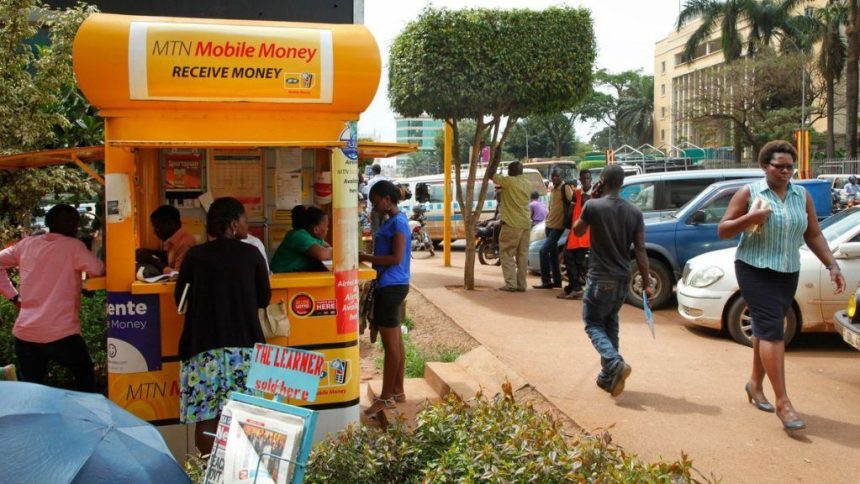
Mobile money agents also reported declining business volumes since the introduction of the tax.
Jennifer Tumwebaze, an agent in Kampala, said both customer numbers and transaction values have dropped significantly.
“Customers now prefer bank agents or move with cash to avoid high charges. Some agents have closed business due to low volumes,” she said.

Tumwebaze noted that the shift to cash transactions has also increased insecurity, as people physically transport money.
Stakeholders further called for the removal or reduction of import duties on entry-level smartphones, arguing that high costs are limiting access to the digital economy.
They said affordable smartphones would increase internet usage, boost e-commerce and ultimately expand the tax base.
“Smartphones in Uganda carry a 28% tax burden including 10% import duty + 18% VAT. Yet smartphone penetration is only 33% which is lower than the 50% regional average,” Walugembe explained.
According to the participants, countries such as Rwanda and Kenya have already removed or reduced such taxes, leading to increased smartphone penetration.
They argued that Uganda risks slowing its transition to a digital economy if current tax policies remain unchanged.