













OPINION
Every year, hundreds of thousands of people around the world lose their lives to drowning, often silently, unexpectedly, and tragically preventable. Global estimates show that about 300,000 people die annually from drowning, making it one of the leading causes of unintentional injury-related deaths worldwide. Children under the age of five account for nearly a quarter of these deaths, while more than half of all victims are under 29 years old.
Water should be a source of life, livelihood, and joy, not a place where hope quietly disappears. Anyone can drown, nobody should!
These tragedies are not confined to distant oceans or unfamiliar coastlines. They occur close to home: near village ponds, along riverbanks, in floodwaters, and on the shores of Uganda’s vast lakes.
A Global Problem With a Local Face
Drowning disproportionately affects low- and middle-income countries, which account for more than 90 percent of all drowning deaths globally. Communities that depend on water for transport, fishing, and daily survival face the greatest risk, with children and young adults particularly vulnerable.
In Africa, drowning rates are among the highest in the world, estimated at 5.6 deaths per 100,000 people. Uganda is no exception.
National data paints a troubling picture. Police records show that 138 drowning incidents were reported in 2023 and 119 in 2024, making drowning the leading maritime-related offence in both years. Public health experts estimate the true toll is far higher. Research from Makerere University’s School of Public Health suggests that as many as 3,000 people die from drowning in Uganda every year—an average of nine lives lost each day.
Most victims are young people between the ages of 5 and 25, with many incidents occurring in rural and lakeside communities like Mayuge, Kalangala, Masaka, Rakai, Mukono, Kampala districts where water is woven into everyday life.
Why the Tragedies Continue
Despite the scale of the crisis, drowning remains widely underestimated. Many Ugandans do not perceive it as a common or serious risk, allowing preventable deaths to continue largely unnoticed.
Several factors fuel this silent epidemic:
Widespread lack of swimming and water-safety skills: Many people in Uganda, especially children of the school going age and fishing communities don’t know how to swim or handle emergencies in water. This leaves them extremely vulnerable when they enter lakes, rivers, swamps, or the floody suburbs of Kampala and and other flooding prone areas of the country.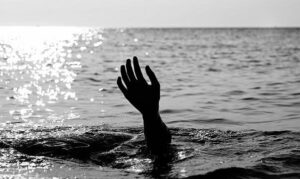
Poor supervision of children near water bodies: A recent fatal incident at Seeta High School where a Senior Six student tragically drowned in the school’s swimming pool highlights the dangers of inadequate supervision even in controlled settings. Police preliminary reports alleging that the designated lifesaver lacked full rescue training, contributing to a student’s drowning explains the urgency need to train caregivers and lifesavers. It’s a public secret, many drowning incidents involve children who are not adequately watched by adults. In rural communities, kids often play or swim unsupervised because caregivers assume they are safe or are busy with chores, whereas not.
Limited public awareness campaigns: Many Ugandans still underestimate the risk of drowning, and cultural beliefs sometimes downplay its preventability. Because drowning is largely invisible, no dramatic crash or explosion – it often goes unnoticed until it’s too late. The media and civil society too, should step up to create awareness on behavioural change and safety precautions around water in high-risk districts. If broader public education remains limited, many people will still lack basic knowledge of water risks and certainly these gaps won’t be recognized.
Inadequate rescue infrastructure and safety equipment: Even when incidents occur, lack of quality rescue equipment and infrastructure means that victims often cannot be saved in time.
On several occasions, government’s own assessment found that most drowning victims were not wearing life jackets, and that many life jackets sold locally fail to meet safety standards, putting the lives of Ugandans on water at risk. Despite the reports, less or no action has been taken to regulate or improve infrastructure on the water for example designating rescue teams, enforce mandatory use of lifeguards, warning signs, or quick-response systems near hotspot areas.
Unregulated boat transport and fishing practices: Weaker safety regulations and poor enforcement on water bodies such as Lake Victoria, Kyoga and Albert, and rivers continue to lead to increased risk. The boats and canoes used on lakes in Uganda are substandard and therefore, unsafe. Recent Government research revealed that more than 95 % of drowning victims were not wearing life jackets, and unsafe. Relevant authorities like UNBS, ministry of transport need to urgently step up and put in place standardized mobility measures on our lakes and rivers. For unregulated boats contribute significantly to fatalities.
These factors do not exist in isolation; they reinforce one another. A community where people can’t swim, lack supervision, don’t understand water risks, have no rescue gear, and rely on unregulated boats is caught in a cycle that makes drowning a persistent threat. Addressing this requires coordinated action: improving swimming education, enhancing supervision and public awareness, equipping communities with reliable safety gear, and regulating water transport more strictly. Only then can Uganda begin to turn the tide on this silent crisis.
Turning the Tide
The encouraging reality is that drowning is largely preventable. Evidence from around the world shows that simple, low-cost interventions save lives. These include introducing swimming and water-safety lessons in schools, promoting the use of life jackets among fishers and boat operators, strengthening adult supervision, and empowering communities with early warning and rescue skills.
In Uganda, efforts are beginning to take shape. Programs aimed at teaching survival swimming in lakeside communities are emerging, while authorities are promoting safety signage and better shoreline management. However, these initiatives remain limited compared to the scale of the problem.
A Call to Action
Behind every statistic is a grieving family, a future cut short, and a community left asking what could have been done differently. Drowning prevention must move from the margins of public discussion to the center of national policy.
Governments, local leaders, schools, parents, and civil society must work together to make water safety a priority. No child, no young person, and no neighbour should lose their life simply because they lacked basic swimming skills or because safety was treated as an afterthought.
Water should be a source of life, livelihood, and joy, not a place where hope quietly disappears. Anyone can drown, nobody should!
By Leonard Kamugisha Akida,
Ugandan Journalist, Media Trainer, and Advocate for Drowning Prevention, SRHR and PWDs rights.
Email: kamugisha.leonardakida@gmail.com