










By Leonard Kamugisha Akida,
KAMPALA
Ugandan government has announced the inaugural Refugee and Host Communities Exhibition, scheduled to run from December 12–14 at Motive Grounds in Bugolobi, aimed at showcasing innovation, investment potential and economic contributions of refugees and the communities that host them.
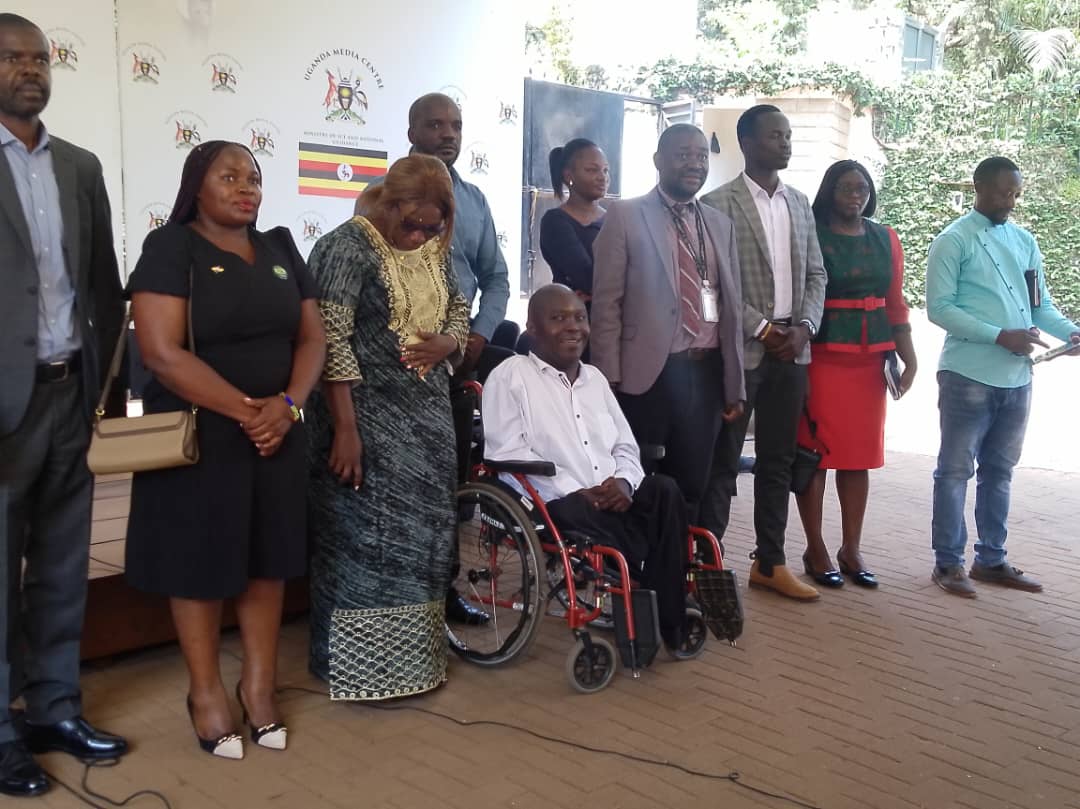
Representing the State Minister for Trade, Francis Mwebesa at a briefing at the Uganda Media Centre yesterday on Tuesday, Zackey Kalega is the Commissioner Internal Trade at the ministry said the exhibition seeks to highlight value-added products and business enterprises run by refugees and host communities across the country.
“This exhibition is designed to promote entrepreneurship by inspiring and equipping refugees and host communities with business skills and access to financing opportunities,” Zackey said.
He noted that the event, organised by the Ministry of Trade in partnership with the Office of the Prime Minister and supported by several development partners, will also offer a platform for policy engagement to create a more inclusive business environment.
Uganda currently hosts nearly two million refugees, the largest number in Africa including more than 56,000 Eritreans, 50,000 Somalis and about 16,000 Ethiopians, according to UNHCR.
Zackey said the government’s decision to host the exhibition is guided by the Refugee Act of 2006, which permits refugees to engage in agriculture, industry, handicraft and commerce. It also aligns with Uganda’s 2023 pledge in Geneva to create over 300,000 sustainable economic opportunities for refugees and host communities.
“We expect over 300 enterprises from settlements such as Rhino, Kyaka, Kyangwali and Nakivale to exhibit. By the end of this fair, we aim to provide refugees with information on trade procedures, business licensing, taxation and standards,” he added.
The exhibition will also connect entrepreneurs to potential markets and investors, he said, noting that visibility of refugee-made products remains a major barrier to economic progress.
Development partners, however, warned that the exhibition comes at a time when the refugee response is facing unprecedented funding cuts.
Musoki Lilian Maate, the Humanitarian Response Manager at Finn Church Aid who represented development partners said humanitarian assistance has “drastically” declined as global donors tighten aid budgets, including reductions linked to U.S aid freezes and the U.K.’s plan to cut aid spending to 0.3% of gross national income.
“This exhibition comes at a critical time,” she said. “Uganda continues to uphold one of the world’s most progressive refugee policies, but for real change we must strengthen self-reliance. The solutions to the refugee problem lie in economic opportunities, not handouts.”
Musoki expressed partners commitment to supporting refugee-led enterprises in agriculture, creative industries, crafts, renewable energy and financial services. She emphasised the need for enabling policies to allow refugees to access markets, expand small businesses and benefit from supportive regulation.
She added that the exhibition will bring together government officials, donors, UN agencies and private-sector player, and called for commitments from policymakers during the high-level dialogue set for December 12.
“Fostering enterprise growth is not charity, it is good economics. Refugees are contributing to Uganda’s economy. We want to see dignity, not dependency,” she said.
Officials say the exhibition will serve as a long-term strategy under the National Development Plan IV to integrate refugees into national programmes and improve access to social services such as health, education and sanitation.
The three-day event will feature exhibitions, business clinics, financing sessions, policy discussions and a marketplace linking refugee businesses with private-sector buyers.