












OPINION
Two months ago, Washington quietly inked a minerals partnership with Kinshasa. Officially, the deal was framed around cobalt, lithium, and securing supply chains for the energy transition. But minerals rarely travel alone. They come with escorts, political, military, and strategic. What was presented as a minerals-for-security framework has begun to reshape realities on the ground in eastern Congo in ways that years of scattered offensives could not.
The Shifting Terrain
Safe zones shrinking: Reports suggest that areas once considered reliable sanctuaries for M23 fighters are increasingly under surveillance and pressure. The bush is no longer friendly terrain.
Geopolitical firepower: Unlike the Maji Maji fighters of history, who relied on cassava flour confidence against colonial rifles, M23 now faces calibrated firepower backed by global supply chain imperatives. The script has changed.
Surveillance advantage: The minerals deal appears to have unlocked intelligence-sharing and monitoring capacities that regional forces alone struggled to sustain. For M23 commanders, the battlefield is no longer just about guns, it’s about geopolitics.
The Kibwetere Parallel
The comparison to Kibwetere the Ugandan cult leader whose movement ended in a dramatic and tragic collapse—may feel stark, but it captures the sense of inevitability. When external forces align against a movement, its leadership often discovers that the exit is sudden, dramatic, and irreversible. Observers note that if current momentum continues, M23’s leadership may begin to vanish from the scene in ways that echo Kibwetere’s abrupt final chapter.
Strategic minerals as leverage: The deal underscores how cobalt and lithium are no longer just commodities—they are geopolitical weapons. Whoever controls them controls the future of energy and technology.
Security through economics: What years of military campaigns failed to achieve, a minerals deal may now be delivering: shrinking insurgent space and weakening rebel leadership.
Regional implications: For communities long trapped between rebel violence and state neglect, the shift could mean new opportunities for stability if governance follows security.
This moment illustrates a profound truth: geopolitics can succeed where guns falter. The minerals deal is not just about batteries and supply chains; it is about recalibrating power in eastern Congo. If M23’s leadership continues to unravel under this pressure, it will be a reminder that in the 21st century, wars are not only fought in forests and hills they are fought in boardrooms, trade agreements, and surveillance networks. The collapse of M23, should it come, will not be remembered as a purely military victory, but as a geopolitical one.
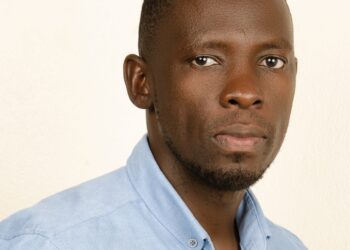
The writer is Ivan Kutegyeka Omupakasi
Social worker and CEO Baje walking Africa.