








By Hakim Owin
The world as we have known it, is changing faster than most of us realize. For decades, the post World War II global order anchored by international institutions like the United Nations, the Bretton Woods system, and a framework of multilateral rules provided a semblance of stability. It enabled trade, diplomacy, and cooperation across cultures, economies, and ideologies.
Today, however, this system is under attack from multiple fronts. This is threatening the very mechanisms that once stabilized the world. Humanity stands at a crossroads, and the choices we make now will define the next century.
Alliances that were once predictable are now fluid, often driven by opportunistic interests rather than shared principles. This fragmentation is compounded by a decline in faith in multilateral institutions.
Organizations designed to manage collective problems from trade disputes to global health crises are increasingly seen as slow, ineffective, or biased.
When nations bypass these systems, they weaken the very rules meant to prevent conflict. As results the consequences of this pattern escalating disputes, weaken social cohesion, and whatever remains fertilize ground for chaos.
On other side, history shows us that periods of global instability are not merely moments of crisis they are opportunities for transformation.
As traditional hierarchies and old systems weaken, there emerges a chance to revolutionize international institutions, making them more inclusive, these institutions can evolve from rigid bureaucracies into dynamic platforms for cooperation, capable of addressing contemporary global challenges with agility and fairness.
By reimagining international institutions as responsive, accountable, and inclusive engines of cooperation, humanity can stabilize the world, not through domination or fear, but through collaboration and shared purpose. It is this hope that drives the work we must do today for a resilient and just global future.
The path humanity takes will depend largely on strategic choices and leadership regimes. Nations and communities can retreat into isolationism, deepening conflict and inequality.
Alternatively, we can work to strengthen both local and global resilience. Most importantly, humanity must cultivate shared ethical principles. Global rules cannot survive if they are perceived as tools for the powerful. Legitimacy derives from fairness, transparency, and inclusion.
Any governance system we decide to bring into existence, must respect human dignity, prioritize long term survival over short term gain, and balance sovereignty with collective responsibility. This is not just an abstract ideal; it is a necessity if we are to prevent chaos in an increasingly interconnected world.
My view is that while the current geopolitical turbulence is deeply unsettling and the challenges ahead are immense, this moment should also be understood as an opportunity.
It is a moment to pause and reflect on both the advantages and the profound challenges of the twenty first century, and to rethink the institutions capable of shaping a more inclusive and stable global future.
History reminds us that every social, economic, or security vacuum that humanity creates and then chooses to ignore eventually becomes far more costly to repair than it would have been to prevent.
Ultimately, humanity’s survival and progress can no longer be guaranteed by military strength or economic dominance alone. The real foundation of a stable world lies in the ability of global citizens to cooperate across boundaries, to recognize shared threats, and to embrace a collective responsibility for the future of humanity as a whole.
When the global order is challenged, it is not only governments that must respond it is the responsibility of global citizens everywhere to help shape a fair, enduring, and inclusive future.
Because if we fail to build the world we need together, we may all be forced to live in the world we failed to prevent.
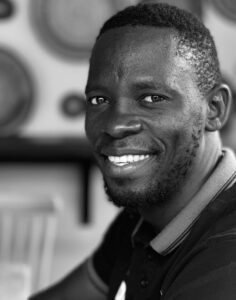
The Writer, is a Governance and Community Systems Strategist and a Mandela Washington Fellow (2022).
Hakim Owiny’s work focuses on strengthening governance frameworks, advancing community led development, and promoting inclusive, sustainable solutions across urban and rural contexts.
He is also the founder of Edu Cycling, with the Mission to promote early childhood literacy for children aged 5–10 across Africa, and is actively engaged in policy advocacy, civic engagement, and systems thinking to advance social, economic, and environmental transformation in Uganda and the wider region.