







By Leonard Kamugisha Akida,
KAMPALA
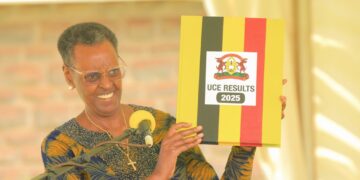
The Uganda National Examinations Board (UNEB) has announced that 428,628 candidates, representing 99.69 per cent of those who sat for the 2025 Uganda Certificate of Education (UCE) examinations, qualified for the certificate.
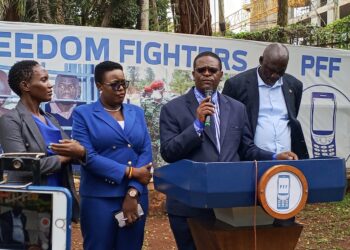
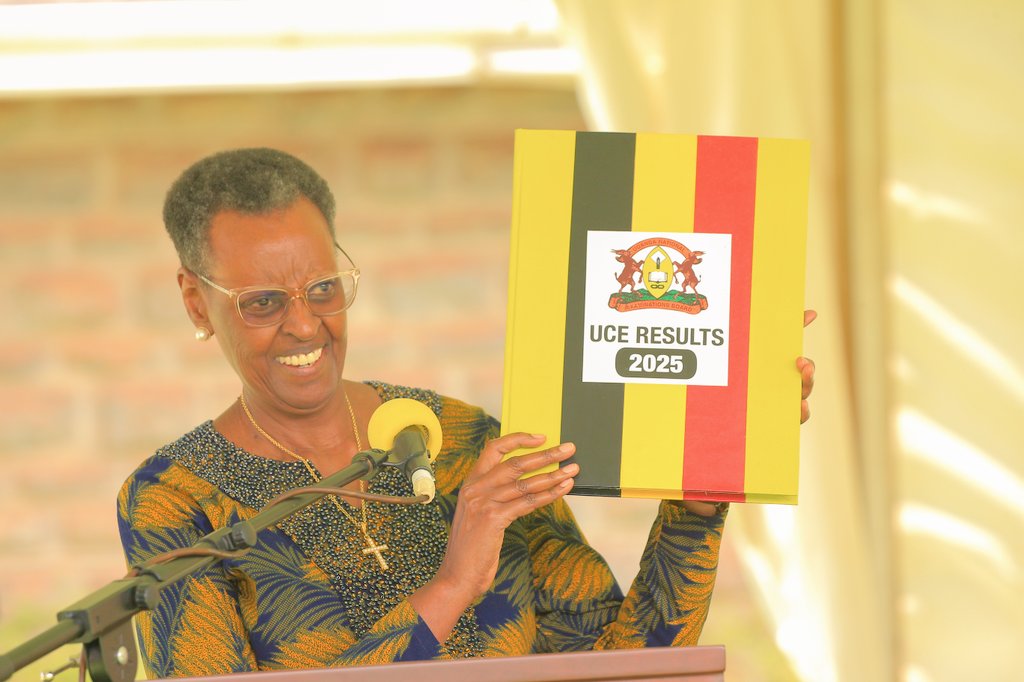
While releasing the results at State House Lodge Nakaseero on Thursday, UNEB Executive Director, Dan Odongo, said candidates who met the required standards will have their performance reflected as Result 1 on both their transcripts and certificates.
“The overall results indicate that 428,628 candidates (99.69%) who sat for the 2025 examination qualified for the UCE certificate. This outcome will be reflected on both the transcript and the certificate as Result 1,” Odongo said.
He explained that the achievement levels for each subject were determined through systematic and technical processes involving statistical and psychometric analysis. The evaluation combined Continuous Assessment (CA) conducted at school level, which contributed 20 per cent, and the End-of-Cycle Examination score, which accounted for 80 per cent.
Odongo said the integrated assessment approach ensures balanced and holistic evaluation of learners under the competency-based curriculum.
UNEB also recorded a significant drop in the number of candidates who did not qualify for the UCE certificate from 1.9 per cent in 2024 to 0.31 per cent in 2025.
According to the board, these candidates will have their results indicated as Result 2 or Result 3 on their transcripts.
Result 2 denotes candidates who failed to meet all requirements for the award, including missing project scores, sitting fewer subjects than required, or lacking Continuous Assessment scores. Result 3 is assigned to candidates who scored below the basic level (Grade E) in all subjects.
A total of 432,163 candidates from 3,975 examination centres registered for the 2025 UCE examinations, compared to 359,417 candidates in 2024, marking an increase of 72,746 candidates, representing a 20.2 per cent rise. Of the registered candidates, 204,292 (47.3%) were male while 227,871 (52.7%) were female.
UNEB also indicated that 154,642 candidates (35.8%) were Universal Secondary Education (USE) beneficiaries, while 277,521 (64.2%) were privately sponsored. In terms of attendance, 429,949 candidates (99.5%) sat the examinations, while 2,214 candidates (0.5%) were absent.
Additionally, the board revealed that 708 Special Needs Education (SNE) candidates registered for the 2025 examination, comprising 342 males and 366 females, compared to 743 candidates in 2024. These included 27 blind candidates, 116 with low vision, 60 deaf candidates, 90 dyslexic candidates, 72 physically handicapped candidates, and 343 candidates with other disabilities requiring extra time.
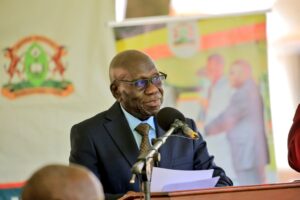
Meanwhile, UNEB Chairperson, Prof Celestine Obua, raised concern over the late submission of Continuous Assessment scores by schools, warning that such a delay affects learners performance.
“Many schools submit CA scores months past the deadline, putting the affected learners at risk of not being graded,” Obua said.
He revealed that the Board will intensify monitoring and evaluation nationwide to enforce compliance with assessment guidelines.
“Provisions have been made to roll out a rigorous nationwide monitoring and evaluation exercise to ensure compliance with assessment guidelines and guarantee the credibility of learners’ scores”
He noted that schools often cite inadequate internet facilities and lack of technical expertise as reasons for delays but warned that UNEB would institute measures to address the problem, including applying sanctions against non-compliant institutions.