













OPINION
Uganda’s future climate resilience hinges less on making new international pledges and more on strengthening its domestic governance and institutional capacity. The nation has endorsed key global agreements and has climate change policies in place, the real challenge is their effective implementation.
Uganda stands at a critical juncture in the global climate crisis. While the international community often calls for new pledges and ambitious targets, the real key to the nation’s climate future lies in a less glamorous, but far more vital arena, institutional strengthening and effective governance. Uganda does not suffer from a deficit of good intentions or well-drafted policies, it rather suffers from an implementation gap, that only strong, resilient institutions can bridge.
Uganda’s commitment to addressing climate change is evident in its advanced legislative landscape. The nation has a National Climate Change Policy and a Climate Change Act, passed in 2021, which provides a legal framework for climate action, adaptation, and mitigation. These documents outline a clear path for integrating climate resilience into national planning and budgeting.
Furthermore, various government bodies, from the Ministry of Water and Environment to the National Environment Management Authority (NEMA), have mandates to oversee environmental protection and sustainable resource management. The nation is very well equipped on paper therefore the problem i8s not the 5Ws and H.
The gap between policy formulation and practical execution is often vast. Existing environmental laws are frequently undermined by a lack of political will, insufficient funding, corruption, and competing developmental priorities.
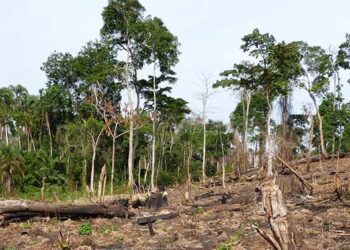
Consider the ongoing challenges of deforestation, wetland degradation, and pollution. Despite clear legal protections, these issues persist because the institutions responsible for enforcement lack the necessary resources, independence, and authority to operate effectively.
Promises made at international forums, while useful for diplomacy, do little to stop illegal logging in local forests or protect crucial river ecosystems from industrial waste if the local NEMA officer or the district environmental committee is underfunded, understaffed, or compromised.
The climate crisis is felt locally, and therefore the response must be executed locally, through empowered and effective local government and environmental bodies.
To secure Uganda’s climate future, the focus must shift from generating new aspirations to making existing institutions functional and accountable and this requires several concrete steps
Instead of focusing solely on new promises at global forums, the Ugandan government and its partners should prioritize empowering regulatory bodies forinstance institutions like NEMA and the National Forestry Authority need guaranteed independence, adequate and consistent budget allocation, and the full backing of the rule of law. Their mandates must be non-negotiable
Implementing rigorous and transparent systems for tracking climate expenditure and project outcomes will build trust and attract further investment from development partners. The Office of the Auditor General of Uganda plays a crucial oversight role here, and their capacity must be reinforced.
Investing in data and early warning systems forexample stronger institutions can better utilize climate data to inform policy and implement effective early warning systems, a critical tool for disaster preparedness.
Further, enhancing inter-agency cooperation given that climate change is a cross cutti9ng issue, improved collaboration between ministries for example water and environment, agriculture, health and finance ensures a cohesive national response rather than fragmented efforts.
By investing in stronger institutions, Uganda can translate its climate ambitions into practical, sustainable outcomes, ensuring a more resilient future for its citizens beyond mere rhetoric and promises.
Uganda has the potential to be a leader in African climate resilience, thanks to its existing policy frameworks. However, this potential will remain untapped if the nation continues to prioritize symbolic promises over substantive institutional reform.
The key to Uganda’s climate future is not more paper pledges but the unwavering commitment to building, funding, and protecting the institutions mandated to implement the laws already in place. When Uganda commits to stronger institutions, it commits to a tangible, enforceable, and resilient future for its citizens and its natural environment.
By Doreen Asasira, an Environmentalist and Climate Advocate,