












By Isaac AKugizibwe,
SPORTS
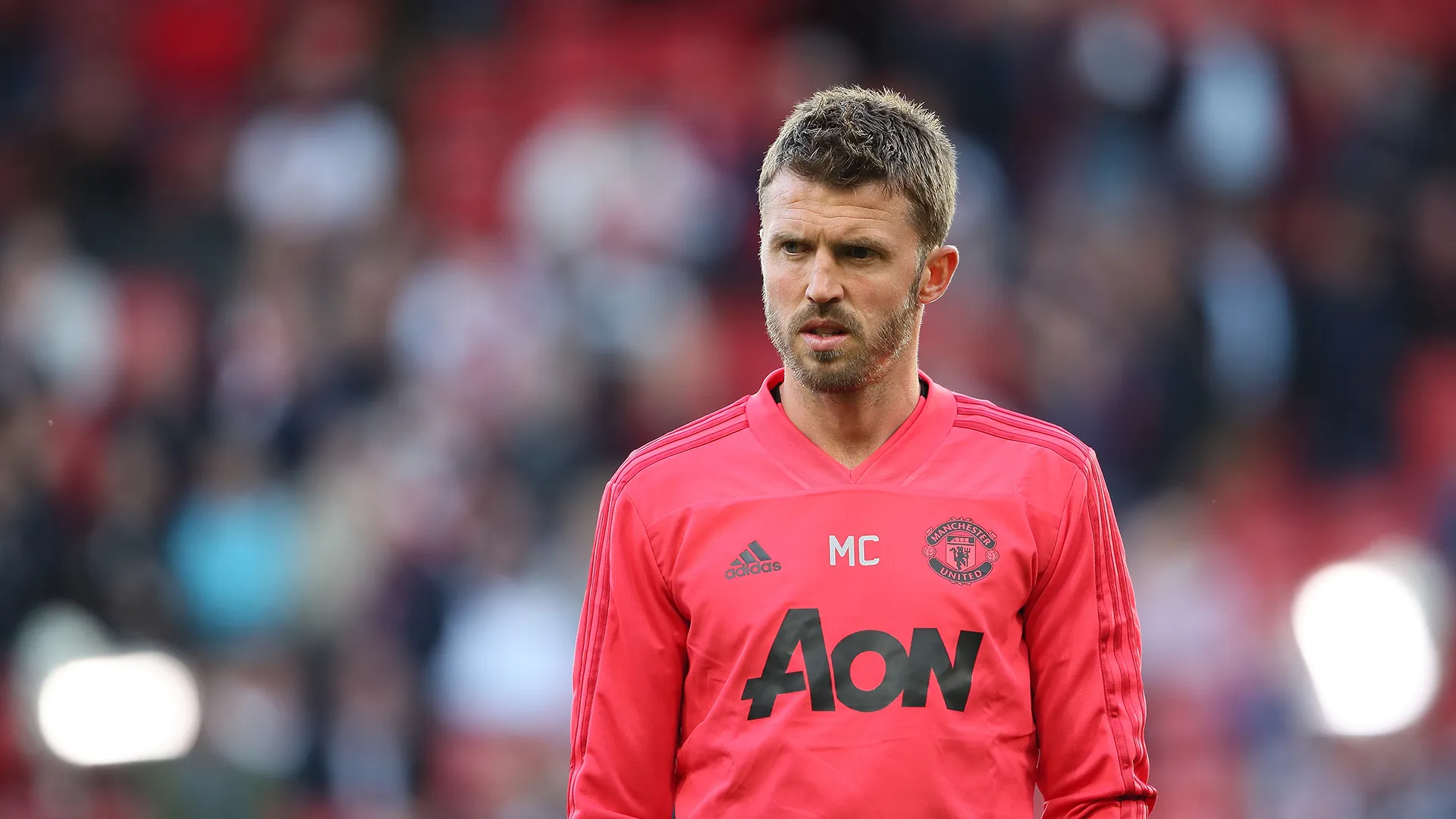
Old Trafford has seen this movie before: crisis, change, and a familiar face stepping forward to steady the ship. Now that Michael Carrick has been handed the interim reins after Ruben Amorim, Manchester United is turning once again to continuity over chaos, and to a man who understands the club’s heartbeat perhaps better than anyone in the building.
But sentiment alone does not win matches. The real question is whether Carrick has the tactical clarity, authority and conviction to arrest United’s drift and restore belief, even in the short term.
Carrick’s greatest asset is credibility. As a player, he was the quiet conductor of United’s last truly dominant midfield, trusted by Sir Alex Ferguson to set the tempo, protect the back four and make others better. That intelligence has translated into coaching.
During his brief interim spell in 2021, Carrick showed composure under intense pressure. United went unbeaten in three games, including a Champions League win away to Villarreal and a controlled draw at Chelsea. More importantly, the team looked organised, disciplined and emotionally settled no small feat for a squad in turmoil.
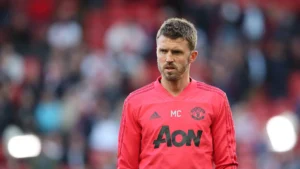
His later work at Middlesbrough reinforced the sense that Carrick is more than a caretaker. He built a possession-based, progressive side, improved young players, and demonstrated a willingness to adapt systems rather than impose dogma. For a United team often torn between philosophies, that flexibility matters.
Tactical reset, not revolution
Carrick is unlikely to attempt a radical overhaul. Instead, expect simplification. United’s recent struggles have often stemmed from confusion: players unsure whether to press high or sit deep, when to build patiently or go direct.
Carrick’s footballing instincts lean toward balance. That means, he is likely to rely on a compact midfield with clearer roles, less structural risk in build-up and greater emphasis on controlling games rather than chasing them
If United regain midfield stability, something sorely lacking, results can follow quickly. Carrick understands spacing, tempo and game management, areas where United have repeatedly faltered in big moments.
Interim managers live or die by dressing-room buy-in. Carrick’s low-ego leadership could be an advantage. He is respected without being authoritarian, authoritative without being abrasive. That matters with a squad heavy on reputation and light on cohesion.
Carrick should be looking at re-establishing standards without public confrontation, restoring confidence to out-of-form senior players and giving clearer and simpler instructions to young talent at Old Trafford.
In a club where the noise often overwhelms the football, his calm demeanour could lower the emotional temperature, a prerequisite for consistency yet the risks are real. Carrick has never managed at elite European level over a sustained period. Interim roles demand decisiveness, not deference. He will need to prove he can make big calls: dropping underperforming stars, adjusting tactics mid-game, and resisting sentimentality.
There is also the broader structural issue. United’s problems are not solely managerial. Recruitment missteps, tactical incoherence across seasons, and an identity crisis cannot be solved in weeks. Carrick can stabilise, but revival is a heavier lift.
And then there is perception. Old Trafford has become impatient. For some supporters, an interim appointment signals lowered ambition. Carrick must therefore show immediate clarity and visible improvement, or risk being seen as another holding pattern rather than a solution.
Reviving “the dream” does not mean silverware overnight. For Carrick, success would be restoring organisation and intensity, making United harder to beat, reconnecting players with their roles and responsibilities and giving the club a sense of direction, however temporary.
If United look coherent again, if matches make sense, Carrick will have done his job but he should not be the saviour Old Trafford fantasises about, yet there are signs he could be the stabiliser it desperately needs. His intelligence, understanding of the club, and calm leadership offer United a chance to reset amid turbulence.
Revival, in this context, is not about glory. It is about belief. And Carrick, quietly and without theatrics, may be capable of restoring just enough of it to keep the dream alive, at least for now.