










By Leticia Ahirirwe
OPINION
As Africa recently marked the Day of Peace and Reconciliation on 31st January, it was a moment to reflect not only on conflicts past but on ongoing injustices that threaten peace today. Among the most urgent of these is the impact of oil extraction and fossil fuel development, an industry that has disproportionately affected women, yet too often leaves them unheard.
In oil-rich regions, women have lost far more than land. Entire communities are displaced to make way for extraction projects, while environmental degradation destroys water sources, contaminates soil, and threatens food security. Women, who are primarily responsible for farming, caregiving, and household management, bear the brunt of these disruptions. Their labor becomes more burdensome, their health is at risk from pollution, and their ability to provide for their families is severely undermined.
The consequences extend beyond material loss. Displacement severs cultural ties and erodes community cohesion. Families face homelessness, children are forced out of school, and mental health challenges increase as women struggle to provide under worsening conditions. Fossil fuel projects often exacerbate inequality, enriching a few while marginalizing many, particularly women.
Environmental degradation also fuels climate injustice. Oil spills, gas flaring, and pollution contribute to climate change, triggering floods, droughts, and extreme weather events. Women, who often collect water, manage food, and care for the sick, are disproportionately affected. Their well-being, physical, emotional, and economic, is under constant threat.
 Despite being most affected, women are largely excluded from decisions about energy, land, and community development. Their knowledge, leadership, and experiences are critical for crafting solutions that are equitable and sustainable. True peace and reconciliation cannot exist where the well-being of women is ignored.
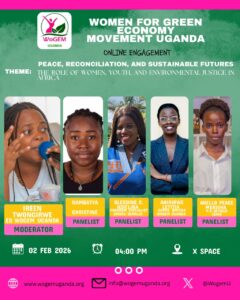
In recognition of these challenges, Women For Green Economy Movement Uganda is holding an X space engagement today, 2nd February, focusing on the role of women, youth, and environmental justice in oil-affected areas. Today’s discussion will center on peace, security, and the impacts of oil-related conflict in Hoima, highlighting the urgent need to empower women and youth, prevent displacement, and promote environmental justice.
Call to Action: Five Steps to Protect Women and Build Peace
Protect Women’s Land and Property Rights:
Women in oil-rich regions are often the first to lose land, homes, and livelihoods. Securing land rights ensures women can maintain independence, farm sustainably, and support their families. Governments and companies must consult women before land is taken, provide fair compensation, and offer resettlement support that preserves social and economic stability.
Safeguard Women’s Health and Well-Being:
Fossil fuel projects contaminate water, pollute the air, and threaten women’s health. Prioritizing access to clean water, healthcare, and mental health services is essential. Protecting women’s well-being strengthens resilience, reduces the human cost of development, and ensures families can continue to thrive despite environmental challenges.
Include Women in Decision-Making and Leadership:
Women must have a seat at the table in energy, land, and development policies. Their perspectives ensure projects respect human rights, protect the environment, and benefit communities. Empowering women in leadership fosters inclusive policies, builds trust, and strengthens social cohesion, which are key for lasting peace and reconciliation.
Promote Economic Empowerment and Alternative Livelihoods:
Displacement and environmental damage often destroy women’s traditional livelihoods. Supporting women with training, microfinance, and sustainable business opportunities enables them to recover economically. Programs in renewable energy, eco-agriculture, and small-scale enterprises allow women to generate income while protecting the environment, improving family well-being, and reducing vulnerability to poverty.
Transition to Sustainable and Clean Energy:
Fossil fuels accelerate climate change, which disproportionately affects women. Investing in renewable energy; solar, wind, and biogas, reduces environmental damage, creates jobs, and strengthens resilience. Prioritizing clean energy solutions protects women’s lives, health, and livelihoods while advancing climate justice and sustainable development.
Peace is more than the absence of conflict, it is the presence of justice, equity, and well-being for all. On this Africa Day of Peace and Reconciliation we must ensure that women are not only protected but empowered, that their health, livelihoods, and leadership are prioritized, and that Africa moves toward a future that is truly sustainable, inclusive, and peaceful.
The time to act is now. Women cannot wait, and neither can Africa.
By Leticia Ahirirwe, WoGEM Uganda