











By Leonard Kamugisha Akida,
NATIONAL
In classrooms, playgrounds and homes across Uganda, an absence is quietly reshaping childhood.
A new Uganda Bureau of Statistics (UBOS) on Orphans and other Vulnerable Children (OVC) report paints a stark picture: more children are growing up without fathers than mothers. According to the report, Uganda is home to an estimated 2.9 million orphans, with a significant proportion having lost their fathers, a trend experts warn could carry profound social and economic consequences.
The numbers tell a stark story.
Behind the statistics lies a deeper story, one of loss, disconnection and a changing social fabric that experts warn could have long-term consequences for the country. The findings categorise children into several groups, those without fathers, those without mothers, those who have lost both parents, and those living with one or both parents deceased. Across nearly all categories, one trend stands out consistently: father loss is significantly higher.
Report findings reveal that 6.2% of children surveyed had lost their fathers, compared to 3% who had lost their mothers, suggesting that fathers are dying at nearly twice the rate of mothers. A further 4% of children have lost both parents, while 13% have lost one parent, placing millions at heightened risk of vulnerability.
But the data also reveals something more troubling. Beyond death, there is also uncertainty.
Thousands of children fall into uncertain categories where one parent is confirmed dead, but the status of the other is unknown. Some do not know whether either parent is alive.
“More than 60,000 children do not know whether their fathers are alive, pointing to fractured family structures, separation, and a lack of connection that goes beyond bereavement,” the UBOS (OVC) report revealed.
For child welfare advocates, this signals not just bereavement, but a breakdown in family connections and systems meant to track and support vulnerable children.
“This is more than death, it’s disconnection. We are seeing a collapse in how families are traced and supported,” said Claire Ankunda, a child welfare advocate.
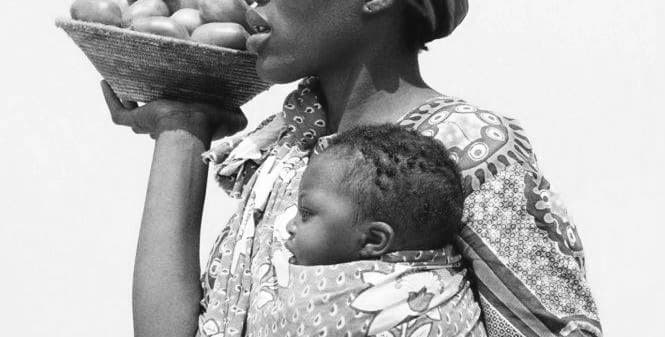
For many children, the absence of a father is not always explained by death alone. In some cases, it reflects separation, migration, or a complete loss of contact. The result, however, is often the same,emotional strain, economic hardship and a weakened support system at home.
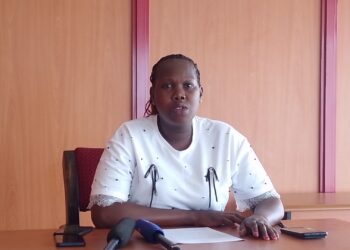
“It’s torturous, growing up without knowing a father or any of your parents,” says a Kampala-based teacher, who asked to be identified as Mom Nisha. “My daughter always asks me about her dad whenever it’s school visitation time. She sees her friends’ parents coming to visit them, and she complains that her dad can’t.”
Although Mom Nisha says she can provide financially, she adds that cannot replace what is missing.
“Yes, I’m a working professional and I can ably provide for her, but she misses that fatherly love. I don’t know where the man is. I don’t even know anyone in his family,” she explains.
The two met as students during the Covid-19 pandemic. “We conceived as a young couple in college… I have never seen him again.”
Her story echoes a broader concern raised both by child rights advocates and the UBOS – OVC report.
Experts suggest that a combination of factors may help explain why more fathers are missing.
Public health specialists point to patterns in men’s behaviour including delayed health-seeking, exposure to risky occupations, and lifestyles that increase vulnerability to illness. Social expectations can also play a role, discouraging men from seeking medical help early.
“Men often wait too long before going to hospital,” said Nsubuga, a men’s mental health expert. “By the time they seek care, the situation is already critical.”
The issue is also unfolding alongside broader demographic changes. UBOS data indicates a rise in single-parent households, with single motherhood increasing from about 20% to nearly 30% in recent years.
Yet the report stops short of providing definitive answers, leaving policymakers with urgent and complex questions.
What is driving the high rate of father absence? Why are men more vulnerable? And what does it mean for a country where millions of children are growing up without paternal support?
For some analysts, the issue has remained largely invisible, overshadowed by other national priorities.
“This is a silent crisis,” experts warned. “It’s not talked about enough, but it has the potential to shape the future of this country in profound ways.”
Uganda’s population, now estimated at about 45.9 million people, is one of the youngest in the world (UBOS Census Report, 2024). How this generation grows up will have lasting consequences.
In communities across Uganda, that future is already taking form.
Teachers report children struggling with school fees and discipline. Caregivers; often mothers, grandparents or extended family shoulder increasing burdens. And for many children, the emotional gap left behind is harder to measure than any statistic.
The numbers may highlight a trend, but they cannot fully capture its impact.
Because behind each figure is a child navigating life with a missing piece, a voice not heard, guidance not given, and support not felt.
As Uganda confronts this emerging reality, the challenge is no longer just to understand the data, but to respond to it.
Without action, experts say, the absence of fathers risks becoming not just a personal tragedy for millions of children, but one of the country’s defining social challenges.