








By Gilbert Akampa Kakurugu
LYANTONDE
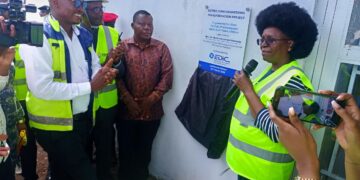
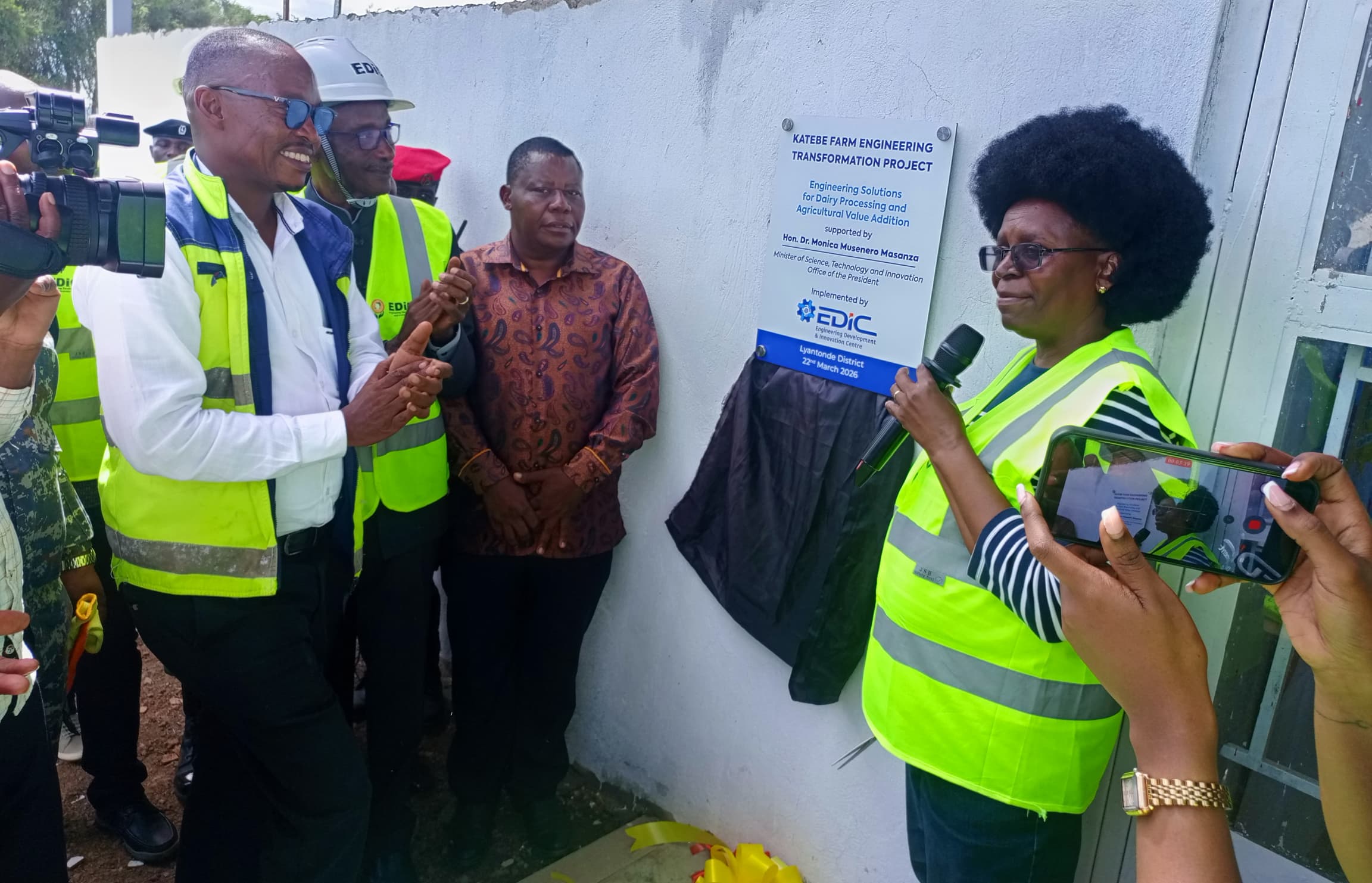
Uganda’s agro-industrialisation agenda took a major leap forward on March 22, with the official unveiling of the transformed Katebe Farm in Lyantonde District. The Engineering Development and Innovation Centre (EDiC), under the Science, Technology and Innovation – Office of the President (STI-OP), spearheaded the project, introducing state-of-the-art dairy processing technologies designed to boost efficiency, sustainability and farmer incomes.
Presiding over the ceremony, Dr. Monica Musenero Masanza, Minister of Science, Technology and Innovation, hailed the initiative as a landmark example of science directly improving livelihoods.
“This is what it looks like when science leaves the lab and goes to the farm,” she said. “We are building systems that help our farmers add value, reduce losses, and earn more from their work.”
The transformation introduced: A steam boiler system, a biomass burner and advanced pasteurisation equipment.
These innovations are expected to significantly increase milk processing capacity, reduce energy costs, and improve product quality. According to EDiC engineer Jimmy Kandole, pasteurisation time has been cut from 15 hours for 250 litres to just 3 hours, with daily output now reaching 5,000 litres.
Katebe Farm, owned by retired Gen. Kale Kayihura, now serves as a hub for over 15 milk suppliers and supports more than 1,000 people engaged in related activities such as banana processing and goat rearing. Positioned at the crossroads of Kiruhura, Sembabule, and Lyantonde districts, the farm is becoming a driver of inclusive local economic growth.
Kayihura expressed gratitude for the transformation, noting its impact on reducing waste and improving quality. He also urged EDiC to explore affordable water technologies to address irrigation challenges in drought-prone areas.
A Model for Uganda’s Future
Beyond Katebe Farm, EDiC’s intervention reflects Uganda’s broader vision of leveraging home-grown technologies to strengthen agricultural value chains, create jobs, and build resilience. The farm now stands as a model of sustainable dairy processing, bridging the gap between research and real-world application.