














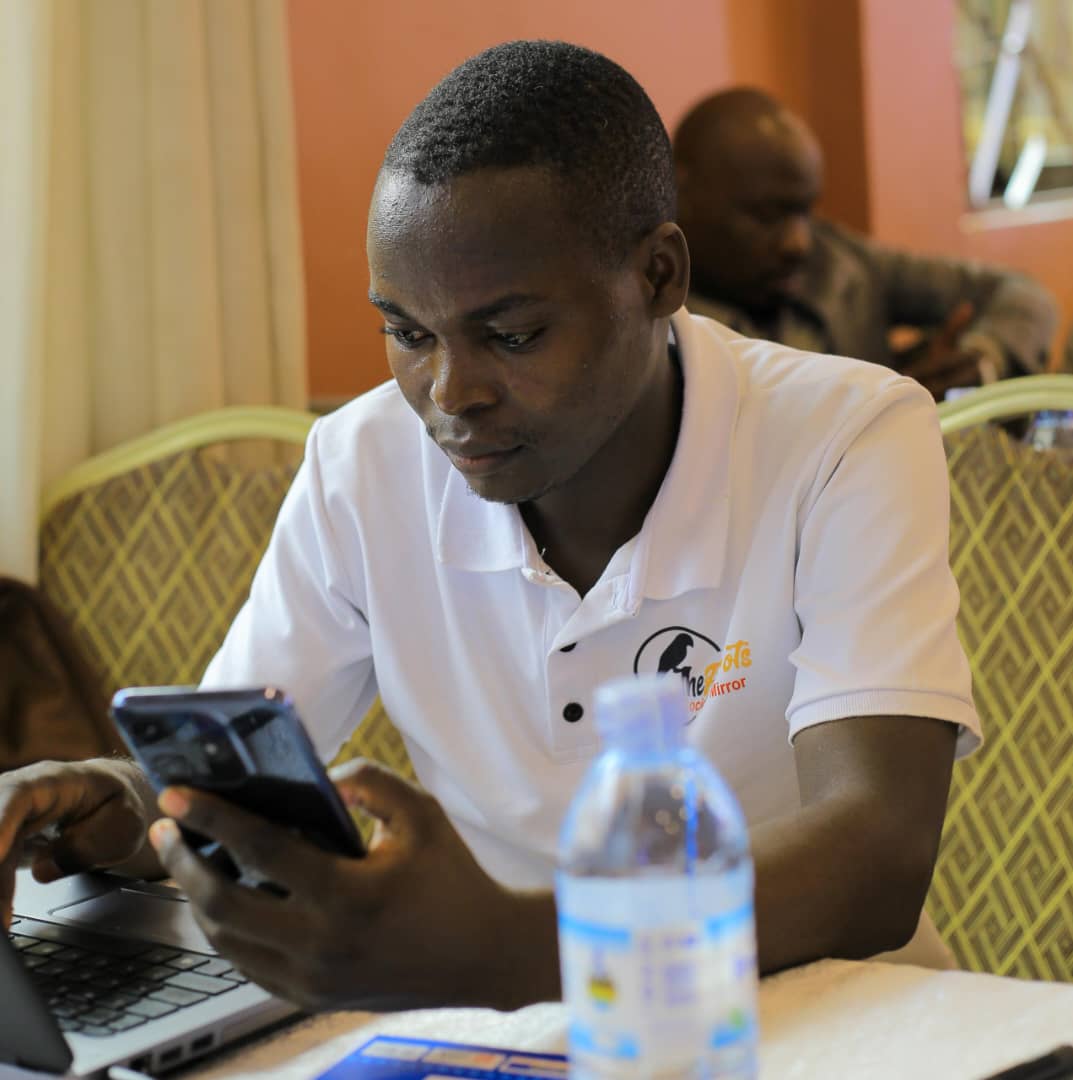
By Leonard Kamugisha Akida
Op_Ed
There is a question Uganda must confront with greater urgency: Who is looking after the boy-child?
For years, public conversations about gender equality have rightly emphasised the challenges facing girls and women, from unequal access to education to gender-based violence and economic exclusion. These efforts remain necessary. But in the process of addressing the disadvantages faced by girls, have we paid sufficient attention to the circumstances shaping the lives of boys and young men?
Across our communities, a troubling concern deserves serious public discussion: the apparent attraction of some young men to lifestyles built around handouts, online dependency, political patronage and other activities that offer immediate gratification at the expense of long-term productivity.
From online relationships built around financial dependence to political propaganda, religious exploitation and sports betting, Uganda must confront a growing question: who is preparing its young men for productive adulthood?
Consider the young man who spends hours cultivating online romantic relationships with women working in the United Arab Emirates, locally referred to by some as Kadamas, not necessarily to build a genuine relationship, but to solicit money for personal upkeep. Instead of investing that time in acquiring a skill, seeking employment or building a business, he treats romantic attention as an alternative source of income.
There is nothing inherently wrong with a woman supporting her partner financially. Nor is there shame in a man experiencing unemployment, poverty or temporary financial difficulty. Healthy relationships often involve mutual support, and economic hardship can affect anyone.
The concern arises when manipulation replaces affection, entitlement replaces responsibility, and dependence becomes a deliberate substitute for honest work.
A relationship should not become a fundraising strategy. Neither should a woman’s financial independence become an invitation for exploitation.
The question is not whether men should accept help. It is whether we are raising a generation of men who understand the difference between receiving support during difficult times and making dependency a permanent lifestyle.
The boy-child and the crisis of purpose
When we speak about the boy-child, we must move beyond slogans and emotional appeals. We must ask what opportunities, expectations and social influences are shaping the transition from boyhood to responsible adulthood.
A young man needs more than encouragement to become successful. He needs education, practical skills, access to employment, mentorship, discipline and an economic environment in which effort has a reasonable chance of producing results.
It would be unfair to blame young men alone for their circumstances. Uganda’s unemployment and underemployment challenges, limited opportunities for decent work, rising living costs and the mismatch between education and labour-market needs can leave even qualified young people struggling to find their footing.
Yet difficult circumstances cannot be the end of the conversation. We must also examine personal choices, social expectations and the cultural habits that sometimes reward appearances over achievement.
Some young men seem more concerned with displaying a lifestyle than building one. They want the expensive phone, fashionable clothes, leisure and social status, but may be unwilling to undertake the patient, often uncomfortable work required to sustain them.
This is where the conversation about masculinity becomes important.
Responsible masculinity should not be measured by how many women a man can persuade to send him money, how much he can display on social media or how closely he can associate himself with powerful people. It should be measured by integrity, accountability, discipline, compassion and the willingness to contribute meaningfully to society.
There is no shame in starting small. There is dignity in learning a trade, selling goods, farming, undertaking an apprenticeship or accepting an honest job while working towards something better.
The real danger is not poverty. It is a culture that makes young people ashamed of honest work while celebrating the appearance of success.
Political patronage is consuming youthful potential
The problem extends beyond online relationships.
Another concern is the use of young people as instruments of political communication, particularly when their participation amounts to little more than repeating partisan messages, attacking opponents and amplifying propaganda in exchange for small payments or other benefits.
Some young people reportedly receive internet bundles, modest monthly allowances, meals at high-end hotels or opportunities to travel abroad in return for political loyalty and online activity. Others may be drawn into political mobilisation because it offers a rare source of income in an economy where decent jobs are difficult to secure.
Political participation is not inherently unproductive. Young people have every right to campaign, support candidates, debate public policy and hold leaders accountable. Indeed, a healthy democracy requires their involvement.
The problem begins when political engagement becomes transactional: when a young person’s voice is rented, critical thinking is abandoned and loyalty is exchanged for a handout.
What happens when the money stops? What skills has the young person acquired? What business has been established? What professional experience has been gained? What has been contributed to the community?
A monthly allowance, even one worth less than $100, may provide immediate relief. But if it comes at the cost of a young person’s independence, intellectual development and productive ambition, society must question the arrangement.
Political leaders who genuinely care about the youth should invest in their capacity to earn a living, not merely their capacity to mobilise crowds or dominate online conversations.
The measure of youth empowerment cannot be the number of young people employed to defend a politician. It must be the number equipped to build independent lives and question those in authority.
When leisure becomes a trap
Sports betting presents another challenge.
For some young men, betting has become an appealing promise of quick money in a society where conventional routes to economic advancement can feel painfully slow. In betting centres, commonly called bibanda, some spend substantial amounts of time and money hoping for a life-changing win.
GeoPoll’s 2026 Betting in Africa survey, conducted across six countries, found that 57 per cent of its 312 Ugandan respondents reported betting on football during the preceding 12 months. Among the Ugandan respondents in the survey, 76 per cent were male. The survey also found that 59 per cent of respondents in Uganda were aged 25–34. These findings are a warning sign, not a national census of gamblers. The Ugandan sample was small and was not designed to represent the entire population. Nor do the figures show how many bettors are unemployed, how many have developed gambling problems, or how many have abandoned work because of betting.
Nevertheless, betting’s appeal as a possible shortcut to wealth warrants public attention.
Betting is not the same as unemployment, and not everyone who participates develops a problem. But when the pursuit of winnings displaces work, training, savings or family responsibilities, the consequences can be serious.
A young man who repeatedly risks his limited income in the hope of becoming wealthy overnight may lose not only money but also time, confidence and opportunities to build lasting economic security.
The deeper issue is the growing appeal of instant rewards over long-term investment. Building a business, learning a trade or developing a profession rarely produces overnight success. These paths demand patience and persistence.
Yet they offer something a lucky bet cannot guarantee: the gradual accumulation of skills, experience and productive capacity.
Uganda needs to take seriously the conditions that make quick-money schemes attractive to young people while ensuring that gambling-related harms are addressed through education, appropriate regulation and accessible support.
Are religious and traditional institutions doing enough?
The responsibility does not rest with young men alone. Families, religious institutions, cultural leaders, government and civil society all have a role in shaping their aspirations.
Religious institutions, in particular, occupy a position of considerable influence. They can provide moral guidance, emotional support, vocational training and practical assistance to people facing hardship.
But that influence should invite scrutiny.
Where young people are encouraged to devote excessive time to activities that do not support their education, employment or economic independence, religious leaders should reconsider their approach. Where participation in religious programmes consistently displaces work, study or family responsibilities, there is a legitimate question about whether spiritual guidance is being balanced with practical preparation for life.
Worship and work need not be enemies. Faith can encourage discipline, service, enterprise and responsibility. Religious communities can help young people develop skills, establish savings groups, find mentors and identify legitimate employment opportunities.
Traditional and cultural leaders also have an important responsibility. They should help restore the dignity of honest work, challenge harmful expectations and encourage young men to become responsible partners, fathers and community members.
Government, meanwhile, cannot demand productivity from a generation without creating credible pathways into productive employment. Promises of empowerment must translate into transparent programmes, accessible financing, relevant vocational training and opportunities that extend beyond political loyalty.
No institution should be allowed to escape accountability simply because it claims to represent morality, culture or political leadership.
Has boy-child empowerment been neglected?
Civil society must also examine its priorities.
For decades, organisations have rightly worked to address barriers affecting girls and women, including school dropout, early marriage, gender-based violence and unequal economic opportunities. Such work should continue.
But gender equality should not become a competition in which supporting one group requires ignoring another.
Boys also face challenges that deserve targeted attention: school disengagement, limited mentorship, pressure to demonstrate financial success, unemployment, harmful masculine expectations and difficulty finding positive male role models.
The answer is not to dismantle programmes supporting girls. It is to build complementary interventions that ensure boys are not overlooked.
Civil society organisations, schools and community groups should invest in mentorship programmes, career guidance, apprenticeships, entrepreneurship training and mental-health support where needed. Boys should be taught that asking for help is not weakness, that failure is not permanent and that honest work carries dignity.
They must also learn that being a man does not mean dominating women, extracting money from them or measuring personal worth through material possessions.
Empowerment must prepare young people to contribute, not merely to demand.
What do the migration numbers tell us?
There is another issue worth examining: the movement of Ugandans abroad in search of work.
Labour migration has opened opportunities for many Ugandans, including women who travel to the Gulf and other destinations to work as domestic workers, caregivers and in other occupations. Their contributions to households and the national economy should not be dismissed.
However, claims that more young women than young men are leaving Uganda for overseas employment, or that young men are increasingly choosing unproductive activities instead, must be tested against reliable data. According to figures attributed to the Ministry of Gender, Labour and Social Development, and reported by Daily Monitor in July 2025, 317,555 Ugandans had secured overseas employment in the Middle East over the preceding decade, up to December 2024. Of these, 268,203 (approximately 84.5 per cent) were women, while 49,332, or about 15.5 per cent, were men.
Government labour-export statistics should be disaggregated by sex, age, destination, occupation and year. Such evidence would help establish whether there are meaningful differences in migration patterns and what those differences might reveal about access to employment.
If young women are increasingly pursuing available economic opportunities while young men face distinct barriers or make different choices, policymakers need to understand why. But migration itself is not proof of productivity, just as remaining in Uganda is not proof of idleness.
The central question is whether young people, regardless of sex or destination, are gaining skills, earning fairly, protecting their rights and building sustainable futures.
We cannot solve a problem accurately if we begin with assumptions instead of evidence.
A new social contract for young men
Uganda needs a more serious and balanced conversation about youth empowerment, one that recognises structural barriers without excusing personal irresponsibility.
Parents should encourage sons and daughters to develop practical skills, respect honest work and become financially responsible. Schools should connect education to the realities of employment and enterprise. Employers should provide credible entry-level opportunities. Government should strengthen job creation, vocational training and transparent youth programmes.
Political leaders must stop treating young people’s economic desperation as an opportunity to purchase loyalty cheaply. Religious and traditional institutions should turn their influence into platforms for mentorship and practical development. Civil society should broaden its interventions to address the distinct needs of boys and young men alongside its continued support for girls and women.
Young men, for their part, must reject the idea that someone else owes them a living. They must learn to distinguish temporary assistance from permanent dependency, ambition from entitlement, and genuine relationships from financial manipulation.
Not every young man is idle, and not every young woman who supports a man is being exploited. Many young men are working hard under difficult conditions, supporting families and contributing quietly to their communities. Their efforts deserve recognition, not condemnation.
But the troubling behaviours discussed here should not be ignored simply because the wider economic environment is difficult.
The boy-child does not need to be placed above the girl-child. He needs to be included in the promise of opportunity, challenged to take responsibility and equipped to become a productive member of society.
Ultimately, a nation’s future depends not merely on how many young people it educates, but on whether it prepares them to think independently, work meaningfully, build healthy relationships and participate responsibly in public life.
If we continue to reward dependency, political sycophancy and the pursuit of quick money while neglecting skills, enterprise and character, what kind of generation are we preparing?
That is the question Uganda must confront, not to shame its young men, but to challenge families, institutions and leaders to help them build lives of dignity and purpose.
The future of the boy-child cannot be secured by slogans alone. It requires opportunity, mentorship, accountability and a renewed respect for productive work.
And it requires young men themselves to recognise that their future cannot be outsourced to a woman’s wallet, a politician’s handout or a betting slip.
The time has come to move from talking about the boy-child to preparing him for life.
The writer Leonard Kamugisha Akida is a Ugandan Journalist, and mental health advocate.
E-mail: kamugisha.leonardakida@gmail.com