











KAMPALA
The Bank of Uganda (BOU) has challenged financial institutions to shift focus from merely expanding account ownership to demonstrating how their products actively boost household incomes, support small businesses, and cushion vulnerable communities against economic shocks.
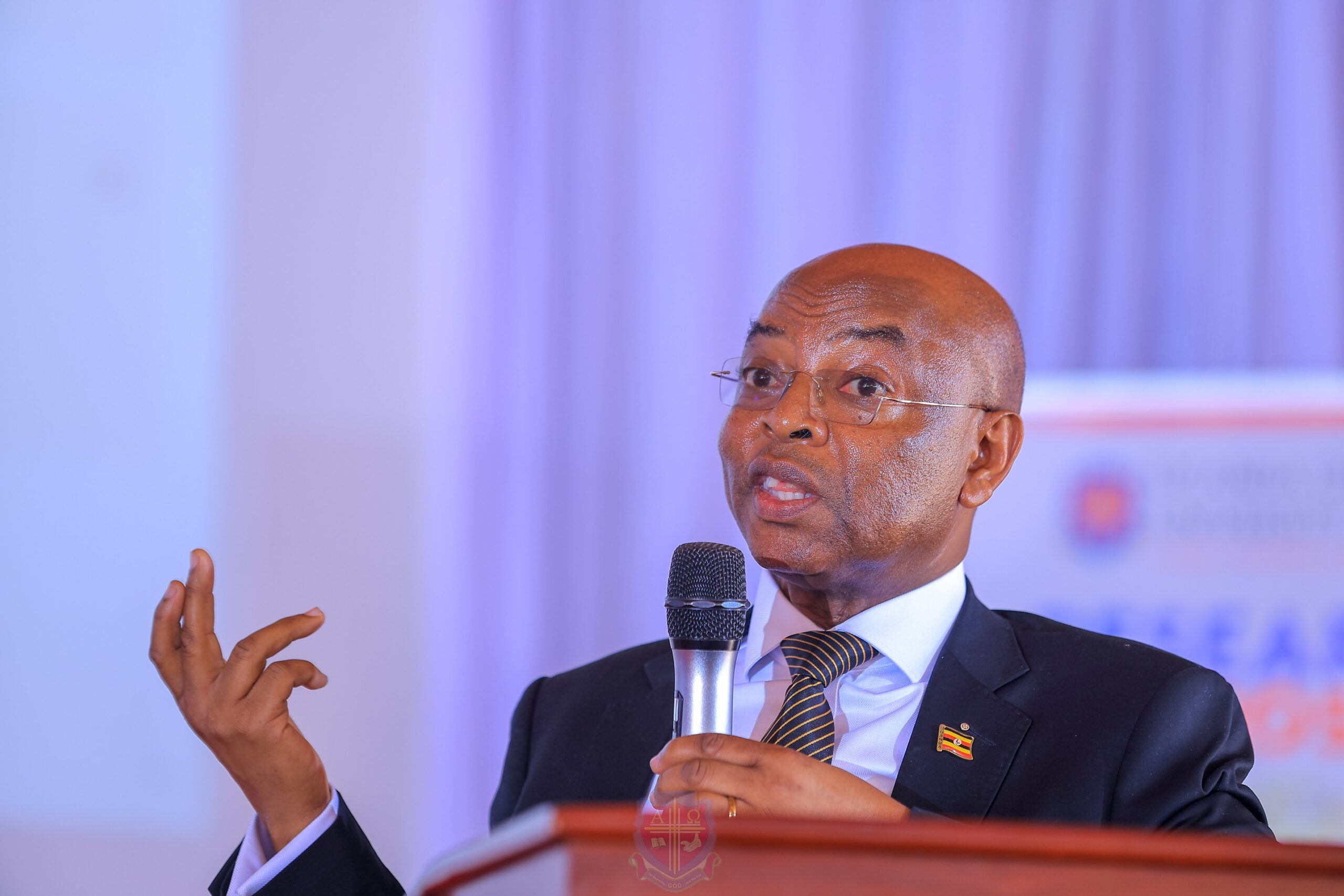
Speaking at the Annual Financial Inclusion and Financial Literacy Forum 2026 at Four Points by Sheraton Hotel in Kampala last Thursday, Deputy Governor Prof. Augustus Nuwagaba warned that high access numbers mask low product usage.
Although the 2023 FinScope Uganda Survey put overall financial inclusion at 81%, driven largely by mobile money and agent banking, Prof. Nuwagaba noted that most Ugandans only use accounts to receive and withdraw cash.
“Financial services may be available, but they are often too costly, difficult to understand, or inadequately tailored to customers’ needs,” he said, pointing to low uptake in savings, insurance, pensions, and investments.
Prof. Nuwagaba said women, youth, rural dwellers, refugees, and persons with disabilities remain underserved, while rising fraud and weak complaint-resolution systems threaten public trust.
To support the government’s Ten-Fold Growth Strategy, the Deputy Governor urged lenders to redesign products for Ugandans with small, irregular, or seasonal incomes rather than designing exclusively for salaried workers. He challenged institutions to use business records and customer data to assess borrowers lacking conventional collateral, and to align loan repayments with agricultural seasons.
On technology, he backed the responsible adoption of artificial intelligence and Open Banking to cut costs, but cautioned against digital tools that compromise data privacy or exclude citizens without smartphones and reliable internet.
He also called for practical financial literacy delivered at critical life stages, such as when farmers take loans or workers earn their first salary, judged by behavioral change rather than workshop attendance.
The forum, organised by BOU and the finance ministry under the National Financial Inclusion Strategy II (NFIS-II), aims to establish up to five actionable industry commitments. Meanwhile, BOU is set to host an upcoming East African Community technical meeting on financial inclusion, ahead of hosting the African Financial Inclusion Policy Initiative conference in 2029.