








By Leonard Kamugisha Akida
KAMPALA
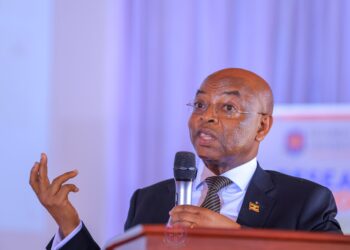
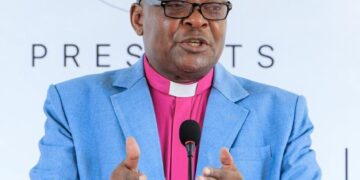
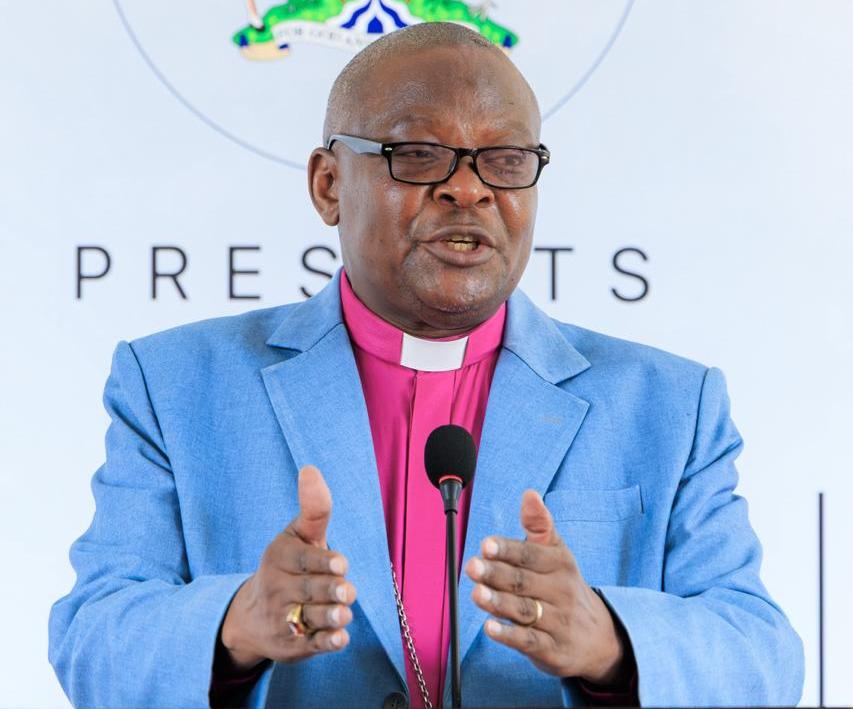
The Bishop of Central Busoga Diocese, the Rt Rev Patrick Wakula, has urged Christians to value everyday life as a miracle from God, calling on religious leaders to prioritise preaching salvation over prophecies and claims of supernatural healing.
Wakula said personal faith, commitment and God’s grace were central to the Christian life, arguing that miracles should not be judged solely by dramatic healings or people recovering from disabilities.
“The greatest miracle is life itself, to be able to wake up and move. That should be the biggest miracle, other than the miracles we think of,” he said.
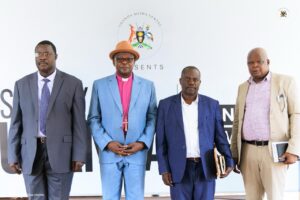
The bishop was responding to a question from a Parrots Media reporter about public criticism of religious leaders’ ability to perform miracles. He was speaking at a press conference at the Uganda Media Centre in Kampala on Thursday to announce preparations for this year’s Bishop Hannington Day commemoration in Mayuge district.
Wakula’s remarks come amid public debate over faith healing and the commercialisation of religion, following outspoken social commentator Frank Gashumba’s challenge to pastors who claim supernatural healing powers to demonstrate them under verifiable conditions.
Gashumba offered a cash reward, initially Shs200m and later increased to Shs500m, challenging pastors to enter a hospital intensive care unit and heal critically ill patients. His remarks attracted criticism from several religious leaders, including Miracle Centre Cathedral pastor Robert Kayanja, who publicly condemned him.
Wakula said neither religious leaders nor bishops had the power to perform miracles at will, adding that the final authority rested with God.
“Even as a bishop, I have no power over a miracle. It is only the word I utter, but the prerogative belongs to God,” he said.
He added that Christians should recognise the many blessings they often take for granted, including the ability to speak, walk, sleep and digest food.
The bishop also cautioned Christians against living double lives, appearing holy during Sunday services while pursuing questionable conduct during the rest of the week.
He called on church leaders to strengthen their preaching of the gospel of salvation and encourage believers to cultivate a personal relationship with God.
“Can we really preach the gospel of salvation? Can we have the engagement the way James Hannington had?” he asked.
Hannington Day and national unity
The press conference also highlighted preparations for the fifth Bishop Hannington Day commemoration, scheduled for October 29 at Kyando Hill in Mayuge district.
This year’s theme is “Anchored in Christ for Unity, Peace, and Stability.”
Joel Wanjala, the undersecretary in the Directorate of Ethics and Integrity, said the commemoration recognised the sacrifice that contributed to the growth of Christianity in Uganda.
“His death, his blood became the blood of faith and a catalyst for the persecution of Christians that paved the way for the Ugandan martyrs in 1885 and 1886,” Wanjala said.
He urged Ugandans to promote reconciliation, peace and unity regardless of their religious affiliations.
“If we want to build a stable and prosperous nation, then we all have to change,” he said.
Paul Isiko, the chairperson of the local organising committee, said preparations included a medical camp, evangelisation missions, film screenings, door-to-door outreach and agricultural demonstrations.
The medical camp is scheduled for October 26 and 27, alongside spiritual activities intended to serve pilgrims and residents.
Isiko said the organisers were working with the National Agricultural Research Organisation to give participants an opportunity to learn about improved agricultural practices.
He also appealed to government institutions, church leaders and other stakeholders to mobilise people to attend the commemoration.
President Yoweri Museveni is expected to be the chief guest, while the Archbishop of the Church of Uganda, the Most Rev Dr Stephen Kazimba Mugalu, is expected to lead the celebrations as the main celebrant.
Memorial site targets religious tourism
Both Bishop Wakula and Wanjala said the government and the Church of Uganda were working towards developing Kyando Hill into an international religious tourism destination.
Wanjala disclosed that President Museveni and Cabinet had approved the proposal and that a committee had been constituted to oversee the development.
He added that improvements had been made to access roads leading to the site, including the upgrading of the Mayuge-Kyando road.
He said attendance had grown from about 2,000 pilgrims in 2023 and 2024 to more than 10,000 in 2025, with organisers expecting further growth this year.
The Church is also working with Uganda Christian University in Mukono to document Hannington’s life and preserve the historical significance of the site for future generations.
Wanjala said visitors could see places associated with the bishop’s final days, including a cave, a well and sites connected to his imprisonment and death.
Who was Bishop Hannington?
Bishop James Hannington was born in England in 1847 and was sent by the Anglican Church in 1884 as missionary bishop of Eastern Equatorial Africa.
While travelling towards Uganda, he was apprehended by emissaries of Kabaka Mwanga II and subjected to brutal treatment. He was killed on October 29, 1885, at present-day Kyando in Bukatuube, Mayuge district.
His reported final words were: “Go tell your master that I have purchased the road to Uganda with my blood.”
His death became an important part of the history of Anglican Christianity in Uganda. His body was later buried at Namirembe Cathedral grounds in Kampala.
Every October 29, pilgrims gather at Kyando Hill to remember his death and reflect on the role of faith, sacrifice and Christian evangelisation in Uganda’s history.