












By Shallon Nagasha
OpEd
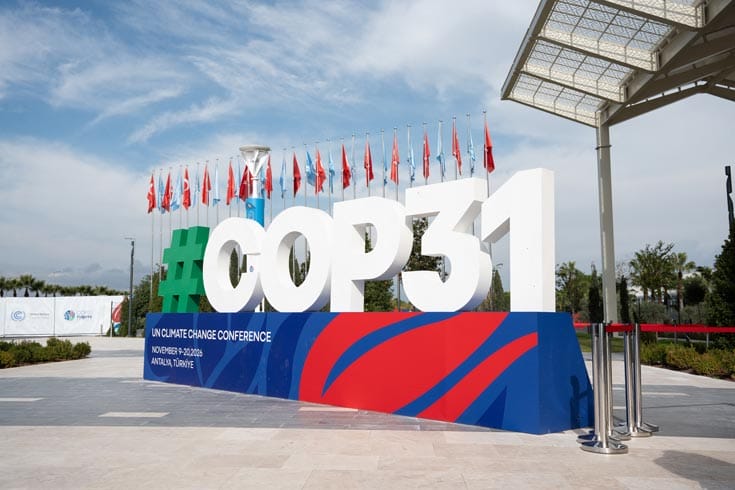
The conclusion of COP31 in Antalya, Türkiye, on 22 November 2026, has left the global climate movement with difficult questions. After two weeks of negotiations and extended discussions, countries failed to reach consensus on an overarching climate agreement. At the centre of the disagreement was the question that the world can no longer afford to avoid: what is the future of fossil fuels?
For many climate activists, particularly those working with communities already experiencing the consequences of climate change, this outcome is more than a diplomatic disappointment. It raises concerns about the willingness of governments to confront the industries and economic interests responsible for driving the climate crisis. How can the world talk about limiting global warming while struggling to agree on even mentioning a transition away from coal, oil and gas?
COP31 has exposed a significant weakness in international climate negotiations. Despite previous commitments, including the agreement reached at COP28 to transition away from fossil fuels, political disagreements continue to stand in the way of meaningful collective action. The failure to adopt the proposed Antalya Pact demonstrates how difficult it remains to translate climate commitments into stronger international political decisions.
However, we must be careful not to interpret the failure of COP31 as the failure of the entire climate movement. The absence of an overarching agreement does not erase previous commitments, the Paris Agreement or the responsibility of governments to protect their populations from climate-related harm.
The question is no longer whether we should continue fighting, but whether we are prepared to change how we fight.
Fossil fuels: The struggle cannot end in negotiation rooms
One of the most important lessons from COP31 is that the fossil fuel question cannot continue to be treated as an issue that can be postponed from one conference to another. Oil, gas and coal remain central to the climate crisis, yet the political and economic interests surrounding their production continue to complicate international action.
For climate activists, this means moving beyond simply demanding that governments recognise the dangers of fossil fuels. We must increasingly demand concrete measures that prevent further dependence on them.
Our strategies must include monitoring government investment decisions, questioning new fossil fuel developments, demanding transparency in licensing and production agreements, and holding both governments and corporations accountable for the environmental and social consequences of their activities.
In countries such as Uganda, where oil and gas developments are closely connected to questions of economic development, livelihoods, land rights and environmental protection, this conversation is particularly important. The transition away from fossil fuels must not be presented as an abstract international ambition. It must be connected to the realities of communities whose land, water, livelihoods and futures are affected by energy decisions.
The climate movement must therefore strengthen its engagement with communities, particularly women, young people, Indigenous Peoples and other marginalised groups who often carry disproportionate consequences of extractive activities.
What becomes of climate activists after COP31?
Perhaps one of the most difficult questions following COP31 is what happens to those who have spent years organising, mobilising communities, attending international negotiations, writing policy briefs and demanding climate justice.
Do we continue attending COP meetings and making the same demands? Do we return home and wait for another international conference? Or do we rethink our approach?
Climate activism cannot be dependent on the success or failure of annual climate conferences. Our work must continue before, during and long after these meetings.
First, we must strengthen grassroots movements. Communities should not only be invited to share their experiences at international conferences; they must be supported to influence decisions within their own countries. Community organising, awareness, legal empowerment and public participation should become central to our strategies.
Second, we must strengthen accountability mechanisms. Climate commitments must be followed by scrutiny of national policies, public budgets, energy investments and development plans. Civil society organisations should be asking governments difficult but necessary questions: Where is the money going? What energy projects are being prioritised? Are communities being consulted? What measures are protecting people whose livelihoods are affected by the transition?
Third, climate activism must increasingly use legal and human rights approaches. Where communities experience displacement, environmental degradation, inadequate consultation or violations of their rights, there must be deliberate efforts to document these experiences and pursue appropriate accountability mechanisms. Climate justice is not only about reducing emissions; it is also about protecting people’s rights and ensuring that those responsible are held accountable.
Finally, activists must strengthen solidarity across borders. The challenges facing communities in Uganda are connected to wider global questions about energy production, corporate responsibility, climate finance and the unequal distribution of climate impacts. Stronger regional and international networks can help ensure that the voices of affected communities are not isolated.
Africa must not be left with the burden of a transition it did not create
COP31 also brings back an important question for African countries: what does a just energy transition actually mean for our continent?
Africa contributes a relatively small share of historical global greenhouse gas emissions, yet many African communities face severe climate impacts, including droughts, floods, food insecurity and the loss of livelihoods.
The continent also faces significant development and energy access challenges. Therefore, the conversation about moving away from fossil fuels must recognise the need for affordable and reliable energy, economic opportunities, industrial development and access to climate finance.
A just transition cannot simply mean telling African countries to abandon fossil fuels without providing the necessary financial, technological and institutional support to develop alternative energy systems.
For Uganda, this calls for stronger investment in renewable energy, particularly solar, hydropower and other sustainable energy solutions, alongside deliberate support for clean cooking, energy access and community-led energy initiatives.
It also requires government to be transparent about the long-term economic, environmental and social implications of fossil fuel investments. The transition must create opportunities for communities, workers, women and young people rather than deepen existing inequalities.
African governments and civil society must therefore move beyond being participants in international climate discussions to becoming stronger contributors to the decisions shaping the continent’s energy future.
From COP31 to COP32: What must change?
With COP32 expected to take place in Addis Ababa, Ethiopia, the African continent has an important opportunity to shape the next chapter of international climate negotiations.
But Africa should not wait until COP32 to begin preparing its demands.
The period between COP31 and COP32 must become a period of deliberate action. African climate organisations, activists, researchers, policymakers and affected communities should use this time to develop clear and coordinated positions on fossil fuel production, renewable energy investment, climate finance, adaptation and just transition.
We need to ask for more than promises. We need measurable commitments, clear implementation timelines, transparent financing arrangements and mechanisms for holding governments and corporations accountable.
There must also be stronger African solidarity on the question of fossil fuels. While countries may have different economic interests and development priorities, the continent needs a common understanding of what a fair, inclusive and adequately financed energy transition should look like.
For organisations working on gender and climate justice, this is also an opportunity to ensure that women are not left out of energy decisions. Women’s participation must extend beyond being beneficiaries of climate programmes to having meaningful influence over energy policies, climate financing and decisions affecting their livelihoods.
The next phase of climate activism must be different
COP31 should challenge us to reconsider whether our strategies are producing the change we want to see. Attending conferences, issuing statements and making declarations remain important, but they cannot be the only measures of progress.
We must become more deliberate about connecting international advocacy to national policy change and community-level action.
We must invest in evidence-based advocacy, strengthen partnerships, support community-led campaigns, pursue strategic litigation where appropriate, monitor public expenditure and demand accountability from those making decisions about our energy future.
We must also recognise that the fossil fuel struggle is connected to other struggles: women’s rights, land rights, food security, water access, economic justice and human rights. These issues cannot be addressed in isolation.
For climate activists, the challenge is not simply to keep the movement alive. It is to ensure that the movement remains relevant, organised, strategic and accountable to the communities it represents.
COP31 may have failed to deliver an agreement, but our responsibility remains.
The climate crisis does not pause because governments cannot agree. Communities continue to experience its effects, ecosystems remain under pressure, and decisions about fossil fuel investments continue to shape our collective future.
We cannot afford to spend another year waiting for governments to find consensus while the consequences of climate change become increasingly visible.
As we look towards COP32 in Addis Ababa, we must carry forward a stronger message: Africa needs a just energy transition, communities deserve protection, women must have a voice in energy decisions, and climate commitments must translate into action.
The future of the climate movement will not be determined by what happens inside conference halls alone. It will also be determined by what we do when we return home, the communities we organise, the policies we challenge, the evidence we produce and the accountability we demand.
COP31 has reminded us that global consensus cannot be taken for granted. But climate justice must never become negotiable.