












By Hakim Owiny,
OPINION
For decades, Africa has operated within a global system that rewarded moral appeals, development narratives, and conformity. While this system was imperfect, it allowed African states to rely heavily on external guarantees, aid flows, diplomatic protection, and institutional support. That era is gradually closing. Today the global powers are explicit about their interests, selective in their commitments, and transactional in their engagement. This is the global order’s structural shift, a paradox in which decisions that make sense for each state, when taken together, defy reason, destabilize the world, and undo the very structures we spent decades constructing.
A transactional global order does not mean Africa is doomed. It means Africa can no longer afford assumptions that aid will come, that security partnerships are unconditional, or that global institutions will shield weak states from the consequences of poor governance. In such a world, Africa’s challenge is not external hostility, but internal unpreparedness. Countries that lack policy coherence, institutional capacity, and social cohesion are exposed. Those that cultivate strategic clarity and internal legitimacy gain leverage, even in unequal systems.
The critical lessons of a transactional world are, no external actor will prioritize African stability more than Africans themselves, please Note that. Global powers engage globally economic weak states not to fix them, but to manage risk threatening interests around strategic resources extraction. This is not exploitation, it is strictly business. Anyone will protect his or her business interest at any cost when threatened. I see this pattern of human behaviour repeating itself across different contexts and at every scale. Stability that depends on external interests is inherently fragile, because interests are not fixed, they shift with circumstances, power, and advantage.
Real stability comes from within. It is built when political systems are inclusive enough to give citizens a stake in the state, when territorial political and economic decisions, intentionally willing to create opportunity for young people, and when institutions are strong enough to function beyond electoral cycles and individual leaders. When these pillars are absent in governance structure, instability becomes a bargaining chip for powerful external factors. Africa we must recognize that good governance is no longer a moral conversation, it is a strategic intent.
Fron now going forward, security, stability and prosperity is not going to be driven by sympathy, but by value. Countries are increasingly judged by what they contribute, not by what they lack. Africa’s continued dependence on raw material exports and primary commodities weakens its bargaining position and leaves it exposed to global shocks. The path to sustainable prosperity lies in human skill development, value addition, industrial capability, regional markets, integrated supply chains, and innovation.
Africa’s minerals, energy resources, land, and biodiversity are strategic assets, but without domestic conservation value, and capability to translate minerals and energy resources into industrial advantages to build the economy, these assets will continue to enrich others more than Africans themselves. The question is no longer how much aid Africa receives, but how much value Africa creates and retains. This will help shape rethinking about sovereignty. Many African states assert sovereignty loudly in political terms while remaining economically dependent and institutionally fragile.
In today’s world, sovereignty is not only about slogans, and political utterances. It is about the ability to negotiate, to say no, and to set national priorities with confidence. Strategic sovereignty requires economic diversification. Africa does not need to choose between global powers. It needs to choose African interests consistently and intelligently. A transactional world rewards societies that can think critically, adapt quickly, and innovate restlessly.
This places a new responsibility on the entire African education system. We must move beyond memorizing information through repetition, without necessarily understanding the underlying concepts. Universities must move beyond just awarding degrees to become places where strategic thinking is developed, civic responsibility is nurtured, and future leaders are shaped. Africa’s youth should be prepared not only to look for jobs, but to design and improve the systems around them. Without this shift, Africa risks perpetuating eras of dependency in all aspects of their existence, that is not strength. That represents a strategic vulnerability, limiting Africa’s capacity to respond, negotiate, and lead in her affairs.
The rise of transactional global politics is not an indictment of Africa. It is an invitation to strategic maturity. It challenges African People and all their civilisations to confront long standing weaknesses, abandon outdated assumptions that aid will come, and organize themselves with clarity and purpose. Africa’s future stability and prosperity will not be determined in Washington, Beijing, or Brussels. It will be determined by Africans.
About the author
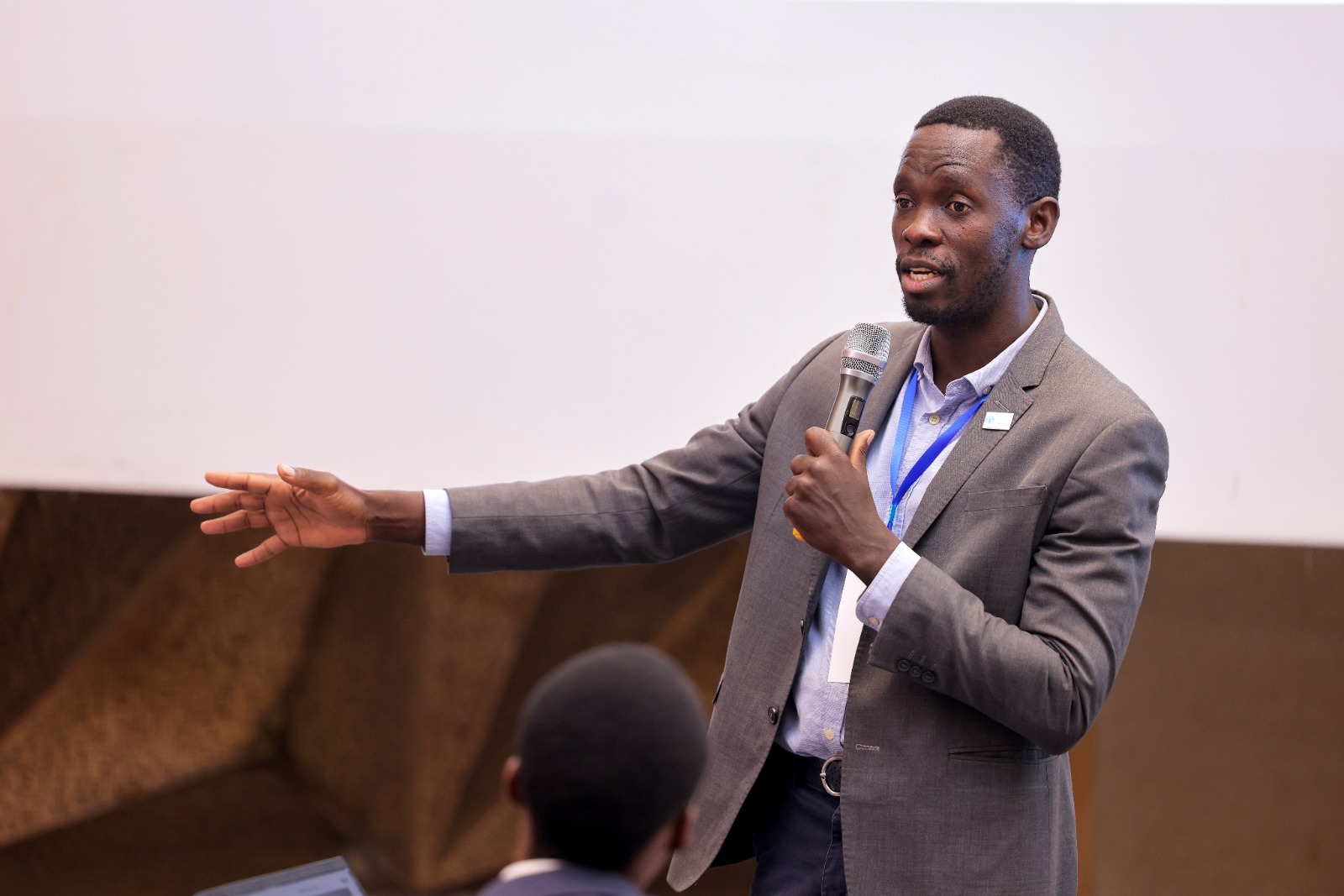
The Writer, Hakim Owiny is a Governance and Community Systems Strategist and a Mandela Washington Fellow (2022).
His work focuses on strengthening governance frameworks, advancing community led development, and promoting inclusive, sustainable solutions across urban and rural contexts.
He is also the founder of EduCycling, with the Mission to promote early childhood literacy for children aged 5–10 across Africa, and is actively engaged in policy advocacy, civic engagement, and systems thinking to advance social, economic, and environmental transformation in Uganda and the wider region.