












LIBYA
Saif al-Islam Gaddafi, the 53-year-old son of Libya’s former leader Muammar Gaddafi, has reportedly died, according to announcements from his political team and family members. His sister told Libyan television that he passed away near the Algerian border, though details surrounding the circumstances remain unclear. Different versions of events are circulating in Libyan media, leaving questions about how he died unanswered.
Once regarded as his father’s likely successor, Saif al-Islam was a central figure in Libya’s political landscape for decades. Born in 1972, he became a prominent voice in the country’s outreach to Western governments during the early 2000s, helping negotiate agreements that led to Libya’s abandonment of its nuclear weapons program and the lifting of international sanctions.
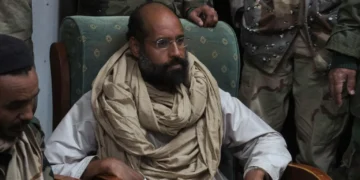
Following the 2011 uprising that toppled and killed Muammar Gaddafi, Saif al-Islam’s influence took a darker turn. He was accused of orchestrating violent crackdowns on anti-government protests and was later detained by a militia in Zintan, where he spent nearly six years in captivity. The International Criminal Court sought to prosecute him for crimes against humanity, while a Libyan court sentenced him to death in absentia in 2015.
Despite his controversial past, Saif al-Islam remained a significant figure in Libyan politics. In 2021, he announced his intention to run for president, though elections were postponed indefinitely. Throughout his career, he insisted he had no desire to inherit power, famously remarking that Libya was “not a farm to inherit.”
His reported death marks the end of a turbulent chapter in Libya’s modern history. Revered by some as a reformist and reviled by others as a symbol of repression, Saif al-Islam Gaddafi’s legacy reflects the contradictions of a nation still grappling with the aftermath of his father’s rule.
Source: BBC