














JINJA
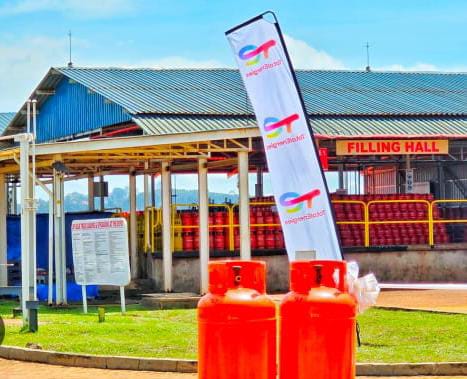
TotalEnergies Marketing Uganda Limited has officially commissioned its newly revamped Liquefied Petroleum Gas (LPG) Filling and Storage Plant in Jinja, marking a significant milestone in the country’s transition toward cleaner, safer, and more sustainable energy solutions.
The upgraded plant, first constructed in 2016 and fully operational by December 2025, now boasts state-of-the-art, fully automated technology designed to ensure precision in cylinder filling, tamper-proof sealing, and zero leakage. With a storage capacity of 140 tons of marketable gas and a daily output of up to 50 tons of filled cylinders, the facility represents a major leap in efficiency and reliability compared to its earlier 30-ton daily capacity.
Operations Manager Jese Egesa emphasized that the five-acre site also allows room for future expansion, ensuring scalability as demand for LPG grows across Uganda.
Speaking at the commissioning, Mr. Olufemi Babajide, Managing Director of TotalEnergies Marketing Uganda, highlighted the company’s “Pioneering Spirit” and long-term commitment to Uganda’s energy priorities.
“This refurbished plant re-affirms our commitment to lead the delivery of quality, reliable, clean energy to all Ugandans,” Babajide said, stressing the importance of safety, efficiency, and environmental stewardship.
Ms. Biova Agbokou, Executive Vice President for East and Central Africa, linked the Jinja facility to TotalEnergies’ global ambition of providing 100 million people in Africa and India access to clean cooking by 2030. She underscored LPG’s role in reducing health risks from charcoal and firewood, cutting carbon emissions, and saving households valuable time.
Chief Guest Amb. Steven Kaboyo praised the plant as a reflection of Uganda’s sustainability journey, aligning with national adaptation strategies to embrace cleaner energy.
Meanwhile, Ben Kagonyera, Business Development Manager at the Uganda National Oil Company (UNOC), described the commissioning as “timely and necessary,” noting LPG’s critical role in advancing clean cooking solutions. He also pointed to future synergies between oil production and domestic gas supply:
“Gas production will begin simultaneously with oil production. This presents a valuable opportunity for Uganda to supply locally produced gas to its citizens,” Kagonyera said.
The revamped Jinja LPG plant is more than an industrial upgrade, it is a symbol of Uganda’s energy transformation. By expanding access to clean cooking solutions, reducing reliance on biomass, and preparing for locally produced gas, the facility strengthens Uganda’s energy ecosystem while contributing to global climate goals.