








By Leonard Kamugisha Akida,
KAMPALA
A new mobile application designed to eliminate long-standing communication barriers for Deaf Ugandans has been launched, offering 24/7 video-relay interpretation, district-based interpreter booking, AI captioning, sign-language learning resources and a community forum.
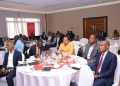
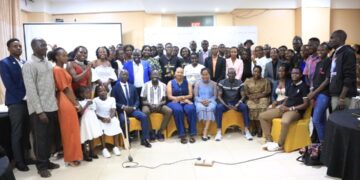
The Deaf Assist Mobile App (Version 1.0) was unveiled during the Sign Language for All (SLFA) Annual Silent Dinner held at Eureka Hotel in Ntinda on Sunday, December 7.
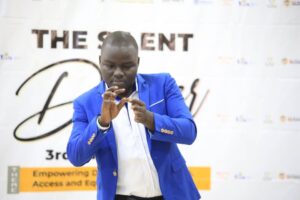
Speaking at the dinner, Alex Ogwal, the founder of SLFA said the innovation seeks to end what he called “systemic barriers disguised as logistical challenges” in access to information and other services for the deaf people in the country.
“These are not inconveniences. They are violations of basic human rights,” Ogwal said. “A Deaf child pays school fees and then pays again for an interpreter who may or may not show up. A Deaf woman reports abuse at a police station but leaves without being understood because no officer knows even the sign for “help” […] A Deaf patient receives treatment while the doctor speaks to the wall because there is no one to bridge the gap – and then gets handed a bill that includes the interpreter she had to hire herself.”
He warned that with the 2026 elections drawing closer, lack of access to information could expose the Deaf community to even deeper exclusion, echoing the difficulties experienced during the Covid-19 lockdown.
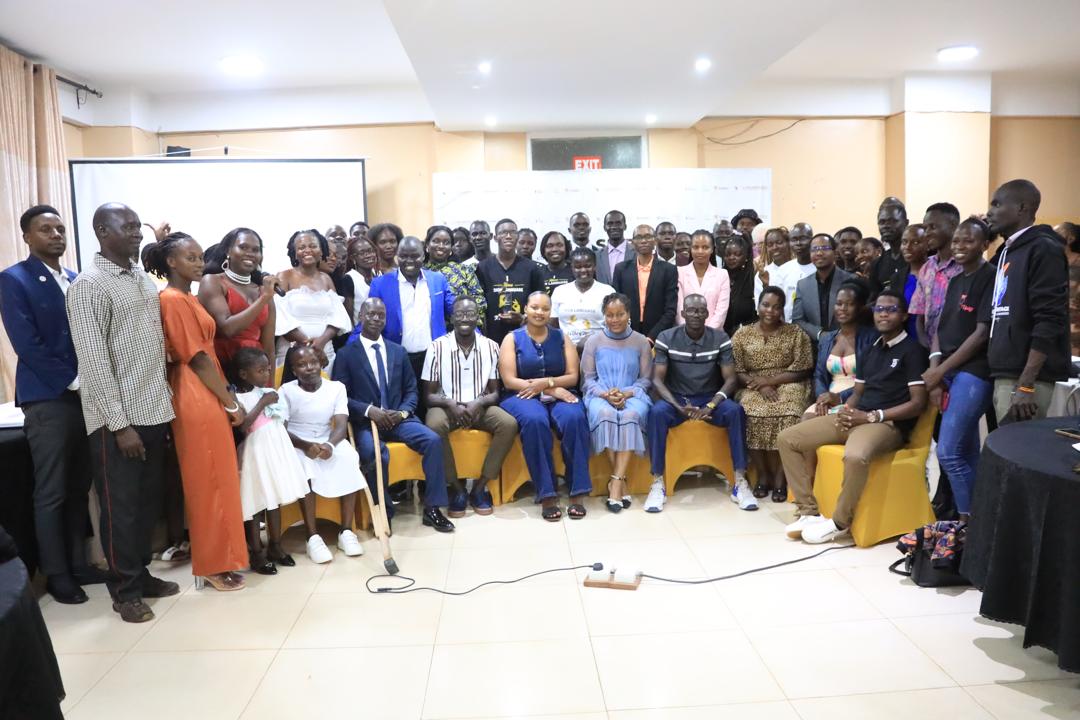
The event, now in its third edition, attracted 70 participants including 25 Deaf persons, health workers, police officers, educationists, CEOs, disability-inclusion advocates and sign-language interpreters.
While sharing his journey of resilience, Ogwal outlined some of the milestones achieved through Sign Language for All in the last three years. They include:
• Training of more than 350 hearing Ugandans in Ugandan Sign Language, Deaf advocacy and inclusion.
• Equipping over 700 health workers and nursing students with basic health-sign-language skills in institutions such as Lacor Hospital and Florence Nightingale School of Nursing and Midwifery.
• Formation of Talking Hands Football Club, integrating Deaf and hearing players.
• Deployment of the Deaf Assist App, described as “a pocket interpreter that turns smartphones into bridges instead of barriers.”
• Publication of the Beginner’s Sign Language for Inclusive Communication handbook, featuring 13 topics including the “oil-water model” explaining Deaf–hearing social dynamics.
• Implementation of the FACES Project, training 300 medical workers in health-sign-language skills with support from US Mission Uganda and Lancet Laboratories.
• Consistent advocacy, mentorship in Deaf schools, song translations, sign-language debates and creation of a YouTube channel promoting Deaf inclusion.
“Showing up is not the same as being heard,” Ogwal said. “A seat at the table means nothing if you are still expected to stay quiet.”
He appealed to organisations to adopt the new Inclusive and Accessible Communication (IAC) Package, which offers corporate interpretation support, staff sign-language training, content translation, onboarding to the Deaf Assist platform and recommendations of qualified Deaf professionals.
Additionally, the deaf Community urged donors, partners and the public to support their inclusion efforts through partnerships, financial contributions and advocacy.
“One day I want a Deaf child to grow up believing the world was waiting for her voice—not begging to finally be heard,” he said.
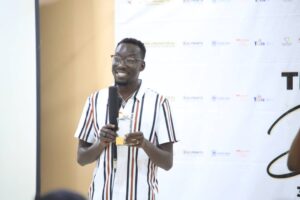
Pamoja Foundation Executive Director Bruce Musimenta commended SLFA for a great innovation saying the the Mobile app do not only reflect the organisation’s mission but also provides inclusion and safe space for sign language.
“Uganda cannot talk about transformation when millions are left out of conversations, services and opportunities simply because the country has not invested enough in accessibility,” Musimenta posted on his official X platform, formerly Twitter after the dinner. “Inclusion is not an event, it is an obligation.”
He expressed the Foundation’s commitment to continue championing accessibility and supporting young innovators, advancing justice and equality.
The Silent Dinner, built around communicating without speech, symbolised the communication barriers Deaf Ugandans face daily and the urgent need for accessible systems in schools, hospitals, police stations and workplaces. The event, now in its third edition, attracted 70 participants including 25 Deaf persons, health workers, police officers, educationists, CEOs, disability-inclusion advocates and sign-language interpreters. It was organized under the theme: “Empowering Deaf Voices: Innovation, Access, Equality.”
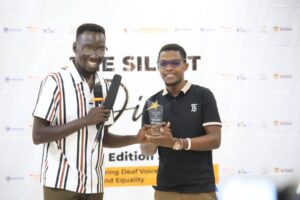
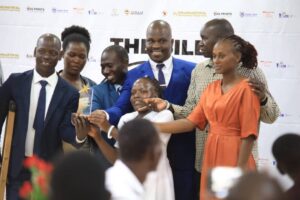
During the dinner, participants were presented awards for their outstanding roles in promoting and advocating for Sign Language in Uganda. Moris Okabo was awarded as the most outstanding sign language instructor, Isaac Muhumuza was awarded as the most outstanding Deaf Male Advocate 2025, while Kalangala Sign Language Centre was recognized as the best outstanding centre, among other winners. The awards were presented to winners by the Chief Guest, Abel Odeke, Executive Director of Equal Aqua Uganda.