






By Leonard Kamugisha Akida,
NATIONAL
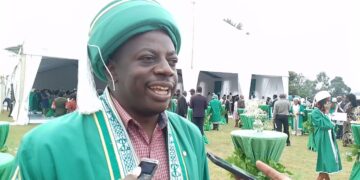
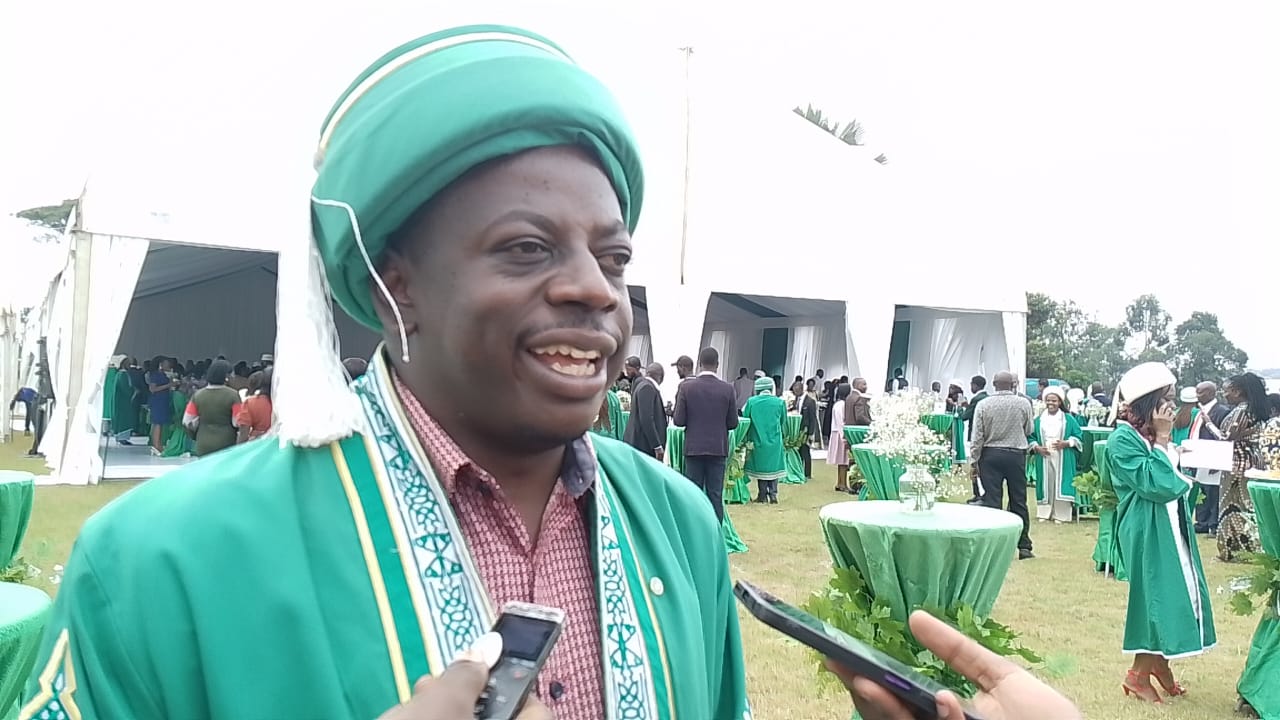
When Gilbert Biryahwaho walked across the stage at Aga Khan University’s first convocation in Uganda on 7 February, the moment marked more than academic success. For the visually impaired teacher from Kabale District, earning a Master of Education degree was the culmination of years of survival, sacrifice and determination.
His journey, he says, has been shaped by loss, resilience and an unwavering belief that disability should never define a person’s potential.
“I came to understand that being disabled should not put me down,” Biryahwaho says. “It should be an opportunity for me to thrive, provided I stay strong and seek support where I need it.”
A life-altering accident
Biryahwaho was not born blind. He lost his sight in 2010 after surviving a severe motor accident while pursuing a diploma in teaching. At the time, he was working as a primary school teacher and nearing completion of his studies.
The accident left him with serious head injuries that required brain surgery to remove blood clots. The recovery was long and painful, and forced him to abandon his studies.
“I could not proceed with my diploma,” he recalls. “I had to go back and start learning the basics again, including braille. It was my only option to survive academically.”
Determined to rebuild his life, Biryahwaho enrolled at Hornby High School Junior in Kabale to learn braille and adapt to life without sight. What began as necessity soon became mastery.
His academic path took a new direction. Unable to continue studying mathematics in its previous form, he shifted to Special Needs Education, enrolling for a diploma and later a bachelor’s degree in the same field at Kyambogo University. Still seeking career growth and professional recognition, he pushed further, enrolling for a master’s degree.
A costly road to education
The pursuit of higher education came with steep financial challenges. Biryahwaho says tuition and related expenses totalled nearly 15 million Ugandan shillings, a burden that strained his family finances. Thanks to the scholarship offer by ministry of education (Uganda) which supported him.
Travel also proved difficult. During his studies, he had to travel long distances by bus, including a journey from his home to Dar es Salaam, because he could not afford air travel. The long and difficult journey contributed to serious health complications.
“From home to Dar es Salaam it is Shs600,000. I had to move at every end of the session from home to Dar es Salaam, I could not afford a flight, so I had to move by bus,” he narrated.
In December 2024, he underwent another major surgery for intestinal complications, a procedure he says nearly cost him his life and drained his remaining financial resources.
“It almost took my life and took away much of my money,” he says quietly. “But I kept pushing forward.”
Teaching with purpose
Today, Biryahwaho teaches at an inclusive primary school where he specialises in braille and mathematics for visually impaired learners. His work is driven by personal experience — and a desire to ensure his students face fewer barriers than he did.
“Come Tuesday (February 10), I must be back in class,” he says with a smile. “The learners are waiting for me.”
Beyond the classroom, he hopes the new qualification will open doors to better employment opportunities, allowing him to support his family.
“I am praying for any opportunity for me to get a fairer job because of the financial need. As I told you about my family, I would be grateful because I am able to do any other assignments besides even being in class,” he said.
A father of four; two daughters and twin boys, Biryahwaho is also married to his one wife, Sarah Biryahwaho who she met after blindness. He says their future remains his greatest motivation.
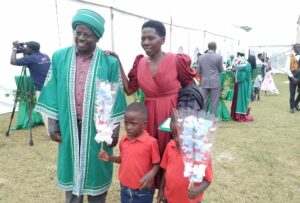
“I struggle for my children so they can have better education and a better future,” he explains. “They should not be defined as children of a disabled parent.”
Advocating for inclusion
Biryahwaho is also a passionate advocate for greater awareness and support for people with visual impairments in Uganda. He says misconceptions remain widespread, particularly about the ability of blind people to read and write.
He praises efforts such as the Bible Society of Uganda’s work in producing braille Bibles, but believes much more public education is needed.
“People do not know that visually impaired persons can read and write in their own language,” he says. “It is mostly ignorance.”
He is calling on the government to invest more in digital literacy and assistive technology for visually impaired learners.
At his school, he says, efforts to introduce computer training were halted after thieves broke into the computer laboratory and stole essential equipment. In July 2024, thieves broke into Hornby High School Junior in Kabale Town and stole 19 computers and magnifying glasses worth 295m, leaving visually impaired learners without essential learning tools. Nearly two years later, no efforts have been made to replace the stolen equipment.
“Digital skills are critical today,” Biryahwaho says. “Without them, learners with visual impairment are left behind.”
A message of resilience
Despite the hardships, Biryahwaho remains optimistic, and uses his story to encourage others living with disabilities.
“To the disability fraternity, I say disability is not inability,” he says. “If we work with our peers and the community understands our challenges, we can succeed.”
For him, graduating with a master’s degree is not the end of a journey, but the beginning of a new chapter, one where he hopes to shape Uganda’s inclusive education system and inspire others to push beyond their limitations.
“God has been faithful to me,” he says. “I lost my sight, but I never lost my vision.”
Biryahwaho’s journey is one of resilience, determination, and inspiration. Despite the challenges posed by visual impairment, he has successfully completed his Master’s in Education at Aga Khan University Uganda, proving that obstacles can be overcome with courage and support.