









BONDO
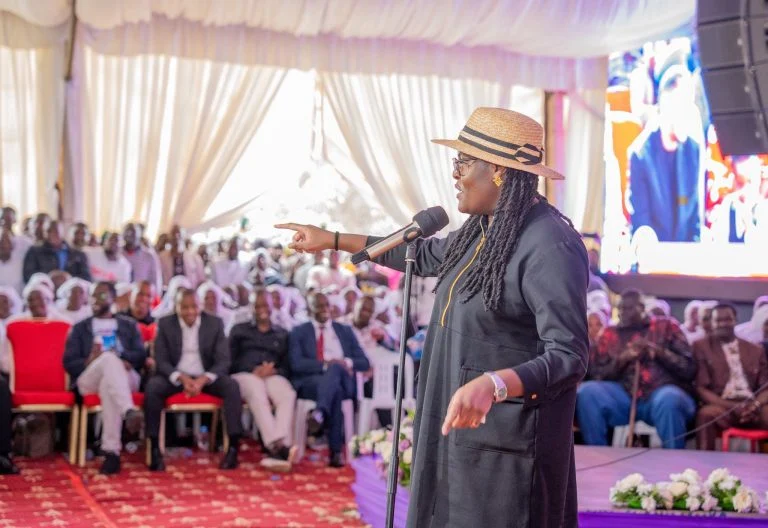
For Winnie Odinga, Bondo is still a place she cannot bring herself to return to.
Months after the burial of her father, former Prime Minister Raila Odinga, Winnie says she has never gone back to the family’s rural home in Siaya County.
The reason, she revealed, is the weight of memories surrounding her father’s final journey and burial.
Speaking about her grief following Raila’s death, Winnie said returning to Bondo remained difficult as the family continued to come to terms with the loss of a man who was both a national political figure and a father.
Raila died in October 2025 while receiving medical treatment in India. His death brought Kenya to a standstill, with political leaders, supporters and ordinary citizens gathering across the country to mourn the veteran opposition leader.
His body was later taken to Bondo, where he was buried at his rural home in a ceremony attended by family members, political leaders and thousands of mourners.
But while the country saw the farewell of a towering political figure, the Odinga family was dealing with the loss of a father, relative and family patriarch.
Winnie said the pain had been profound and remained difficult to process.
She described Raila as more than the political leader known to millions of Kenyans, saying his presence had shaped the lives of his children and relatives.
Her comments offer a rare glimpse into the private grief experienced by the family months after the public mourning that accompanied Raila’s death.
Raila, who served as Prime Minister between 2008 and 2013, was one of Kenya’s most influential political figures. He contested the presidency several times and remained a central player in the country’s opposition politics for decades.
He also played a significant role in Kenya’s democratic and constitutional reform journey.
His death marked the end of a political career that had spanned several decades and left a lasting imprint on Kenya’s political landscape.
Since his burial, leaders and supporters have continued to invoke his legacy, while political discussions have increasingly focused on the future of the movement he led.
For Winnie, however, the loss remains deeply personal.
Her inability to return to Bondo underscores the difference between the public mourning of a national icon and the private grief of a daughter who lost her father.