











By Leonard Kamugisha Akida
NATIONAL
The opposition Forum for Democratic Change (FDC) has opposed government plans to grant the Uganda Revenue Authority (URA) access to individual and business bank accounts, warning that the proposal threatens financial privacy and could undermine public confidence in the banking sector.
The party has also questioned the legality of URA’s access to national identification records, demanding that the tax body and the National Identification and Registration Authority (NIRA) explain the legal basis for sharing citizens’ personal information.
The concerns follow remarks by State Minister for Finance Amos Lugolobi in Parliament last week that government would proceed with the proposal to allow URA access to bank account information.
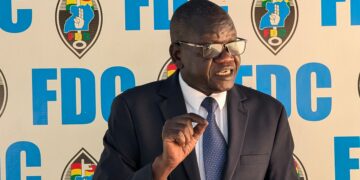
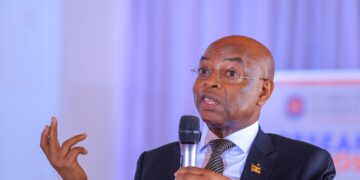
Speaking on the matter, FDC Vice Chairperson for Western Uganda, Franco Robert Centenary said although the party supported tax collection, it opposed what he described as government’s attempt to intrude into citizens’ private financial affairs.
“We appreciate the taxes which enable government to run, but we reject this proposal,” Centenary said.
According to him, money deposited in bank accounts may come from different sources, not all of which are related to business activities.
The party cited a 2023 Constitutional Court ruling against blanket demands for information on bank account holders, arguing that tax collection should not override the constitutional right to privacy.
FDC warned that the proposed measures could discourage Ugandans from keeping their money in banks, potentially reducing deposits available for lending to businesses and individuals.
It argued that declining public confidence in financial institutions could hurt traders, farmers and salaried workers who depend on credit.
The opposition party also questioned how URA obtained citizens’ national identification numbers and whether NIRA had the legal authority to share the records without their consent.
It alleged that URA had been linking national identification numbers (NINs) to tax identification numbers (TINs), with some citizens reportedly facing restrictions on accessing services if they failed to update their details.
FDC demanded that URA and NIRA publicly disclose the legal basis for sharing the information, the specific data exchanged, who can access it and the safeguards in place to protect it.
The party further called for an independent investigation into access to national identification data, citing concerns about fraudsters who allegedly contact citizens using their personal information.
It urged the Personal Data Protection Office to audit access to NIN records and report its findings to Parliament and the public.
The party also criticised government expenditure and the high cost of living, arguing that wasteful spending and economic hardships undermine citizens’ willingness to pay taxes voluntarily.
Among its demands, FDC called on government to withdraw the proposal, protect financial privacy in law and ensure that access to bank records requires the account holder’s consent or a court order based on specified grounds.
“Paying taxes is the duty of all citizens, but privacy is a right,” the party said, pledging to oppose the proposal in Parliament and, if necessary, in court.
FDC called on legislators, lawyers, banks and the public to reject the proposed measures.
Meanwhile, the party also opposed the directive by the central bank to set cash withdrawal limits on individual and business accounts held with supervised financial institutions.
The Bank of Uganda (BoU) in a notice issued on June 4, 2026, said it would introduce daily and weekly limits on over-the-counter cash withdrawals from January 1, 2027. According to the bank, the move is aimed at promoting digital payments.
Under the new guidelines, individual account holders will be allowed to withdraw up to Shs50m daily and Shs250m weekly, while corporate and business accounts will be subject to a daily limit of Shs500m and a weekly cap of Shs2.5b.
Centenary said the guidelines affect operations of businesses in the country, especially those that use more than the limit set by the bank such as the coffee farmers.