












By Hellen Tusiime
KAMPALA
Teacher shortages are stretching staff in some government schools within and around Kampala, leaving teachers to handle large classes, heavier workloads and less time to give individual learners attention.
At Makerere College School, the shortage of government teachers has prompted the school to hire additional teachers to cope with its large student population.
Speaking with the Deputy Headteacher Makerere College School, Samson Kajjiri said that the school has about 2,040 students, served by 89 government teachers and 69 hired teachers.
He added that the number of government teachers was inadequate for the school’s population, with some streams having about 100 students, while the A-Level section has about 600 students.
“The number of government teachers is not enough for our student population,” Kajjiri said.
The shortage has also made assessment difficult, particularly under the new curriculum, which requires group work and practical activities. The large number of learners also limits teacher-student contact and makes discipline management difficult.

“Assessment becomes difficult because the new curriculum requires us to assess learners through groups and practical activities,” Kajjiri said.
“Sometimes it is difficult for a teacher to give every learner the attention they need,” he added.
The school has responded by hiring 69 teachers, but this comes at a cost because their salaries are not paid by the Government which puts the school in a lot of expenditures.
He said the school had also raised the staffing concern with the Ministry of Education and Sports, but responses had taken time.
Patrick Aimusi, Biology teacher from s.1-6 at Makerere college school said the teacher shortage has increased teachers’ workload, particularly in marking because teachers are always expected to mark papers within three days which becomes too difficult for them, assessment and classroom management.
“The workload is high, especially when it comes to marking and assessment,” Aimusi said.
He added that teachers sometimes struggle to give timely feedback to learners because of the number of students they handle.
To cope with the pressure, teachers use information and communication technology, group work and the students’ council to support classroom management.
The teacher shortage is also affecting learners in different ways at a larger extent,
Speaking with a Senior Four student Praise Rugyendo who is also a student at the same school, he said teachers sometimes arrive late for lessons because they are attending to another class. Coming late makes students not to acquire enough knowledge from the teachers because they attend to them for few hours.
“Sometimes teachers come late because they are teaching another class,” Praise said.
He added that learners also miss some lessons and receive limited guidance, no enough interaction with the teacher and sometimes leads to students’ failure and indiscipline because of the teachers’ workload.
“Large classes also make it difficult for students to concentrate,” Praise said.
At Kasubi Family Primary School in Rubaga Division, the staffing challenge is also being felt by both students and teachers.
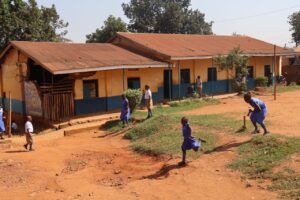
Speaking with the headeacher Headteacher Florence Mabaale said about 14 teachers serve approximately 700 pupils, putting pressure on the available staff.
She said the school needs more teachers to reduce the workload and improve the attention given to individual pupils.
“When teachers are few, the workload becomes heavy and it becomes difficult to give every learner the attention they need,” Mabaale said.
Primary Five teacher Agnes Nakiwala said large classes make it difficult to identify pupils who need additional academic support which ends up leading to poor performance among students because you can’t reach out every pupil to know where he or she didn’t understand.
“Sometimes you have many pupils who need help at the same time, so it is difficult to attend to everyone individually,” she said.
Science teacher Isaac Ssozi at the same school also said recruiting more teachers would reduce the workload and improve classroom management because being few teachers force them to have few classes congested with many learners.
“Few teachers force school to have few classrooms congested with many leaners
Primary Seven pupil Robert Musinguzi said pupils sometimes have to wait for assistance when several learners need help from the teacher and at the and of the day, they end up not getting any assistance because of being too many which ends up into poor performance
“Sometimes you want to ask the teacher something, but there are many other pupils also asking questions,” Robert said.
The staffing challenge comes as Kasubi Family Primary School undergoes redevelopment aimed at improving its learning environment. Teachers, however, say improved infrastructure also needs to be matched with adequate staffing.
The issue also extends to areas around Kampala.
At Queen’s Secondary School in Nansana, Wakiso District, teacher Gerald Aine said the school has more than 1,000 students and about 35 teachers, placing additional pressure on the existing staff.
Aine said teachers have to balance teaching large classes with lesson preparation, marking and supporting individual learners.
“The workload has increased considerably. Teachers have to handle large numbers of learners,” he said.
Large classes, he said, make it harder to identify individual learning difficulties and provide learners with adequate attention.
The situation can be particularly challenging during practical lessons and other activities that require close supervision.
Government response
The shortage of teachers in government schools is not limited to individual classrooms, but is also linked to recruitment, deployment and the availability of teaching positions.
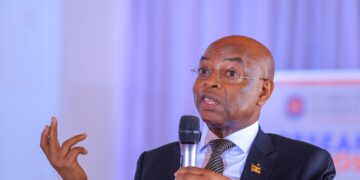
Speaking with the state minister for education, Hon. Dr john Chrysostom Muyingo said government is undertaking reforms aimed at improving the development and management of teachers.
He added that the reforms are intended to improve the quality of teaching and address challenges affecting the teaching profession.
“The reforms are intended to improve the quality of teaching and address challenges affecting the teaching profession” Muyingo said
The ministry of education has also continued recruitment processes for education positions serving government schools, including schools under KCCA.
However, the experiences reported by teachers and learners in the schools visited show that staffing gaps can increase workloads and reduce the time available for individual learner support.
Background
Makerere College School is one of Makerere University’s demonstration schools under the School of Education. The university says the school offers secondary education and is used in the preparation of teachers.
Kampala and neighbouring districts continue to experience pressure on education services as schools serve large numbers of learners. While government recruitment and deployment remain important in addressing staffing gaps, schools also face the challenge of ensuring that available
He said staffing gaps can also require teachers to teach outside their areas of specialisation, while continuing with their normal responsibilities.
For government schools within and around Kampala, teachers and learners say adequate staffing is necessary alongside classrooms and other infrastructure to improve teaching, classroom management and individual learner support.