













By Doreen Asasira,
OPINION
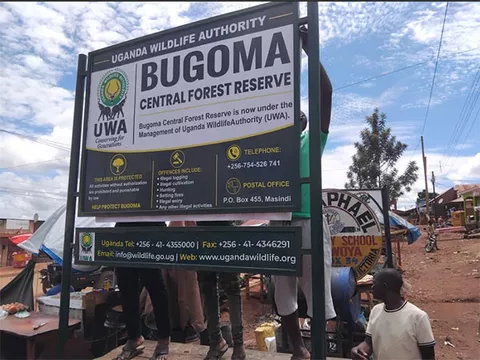
The decision by government to hand over management of Bugoma Central Forest Reserve to the Uganda Wildlife Authority (UWA) has rekindled hope among conservationists, communities, and all Ugandans who have watched the steady destruction of one of the country’s most important tropical forests with deep concern. After years of controversy, conflict, and environmental degradation, Bugoma has been given another opportunity to survive. But this second chance will mean little unless government and all stakeholders act decisively to address the unresolved challenges that continue to threaten the forest.
For years, Bugoma Forest has suffered relentless pressure from sugarcane expansion, land grabbing, illegal logging, charcoal burning, and weak enforcement of environmental laws. The destruction sparked national and international outrage because Bugoma is far more than a forest reserve. It is a critical biodiversity hotspot that supports chimpanzees, birds, rivers, tourism potential, rainfall formation, and the livelihoods of surrounding communities.
The recent transfer of the forest to UWA management can be seen as an acknowledgment that earlier management systems failed to adequately protect the forest. Yet the handover alone will not solve the deep-rooted governance failures that enabled destruction in the first place.
One of the most worrying issues remains the uncertainty surrounding the official boundaries of the forest. The absence of publicly accessible cadastral maps showing Bugoma’s original boundaries has created loopholes that encroachers and land grabbers can exploit to claim protected land. Without transparency and clear land governance systems, conservation efforts will remain vulnerable to manipulation and conflict.
Equally concerning is the failure to publicly release reports from previous government boundary-opening exercises conducted to clarify the forest’s limits. Transparency is essential if Ugandans are to trust that conservation efforts are genuine, lawful, and free from political interference. Public access to such information would strengthen accountability and reduce disputes over ownership and encroachment.
The unresolved restoration obligations of Hoima Sugar Limited also remain a major concern. Despite directives for restoration of degraded forest land, the public still lacks clear information on the extent of progress made. Environmental restoration orders should not exist only on paper. Government institutions must demonstrate that environmental laws apply equally to all actors, regardless of economic or political influence.
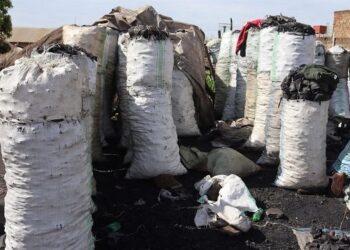
At the same time, illegal activities such as charcoal burning, logging, farming, and encroachment reportedly continue within the forest. This highlights the scale of the task now facing UWA. Effective conservation will require adequate funding, strong political backing, professional enforcement, and collaboration with local communities.
Importantly, Bugoma’s destruction has also carried painful human consequences. Environmental degradation around the forest has contributed to river pollution, population influxes, social instability, human wildlife conflicts and increased vulnerability for women and communities living near the forest. These impacts remind us that environmental destruction is never just about trees. It affects public health, livelihoods, safety, and economic wellbeing.
Uganda therefore needs a broader and more inclusive conservation strategy for Bugoma. Protecting wildlife alone is not enough. Restoration of degraded rivers, support for affected communities, gender-responsive interventions, stronger tourism development, and meaningful community participation must all become part of the conservation agenda.
That broader approach reflects the future of conservation globally. Successful conservation today depends on ensuring that local communities benefit directly from protecting natural resources. Communities surrounding Bugoma should not be viewed merely as potential encroachers; they should become active partners and beneficiaries in eco-tourism, forest restoration, and sustainable livelihood projects.
The forest also presents enormous tourism opportunities. Chimpanzee trekking activities already offer a glimpse of the economic potential Bugoma holds. With proper investment in eco-tourism, bird watching, primate tourism, cultural tourism, and community enterprises, Bugoma could become one of East Africa’s leading conservation and tourism destinations while generating jobs and income for local people.
Uganda now faces a critical test. The country can either use this moment to establish a transparent, community-centred conservation model for Bugoma, or it can allow the same failures that nearly destroyed the forest to continue under a different administrative structure.
Protecting Bugoma is not anti-development. On the contrary, sustainable conservation is itself a form of long-term development. Forests protect water sources, regulate climate, attract tourism revenue, preserve biodiversity, and sustain livelihoods for generations. Destroying them for short-term commercial gain undermines national resilience and environmental security.
Bugoma has been given a second chance. Uganda must not waste it.