










By Leonard Kamugisha Akida,
KAMPALA
National Planning Authority Executive Director Dr Joseph Muvawala has warned that mental health is no longer a peripheral health concern but a structural barrier to Uganda’s population and development agenda.
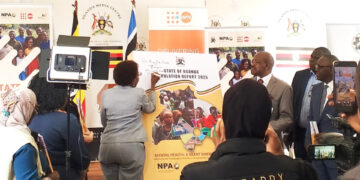
Speaking at the release of the 2025 State of Uganda Population Report in Kampala, Muvawala warned that Uganda risks psychological vulnerabilities in important sectors if rising mental health cases go unchecked.
Findings from the 2025 report show facility-reported mental health cases increased by more than 70% between 2021 and 2024. About 24% of adults and 23% of children are affected by mental health conditions, yet fewer than one in 10 Ugandans who need care receive appropriate treatment.
“This is not only a health system gap; it is a human capital risk,” Muvawala said, warning that without reform, Uganda risks embedding psychological vulnerabilities into its labour force, education outcomes and long-term growth trajectory.
He noted that the report is not a sector document but a national planning instrument intended to translate population evidence into actionable intelligence for decision-making at national and sub-national levels.
“Mental health is now a structural barrier in Uganda’s population and development equation,” he said.
Uganda’s population stands at about 45.9 million people, growing at 2.9% per annum. About half of the population is under the age of 18, while 57% falls within the working-age bracket.
Citing the 2024 census data, which indicates that half of the youth are neither in employment nor education, Muvawala warned that the youthful population structure presents both an opportunity and a risk.
“The youth structure presents a dividend. But it also presents pressure if not well handled,” he noted.
Data further reveals that 33.1% of households remain in subsistence livelihoods. In addition, 12% of persons aged 10 years and above experience probable psychological distress. Muvawala attributed the trend to rapid population growth, unemployment, urban pressures, substance misuse and social vulnerability.
“These are not isolated statistics. They form a pattern,” he said
He proposed five structural shifts, including moving from reactive treatment to prevention, integrating mental health into primary health care, decentralising early detection through village health teams, utilising digital platforms for screening and counselling, and strengthening integrated data systems.
“Mental health is no longer a silent variable in Uganda’s population story. It is now a defining determinant of whether our demographic transition translates into prosperity or pressure,” he said.
Butabika overwhelmed
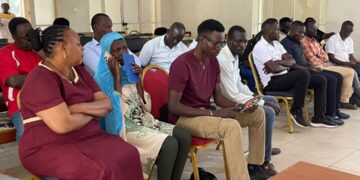
Dr Juliet Nakku, Executive Director of Butabika Hospital, described mental health as a “silent emergency” and said the findings of the report reflect realities on the ground.
“We are witnessing an ever-increasing number of patients seeking mental health services,” she said, adding that the national referral hospital is operating beyond capacity.
“Honourable Minister, Butabika as we speak is full beyond the brim,” Nakku said, noting that while increased demand may reflect reduced stigma and improved awareness, it also poses serious challenges to service quality.
She called for expansion of mental health infrastructure, establishment of mental health units in regional referral hospitals and increased investment in alcohol and drug rehabilitation services.
Nakku also decried the shortage of specialised mental health professionals, saying Butabika has less than half the psychiatrists required to manage its patient load. She urged Government to provide wage allocations to recruit psychiatrists, psychologists, counsellors and social workers at regional, district and primary health care levels.
“Mental health commodities are often at the bottom of the priority list, leading to frequent stock-outs, especially outside Kampala,” she said, appealing to the Ministry of Finance for additional funding.
She further called for mainstreaming mental health across sectors, including education, labour and local government, and establishment of a formal multi-sectoral coordination mechanism.
“Mental health is not just a medical responsibility. It is a shared responsibility,” she emphasised.
Mental health key to human capital – UNFPA
United Nations Population Fund Representative in Uganda Kristine Blokhus said mental health must be understood not only as a clinical issue but also as a driver of economic productivity and national competitiveness.
“As Uganda advances its human capital development agenda under Vision 2040 and NDP4, mental health needs to be understood as central to development,” she said.
Blokhus warned that untreated mental health conditions weaken educational outcomes, labour participation and household resilience, undermining the country’s ability to harness the demographic dividend.
She highlighted the link between mental health, sexual and reproductive health, and gender-based violence. According to the report, 54% of married women aged 15–49 have experienced physical, sexual or emotional violence by a partner, while 17% of women report experiencing sexual violence.
“These experiences lead to a complex array of mental health consequences, compounded by stigma and lack of support,” she said.
Blokhus noted that maternal health challenges, teenage pregnancy and child marriage also heighten risks of depression, social isolation and economic vulnerability.
“Strengthening sexual and reproductive health services is not just about safeguarding rights. It is a crucial intervention for improving mental health outcomes and Uganda’s development prospects,” she added.
She reaffirmed UNFPA’s commitment to supporting Government efforts to integrate mental health and reproductive health services as part of inclusive development and human capital advancement.
The minister of health, Dr. Jane Ruth Acheng acknowledged that mental health is both social and economic burden, noting that the government is committed to a comprehensive paradigm shift towards integrated, community-based health services aligned with the NDPIV and primary health care priorities.
“Integrating mental health into adolescent health, maternal health, and post-gender-based violence care is therefore not optional, it is essential,” Acheng said.
“We will embed mental health into nationwide primary health care through standardized screening, treatment, and referral programs. always. We will also empower the village health teams and community health extension workers as the front line for early identification and follow-up. We will expand the workforce.”
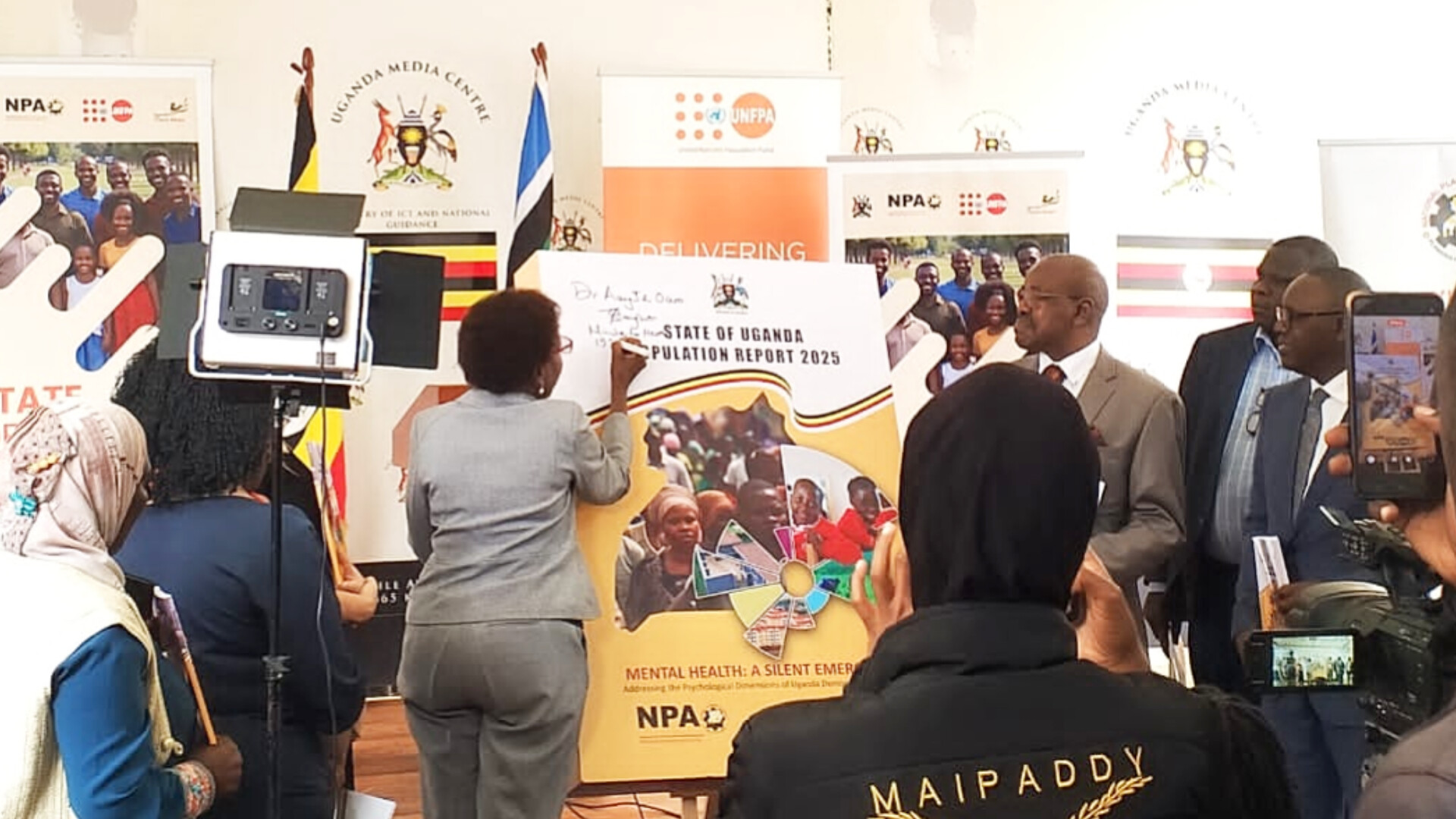
The 2025 State of Uganda Population Report calls for increased financing, coordinated multi-sectoral action and integration of mental health into national development planning to safeguard Uganda’s demographic dividend.