










By Shallon Ainembabazi
Op_Ed
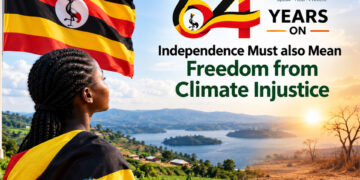
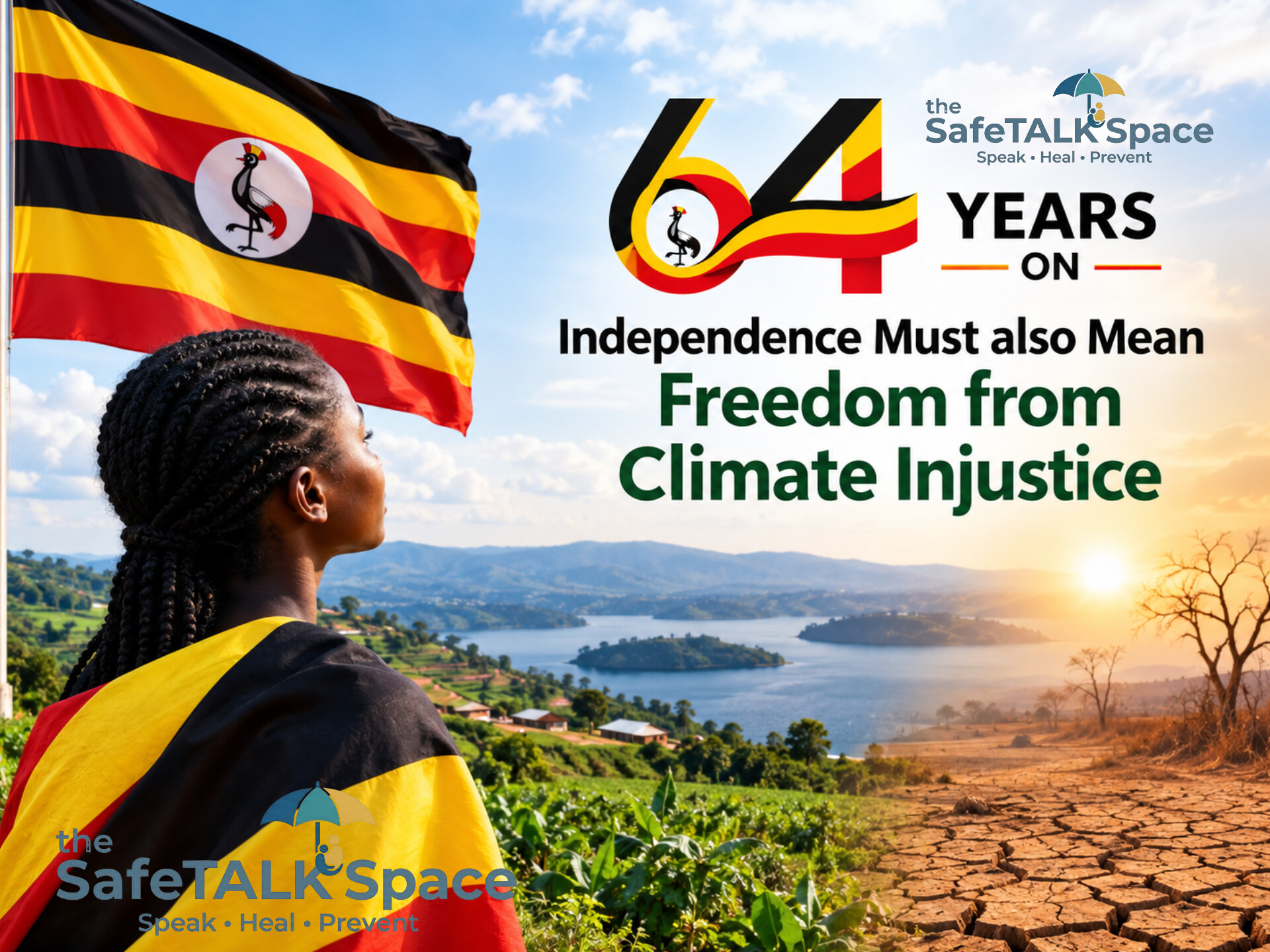
As Uganda marks 64 years of independence, we will celebrate the courage of those who fought for our freedom and reflect on how far the country has come since 1962. But as we raise our flags and celebrate our national identity, we must also ask ourselves a difficult question what does independence mean to a woman in rural Uganda whose crops have dried up, whose family struggles to put food on the table and who walks long distances every day in search of water and firewood? What does freedom mean to a woman whose workload increases every time the rains fail whose livelihood depends on an unpredictable climate and whose voice is still missing from many decisions about land, energy, natural resources and development? These are the everyday realities of many Ugandan women and girls and they remind us that political independence alone is not enough if millions of citizens remain trapped in social, economic and environmental inequalities.
For many women particularly those in rural and low-income communities the climate crisis is already a lived reality. Droughts and unreliable rainfall are affecting crops reducing household incomes and worsening food insecurity. When water sources dry up, it is often women and girls who travel farther and spend more time searching for water. When firewood becomes scarce, women may have to walk longer distances to meet household energy needs, sometimes exposing themselves to harassment and other risks. When harvests fail women are often the ones expected to find alternative ways of feeding their families while continuing to carry the responsibility of cooking, cleaning, caring for children and supporting other family members. The climate crisis is therefore not gender-neutral. It is deepening inequalities that women have carried for generations while much of this unpaid care and survival work remains invisible in our economic calculations and development plans.
Yet women should not only be described as victims of the climate crisis. Across Uganda, women are already leading solutions. They are planting trees, promoting clean cooking, managing waste, developing small businesses, protecting community resources and sharing knowledge about sustainable livelihoods. Women are often the first to understand when a water source is disappearing, when crops are no longer performing as they used to or when the cost of household energy becomes unbearable. Their knowledge is therefore not something to be consulted only after policies have been designed. It must be at the centre of climate planning and decision-making. If Uganda is serious about building resilient communities women must have access to climate finance, land, technology, skills, markets and sustainable livelihood opportunities. Women-led and community-led solutions must receive the resources they deserve rather than expecting communities to continue surviving climate shocks with limited support.
As we look towards Uganda’s future, our development choices must also become more just and feminist. A just transition should not simply mean changing technologies or investing in new energy systems; it must ask who benefits, who participates and who carries the costs. Uganda needs development that creates decent green jobs, expands access to affordable and clean energy, protects communities and ecosystems, and provides opportunities for women and young people. We must also recognize that investing in water systems, clean cooking, childcare and other services that reduce unpaid care work is part of building climate resilience. A woman who spends hours searching for water or firewood has less time for education, income generation, leadership and participation in public life. Reducing these burdens is therefore not charity it is an investment in equality and national development.
Uganda’s 64th Independence anniversary should therefore be more than a celebration of the past. It should be a moment to redefine what freedom means in a country facing climate and economic challenges. Independence must mean that rural women have the resources and power to shape their futures that girls can remain in school despite climate and economic pressure that communities have access to safe water, clean energy and sustainable livelihoods and that women are present and heard wherever decisions about climate, land, energy and natural resources are made. Government, civil society, development partners and the private sector must move beyond commitments and invest in locally led solutions, gender-responsive climate finance and women’s leadership.
A truly independent Uganda cannot leave its women carrying the heaviest burdens of a crisis they did the least to create. As we celebrate 64 years of independence let us build on the freedom won by previous generations by pursuing a future where resilience is shared, development is equitable, women’s leadership is valued and no community is left behind. Uganda’s next chapter must be a just, feminist, inclusive and sustainable one because our independence should not only be remembered in history it must be felt in the everyday lives of the women and girls who make Uganda what it is.