










By Hellen Tusiime
ENTEBBE
Nearly six decades after leaving Uganda as an nine-year-old boy, British citizen,Ugandan born, Bhupinder Singh Basson has returned to the country where his childhood began, retracing the classrooms, family home, places of worship and landscapes that remained vivid in his memory.
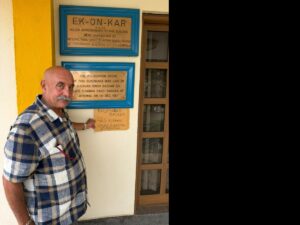
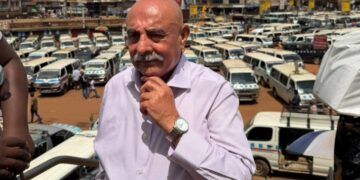
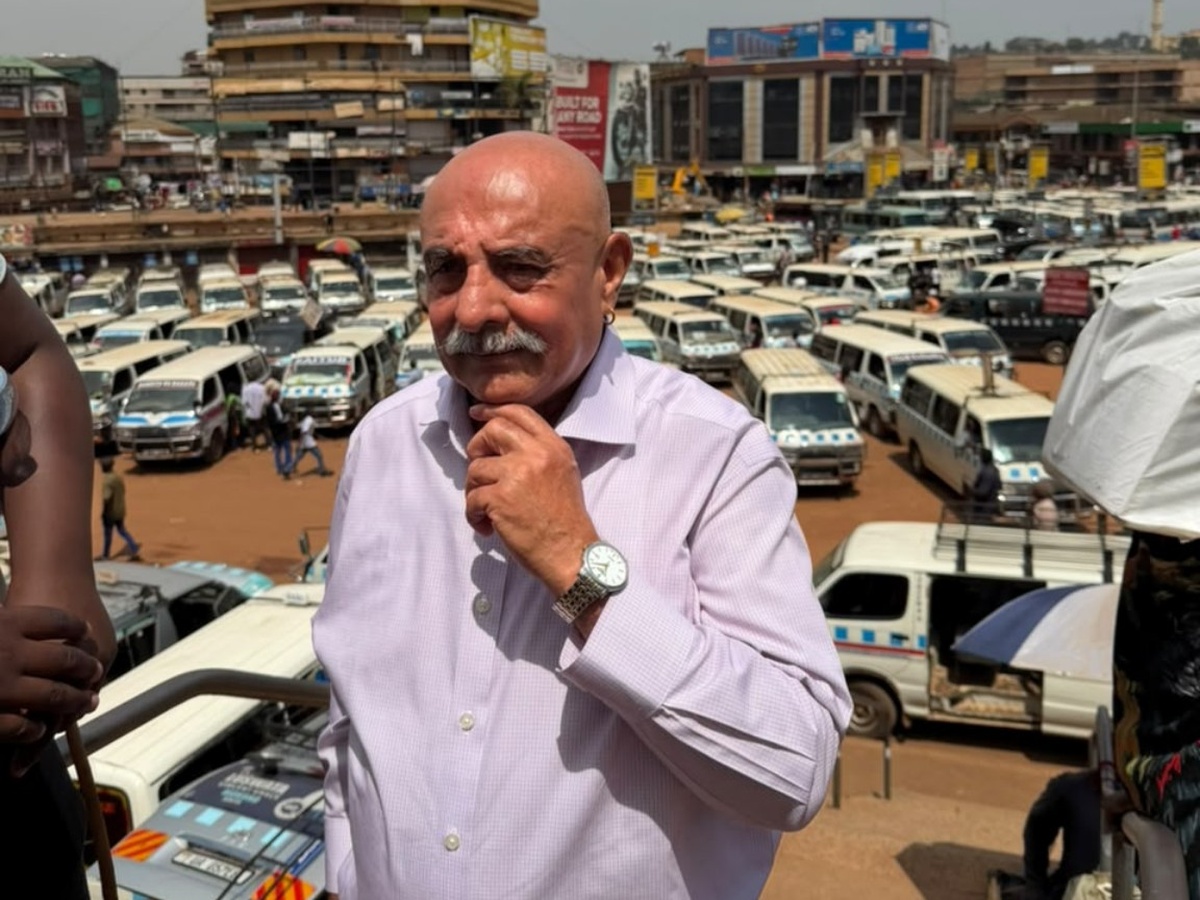
Mr .Bhupinder Singh Basson
Basson, now 68, arrived in Uganda in October with his wife, Narinder Kaur Basson, and daughter, Priya Basson, for a six-day journey that he described as much more than a holiday.It was a return to his childhood.
“I wanted to come back and see the places where I grew up, where I went to school and where my father lived,” Basson said.
Born in Uganda in 1958 to an Indian father, the late S. Kishan Singh Basson, Bhupinder spent his early childhood in Entebbe. His father worked at what was then Uganda’s Parliament House in Entebbe.
In 1967, when Bhupinder was nine years, the family left Uganda for the United Kingdom.Although he grew up in Britain and later became a British citizen, memories of Uganda remained part of his family history.
His return came against the background of a major turning point in the history of Uganda’s Asian community the 1972 expulsion of Asians under the government of Idi Amin, an event that disrupted thousands of families and communities across the country.
For Basson, however, the journey was personal he wanted to see what remained of the Uganda he had known as a child.
Finding his childhood again
One of his first emotional encounters was at the Entebbe Botanical Gardens.Walking through the gardens, Basson began recognising places from his childhood, including trees and an area he remembered as the “Tarzan Forest”.He could still identify some trees by their local names, including the Mlinga tree.With the help of a local guide.
He also traced his former school, St Theresa Primary School in Entebbe and the school was still standing.Even more remarkably, the classroom he remembered from his childhood remained part of the school.
During his first visit, the pupils were on holiday. Basson therefore promised to return when the school reopened.
“I kept that promise”, Basson said
On his fifth day in Uganda, he returned to St Theresa Primary School at about 10:00am, when pupils were at break time and introduced himself to the school administration as a former pupil.
The school allowed him into the classroom where he had studied as a child. The room is now used by Primary Six pupils.Basson sat in the same classroom where he had once sat as an eight-year-old and took photographs, recreating scenes from his childhood.
The visit took another turn when teachers invited him to speak to Primary Seven candidates preparing for their Primary Leaving Examinations.
He encouraged the pupils to remain disciplined and focused and emphasised perseverance, endurance, empathy and kindness.
“I told them that they should believe in themselves, remain focused and never give up,” he said.
Basson also expressed a desire to give back to the school that had provided his early education. He requested the school’s official bank details so that he could make a contribution.
For him, the return was therefore not only about remembering the past.It was also about giving something back.
Reconnecting with his father’s legacy
Basson’s journey also took him to Gurdwara Ramgarhia Sabha, a place closely associated with his late father.The temple was built and opened by his father in 1957, making the visit an important connection to his family’s history and Uganda’s Sikh community.Standing at the temple decades later brought back memories of his father.
He later visited Gurudwara Ramgarhia Sikh Society, where he met members of the Sikh community and was presented with framed photographs of pioneers of the society, including his father.
For Basson, the photographs offered a tangible connection to a part of his father’s life that he had left behind as a child.
Historical accounts also document the presence of Ramgarhia Sikh institutions in Entebbe and other parts of Uganda, reflecting the established Sikh community that existed in the country before the 1970s.
The house he never forgot
Another significant stop was the family’s former home.The property has since changed hands and is now occupied by PK Executive, which operates a meat grill and washing bay. However, the original house remains.
Basson arrived carrying old photographs taken at the property during his childhood, including photographs with his late father and other people who were part of the family’s life.The occupants welcomed him into the house.
Inside, he began identifying spaces from his childhood including where his bed had been, his father’s room and his brother’s room.
Although the house had changed in some respects, its structure remained familiar enough for him to recognise it.He then took new photographs in some of the same locations where the childhood photographs had been taken.
The result was a visual connection between the boy who left Uganda in the 1960s and the man who returned in 2026.
Discovering Uganda beyond Entebbe
Basson and his family also explored Kampala and other parts of the country.Their visit included the Shree Kutchi Leva Patel Hindu Temple, Old Taxi Park, sites associated with the Buganda Kingdom, the former Idi Amin-era torture chambers and a traditional bark-cloth-making experience.
They also visited a cultural centre along Buganda Road, where they bought crafts and interacted with local artists.
Basson experienced boda boda transport and explored aspects of Uganda’s cultural heritage that were either new to him or had changed considerably since his childhood.
The family later travelled to Jinja, where they visited the Uganda Railway Museum and learned about the construction of the railway and the contribution of Indian workers to its development.
They also visited the Source of the Nile, where they took a boat ride and learned about the history associated with early explorers, including John Hanning Speke.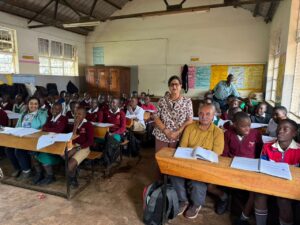
A traditional Ugandan coffee experience followed, with the family participating in roasting, weighing and grinding coffee before tasting the finished product.Impressed by the experience, they bought locally produced coffee to take back to friends in Europe.
A close encounter with Uganda’s wildlife
On another day, the family travelled to the CTC Conservation Centre in Butambala, where they encountered wildlife including lions, leopards, zebras and snakes.The experience was described by the family as a once-in-a-lifetime encounter.
They later continued to Kayabwe along the Masaka Road and visited the Equator landmark, where they received certificates and learned about the geographical relationship between the Northern and Southern Hemispheres.
A letter to Museveni
Basson’s return also prompted him to write a letter to President Yoweri Museveni.The letter, which was submitted to the Office of the President, expressed his appreciation for what he described as the restoration of peace and unity in Uganda.
He also requested an opportunity to meet the President before returning to the United Kingdom.
The request reflected another aspect of his journey: reconnecting not only with places from his childhood, but also with the country he had continued to follow from abroad.
Lake Victoria and a final farewell
On the sixth day, the family visited Coco Beach on the shores of Lake Victoria.For Basson, the lake was another link to his childhood.But after almost 60 years away, he also noticed changes to the shoreline and the development of beach establishments.
The family enjoyed swimming and a jet-ski experience before having a meal at Café Javas at Victoria Mall.
On September 18, 2026, Basson, his wife and daughter departed Uganda for the United Kingdom.
A return that went beyond tourism
Basson’s journey was different from an ordinary tourist visit because he was not simply looking for new places to see.He was looking for places he remembered.He found his former school and sat again in his childhood classroom, returned to the house where he had grown up, visited a temple connected to his father.
He also met members of the Sikh community and received photographs that connected his family to Uganda’s history.
He returned to Lake Victoria and introduced his daughter to a country she had previously known largely through his memories.
“Coming back has allowed me to reconnect with a part of my life that I left behind when I was a child,” Basson said.
His return also demonstrated how physical places can preserve personal history.A classroom, a house, trees, a place of worship and old photographs enabled a man who had been away for nearly six decades to connect his present with his childhood.
For Basson, Uganda was therefore not simply a destination revisited.It was a part of his life story that had remained with him long after he left.And when he finally returned, many of the places he remembered were still there waiting to be recognised.
Background
Uganda has a long history of Indian and Sikh communities, many of whom came to the country during the colonial period, including workers who contributed to the construction of the Uganda Railway. Over the years, the communities established businesses, schools, temples and other institutions and became part of Uganda’s social and economic life. However, their history was disrupted in 1972 when President Idi Amin ordered the expulsion of Asians from Uganda. Basson’s family had already left Uganda several years earlier, when he was eight, but the events that followed became part of the history of the community to which his family belonged. His return therefore gave him an opportunity to reconnect with both his personal childhood memories and his family’s place in Uganda’s Indian and Sikh history.