







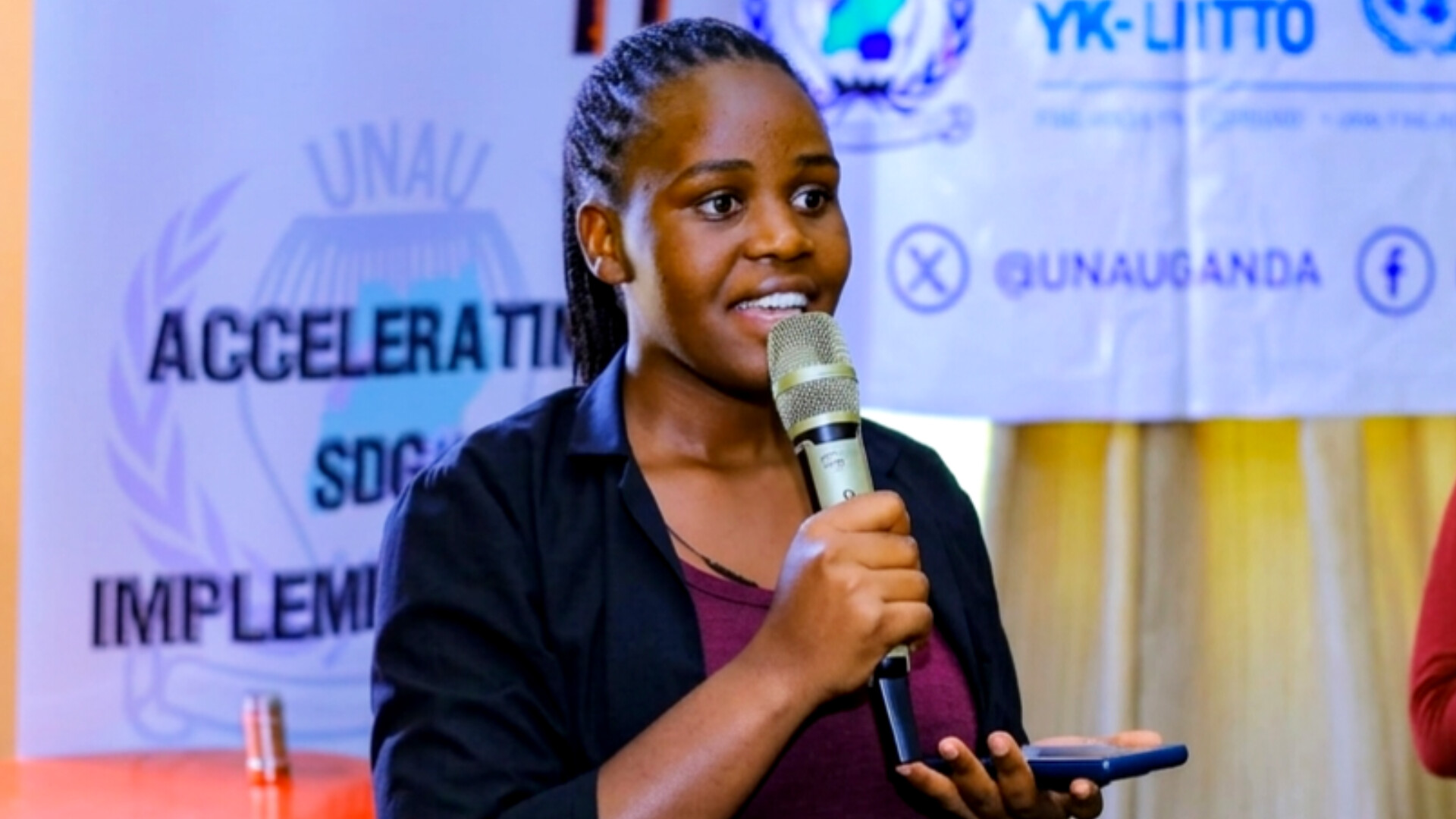
By Shallon Nagasha,
Op_Ed
There comes a time in every nation’s history when silence becomes too costly and Uganda is at such a moment.
A cross the country, conversations in homes, workplaces, universities, places of worship and on social media increasingly reflect one common concern: the state of human rights and fundamental freedoms. Reports on arbitrary arrests, excessive use of force, intimidation, unlawful detention and other alleged violations have left many Ugandans questioning whether the rights guaranteed under our constitution are being fully respected.
Regardless of our political beliefs, ethnicity, religion, age or social status, every Ugandan should be concerned whenever any person’s fundamental rights are threatened. Human rights are not reserved for those we agree with but they belong equally to those whose opinions differ from ours.
Uganda has long prided itself on having one of the most progressive constitutions in Africa. The constitution of the Republic of Uganda ,1995, guarantees the right to life, liberty, equality before the law, freedom of expression, freedom of assembly, freedom from torture and the right to fair hearing. These rights are not privileges granted at the convenience of the state; however, they are constitutional guarantees that bind every organ of government and protect every person without discrimination.
Yet recent events have once again raised profound concerns about the state of human rights, the shrinking civic space, and adherence to the rule of law. Reports of arbitrary arrests, prolonged detention, excessive use of force, alleged torture, intimidation of political actors, restrictions on peaceful assembly and suppression of dissent continue to attract national and international concern. Such developments should concern every Ugandan regardless of political affiliation because constitutional rights belong equally to all citizens.
The recent public debate surrounding political leaders and individuals who have reportedly experienced or alleged violations of their fundamental rights serves as another reminder that constitutional guarantees are only meaningful when they are respected in practice. Whether one agrees or disagrees with an individual’s political views should never determine whether they enjoy protection under the law because human rights are universal, indivisible and inalienable.
A nation grows stronger when its citizens feel safe to speak, assemble peacefully, express differing opinions and participate in public life without fear. Democracy is not measured by how loudly the majority speaks, but by how safely the minority can be heard.
Human rights are often misunderstood as obstacles to governance or security. In reality, they are very foundation of peace, stability and national unity. A society where justice prevails is one where citizens develop trust in public institutions. Conversely, when rights are perceived to be disregarded, public confidence weakens social divisions deepen and fear begins to replace hope.
Young people, who make up the majority of Uganda’s population, deserve a future where they are encouraged to participate in shaping their country’s destiny rather than fearing the consequences of expressing their views responsibly. Women deserve to live in communities where their voices are valued and protected. Journalists should be able to inform the public without intimidation. Human rights defenders should not be treated as enemies for advocating justice and accountability.
Our constitution evasions a Uganda where every person is equal before the law. That vision cannot remain confined to the pages of a legal document. It must be reflected in our daily lives, our institutions and the conduct of those entrusted with public authority.
This is not a call for confrontation. It is a call for constitutionalism, accountability and respect for human dignity. It is a call for dialogue instead of hostility, justice instead of impunity and leadership that inspires confidence rather than fear.
The responsibility to protect human rights does not belong to government alone instead it belongs to all of us. Citizens must reject violence in all forms, respect differing opinions and engage peacefully in civic life. Religious leaders, cultural institutions, civil society organizations, educators, the media and the private sector all have an important role in nurturing that values justice, tolerance and mutual respect.
Patriotism is not demonstrated by remaining silent when challenges arise instead true patriotism means loving one’s country enough to hope for better, to speak with honesty and to work towards a society where every individual is treated fairly and equally.
Uganda’s future depends not only on economic growth, infrastructure or technological advancement instead it depends on whether we remain committed to the principles that unite us as a nation: respect for human dignity, justice, equality, freedom and the rule of law.
History will remember not only the decisions made by those in positions of authority but also the voices of ordinary citizens who chose to stand for what is right. Let us therefore choose compassion over division, dialogue over hostility and justice over fear.
A Uganda where every person’s rights are respected is not only possible-it is the Uganda we all deserve.
The writer is a Legal Researcher
women For Green Eceonomy Movement (WOGEM) Uganda.