







By Grace Bariyo
Op_Ed
Every year on July 28, the world marks Nature Conservation Day, a moment set aside to recognise efforts to protect the planet’s natural resources and the people working to save them. For Uganda, the occasion carries particular weight: the wildlife that has long defined the country’s identity is increasingly under threat from its fast-growing oil industry.
Uganda is home to some of Africa’s richest biodiversity including mountain gorillas, chimpanzees, lions, elephants, hippos and rare antelope species roaming its rainforests and savannas. That natural wealth has made the country a major tourism destination. But conservationists warn it is now at risk, as oil development spreads across the Albertine Rift, one of the continent’s most sensitive ecological zones.
Since oil was discovered in the Lake Albert basin in 2006, the region has faced land grabbing, forced evictions, environmental degradation and human rights violations, according to environmental watchdog groups. Wildlife has not been spared: industrial noise, habitat loss and blocked migratory routes have disrupted animal populations across the basin.
Major projects including the Tilenga and Kingfisher oil fields and the East African Crude Oil Pipeline (EACOP) have resulted into the clearing of vegetation and destruction of wetlands to make way for wells, camps and pipelines. Drilling and transport activities threaten to contaminate the Nile and Lake Albert with toxic waste and potential spills, while chemical runoff risks poisoning aquatic life and the land animals that depend on the same water sources. Industrial noise also disrupts animals’ natural breeding patterns.
The toll is already visible in official data. According to a 2026 Uganda Wildlife Authority (UWA) report, the country’s elephant population fell from 6,621 to 6,352, while lion numbers dropped from 314 to 291.
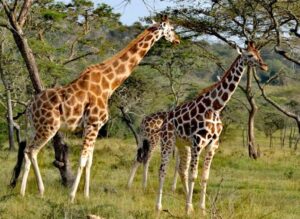
Murchison Falls National Park, once Uganda’s largest protected area, home to 144 mammal species, more than 550 bird species and dozens of reptile and amphibian species used to draw more than 50,000 tourists a year. Environmental watchdogs say the park is increasingly degraded, with fewer attractive sites left to draw visitors. Queen Elizabeth National Park faces similar pressure, with conservationists warning of disruption to critical habitats near Lake Edward, compounded by human encroachment for settlement and farming.
TotalEnergies’ Tilenga project has brought additional risks for tourism itself. Industrial noise, heavy vehicle traffic and cleared vegetation have altered the wilderness scenery that draws visitors, while pollution risks, rising accommodation and travel costs, and increased human-wildlife conflict from displaced animals add further strain.
Elsewhere, Bugoma forest reserve in Kikuube district was partly cleared for sugarcane growing despite warnings from conservationists at the time that even partial destruction of the forest would cause lasting biodiversity loss and affect water levels in the Nile. Bugoma is home to 34 animal species including an estimated 550 endangered chimpanzees and Ugandan mangabeys along with 225 bird species and 260 tree species that provided food and shelter for wildlife.
An estimated 70% of Uganda’s oil reserves in the Albertine Graben lie within protected game reserves and national parks, conservation groups say.
Tourism contributes an estimated $800 million (about 2 trillion Ugandan shillings) to Uganda’s economy each year. Experts warn that without stricter environmental oversight and wider adoption of cleaner technology and investment in sustainable sectors such as tourism and agriculture, the country’s revenue and environment will continue to face mounting risk. Therefore, we call on the government and other relevant stakeholders to ensue protected areas such as MFNP and Bugoma forest are restored, conserved and protected for future generations among others.
The writer, Grace Bariyo is a Member at Green Guardians Women and Youth Climate Defenders Association (GGWYCDA)