







By Leonard Kamugisha Akida
KAMPALA
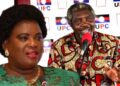
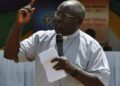
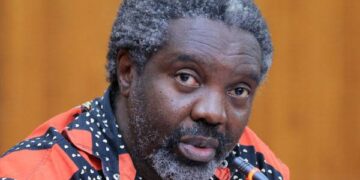
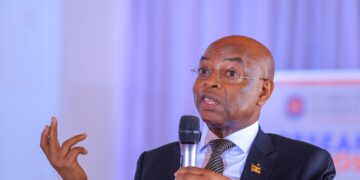
Uganda People’s Congress (UPC) president Jimmy Akena has called for a review of the country’s education system to equip learners with practical skills that can help them earn a living even when they do not complete school.
Akena said Uganda’s examination system should go beyond testing what learners remember and instead address what the country expects its young people to build, operate and contribute to after school.
He made the remarks on Wednesday during a press briefing at the UPC headquarters at Uganda House in Kampala.
The calls came shortly after the Uganda National Examinations Board (UNEB) released the 2026 examination timetables.
Akena wished candidates sitting the Primary Leaving Examination (PLE), Uganda Certificate of Education (UCE) and Uganda Advanced Certificate of Education (UACE) success, but said the examinations should prompt a wider debate on the country’s education system.
“An examination should ask a much bigger question. What are we preparing the Ugandan child for? And what are we preparing the Ugandan child to be able to build or operate?” he asked.
He said Uganda should develop an education system that provides practical skills to learners who leave school before completing the primary or secondary cycles.
“On the conveyor belt, very many of the children do not complete. I am concerned about those who don’t complete. What skills have we given them to survive?” Akena said.
He argued that a child who drops out at primary should still be able to read, write, analyse and acquire practical skills to enable them to participate in the economy.
Akena also raised concern about the increasing role of private education, saying the trend raises questions about the condition and effectiveness of public schools.
The concerns come as UNEB reports that of the 1,627,885 candidates who have registered for the 2026 national examinations (PLE, UCE and UACE), nearly half of the candidates are from private schools.
“Of these, 52% are government-sponsored under the universal education programmes, while 48% are privately sponsored,” he said.
The former legislator for Lira East Division, further called for investment in teachers, arguing that improving education would require investment in the people who deliver it, particularly teachers.
According to Akena, inadequate staffing and poor working conditions in public institutions undermine the quality of services delivered to Ugandans.
“Who are going to deliver the education? It is the teachers. We must cater for them,” he said.
He called for better accommodation and working conditions for teachers, noting that the country cannot expect improved learning outcomes without supporting those responsible for teaching.
Akena made a similar argument about the health sector, saying health workers must also be adequately facilitated if Ugandans are to receive quality healthcare.
He said UPC’s policy focus would include education, health, agriculture and livelihoods, with emphasis on developing Uganda’s human capital.
Akena raises malnutrition concern
Akena also renewed his call for urgent action on child malnutrition, citing the reported high prevalence of stunting among children under five.
Uganda’s Ministry of Health and international agencies report that about 26% of children under five are stunted, with the burden varying across regions.
Akena said malnutrition threatens children’s ability to realise their potential before they even enter school.
He cited regions including Karamoja, Kigezi and Tooro, saying poor dietary diversity contributes to malnutrition in some communities.
Recent health reporting has similarly linked Uganda’s high malnutrition burden to inadequate dietary diversity, with Karamoja and Tooro among areas reporting high levels.
Akena said Uganda’s education policy should therefore be linked to broader investments in nutrition, health and livelihoods.
“If we don’t care for the youngest of Ugandans, the most vulnerable Ugandans, we have failed,” he said.
He said the UPC would continue developing policies aimed at improving education and health services, agricultural production and employment.
“The kid of today must be able to do things better than what we’re able to do,” Akena said.