












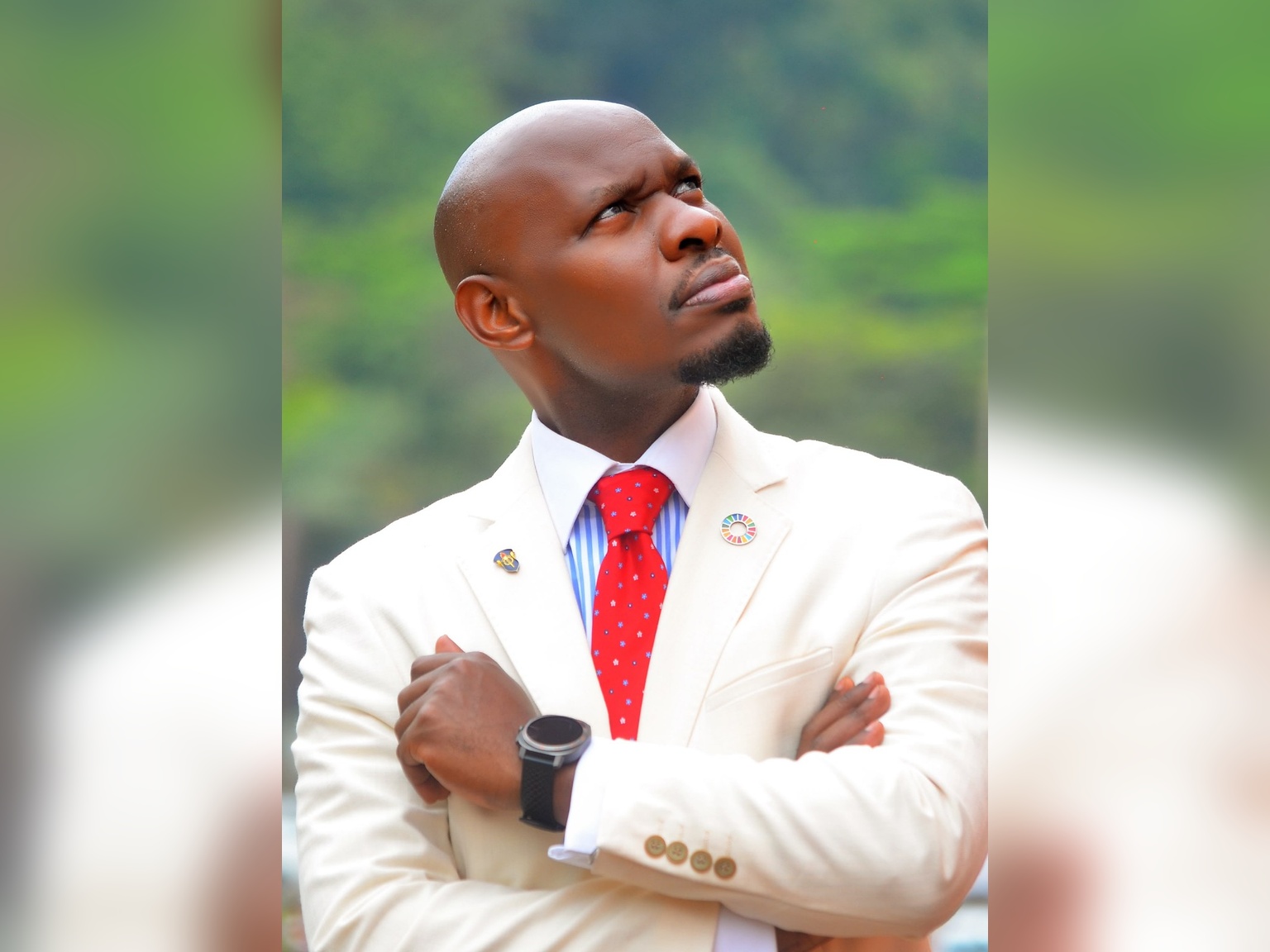
By Robert Kigongo
Op_Ed
As human beings driven by insatiable desires, we often sit back in our living rooms watching global superstars and people of influence admiring their life journeys, wealth, standards, talent and global impact and influence, yet at this moment in time, there is one particular favorite celebrity whose shoes I would hesitate to wear, none other than French and Real Madrid superstar Kylian Mbappe.
Imagine scoring a brace for your club against its arch-rival in an el classic, to then losing the Ballon d’Or, then to losing major multimillion dollar contracts and causing diplomatic friction among veto powers in a space of just three days. If you are not resolute, you can easily slip into depression.
While the United States continues its standoff with Iran and suspension of South Africa and Rwanda from AGOA, the People’s Republic of China has chosen to go to war with an harmless French civilian over the use of the word ‘dictator’ in reference to Mao Zedong.
Klyian Mbappe’s did not create his own dictator caricature memes, but his recent reaction to them has turned a joke into a diplomatic incident and a major international controversy in sports.
Since, 2018 World Cup to date, there has been growing propaganda caricaturing Mbappe as a dictator due to his assertive character on and off the pitch over his fellow teammates and coaches as a result he has been caricatured with memes o f a dictator including one of Chinese Communist party founder Mao Zedong.
During a recent casual interview, the 27-year-old French national soccer team captain was asked about the dictatorship memes made about him.
Jokingly, he pointed to one caricature in particular “The one where they put my face on a chines dictator ( Mao Zedong) that really makes me laugh, I use it with my friends all the time”.
That public laughter over him being displayed as historical Chinese dictator Mao Zedong is what casted him into hot soup and hell broke loose.
China retaliated with disproportionate force against Mbappe when Beijing announced the indefinite suspension of the Spanish Premier League from all its pay-per-view platforms and ordered termination of his multimillion-dollar contracts with Chinese companies such as Dongpeng Beverages, Mengniu Dairy, Milkground, and Xiaohongshu Rednote.
Even though apologies were immediately tendered by the player, the club, La Liga President Javier Tebas, and President Emmanuel Macron in an expeditious bid to save the French captain from the dragon’s wrath, China maintained its stance.
One wonders what exactly annoyed Beijing to respond with such force over a sarcastic laugh at a meme. Well, the reality is that such statements or jokes from public figures are judged more harshly than those of ordinary people.
Mbappe did not create the Chairman Mao lampoon, but casually laughing at it made him culpable in Beijing’s eyes.
China does not see the victim as football fans do. To fans, Mbappe as a dictator is banter. To China, it is degradation of its culture, history, heritage, and most importantly, the image of the founder of the Chinese Communist Party.
Mbappe did not intend to cross China’s political red line, nor did he anticipate that the words “Chinese dictator” would spark a global controversy. He accidentally scored an own goal in China’s net.
Outside China, many remember Mao Zedong as a dictator whose Great Leap Forward and Cultural Revolution caused the deaths of millions which is contrary to members of the Chinese Communist Party where he is highly idolised as a revolutionary whose historical status is undisputed.
Mao ruled China from 1949 to 1976 after defeating Chiang Kai-shek’s nationalist forces in the Chinese civil war, introducing land reforms, the Cultural Revolution, and the Great Leap Forward that transformed the country from an agrarian economy into the industrial superpower it is today.
Mao Zedong is also remarkably remembered for ending the brutal Japanese invasion, exploitation, territorial loss and China’s century of humiliation between 1839 and 1949.
Therefore, a monumental Statue ( in memory of great historical contributions) stands tall in Lijiang, Yunnan province while his portraits are still gaze from shop walls and boardrooms, yet his face circulates everyday on bank notes.
In the Western World, Mao is mostly remembered for crushing dissent, purging intellectuals, jailing and exiling opponents, and presiding over a famine that killed between15 to 45 million people during his reign.
Regardless of the iron fist and devastating history to outsiders, any travesty of Mao’s legacy will definitely attract censorship and economic pressure to external adversaries;
According to Chinese Mao’s name remains an embodiment of strength and resilience, even if the West chooses to remember the cost at which he transformed his country.
China, as an engineered state under the Chinese Communist Party, continues to move in the social, cultural and political direction of Mao Zedong, henceforth any attempt to tarnish his name is deemed detrimental, given Beijing’s geopolitical status.
In an era where sports has become a commercial enterprise, football is now controlled by money to the extent that countries like China can dictate terms and conditions before broadcasting competitions.
One moral lesson in this whole Mbappe-China saga is not only a collision of football, politics and money, but also a display of sports as an instrument of geopolitical power.
Even thou, sports remains the world’s sole unifier but for China it is an opportunity to remind the world that no one or country can play with its culture, history, heritage, or describe its past leaders as dictators or its political identity as dictatorship.
In my view point, Yes, China’s politics based on its current state of civic space, press freedom, elections conduct and citizens’ exercise of rights and freedoms, is dictatorial in making and so was the founder of China Communist’s party.
However, China’s disproportionate reaction towards Klyrian Mbappe’s sarcastic joke ‘referring to Mao Zedong a dictator’ is a clear message that sometimes ‘wine’ can taste bitter to the vintner.
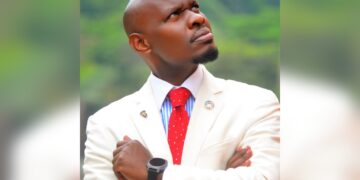
The author, Robert Kigongo is a sustainable development analyst.