











By Leonard Kamugisha Akida
KAMPALA
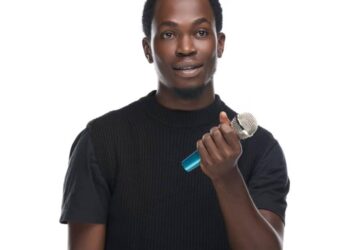
Leonard Egesa was taken away by armed men shortly after appearing on a radio programme in Kampala. A fellow panellist says the incident unfolded in seconds, leaving presenters and staff fearing for their safety.
It was supposed to be a discussion about Uganda’s political future. Instead, a radio talk show ended with a political analyst being taken away by armed men, leaving his whereabouts unknown and a fellow panellist struggling to come to terms with what he had witnessed.
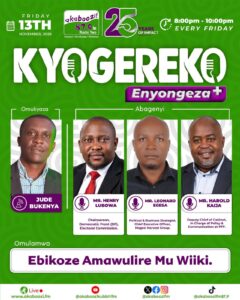
Leonard Egesa, a political and business strategist, was reportedly seized by plainclothes men shortly after appearing on a two-hour Kyogereko – Enyongeza programme hosted by Jude Bukenya on Akaboozi FM on Friday evening.
The incident happened at the premises of Radio One FM90 in Kampala, the sister station of Akaboozi FM, where the discussion was being broadcast.
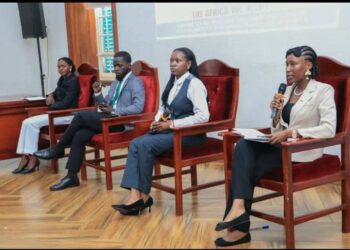
Harold Kaija, the Deputy Chief of Cabinet in charge of Policy and Communication at the People’s Front for Freedom (PFF), who shared the studio with Egesa, described an evening that began with reluctance to participate but ended in fear and confusion.
In a detailed account of the incident, Kaija said he had initially considered turning down Bukenya’s invitation to appear on the programme scheduled for 8:00pm to 10:00pm.
He had already appeared on Radio One the previous evening and was not particularly keen on another engagement.
However, when Bukenya mentioned that Egesa would be among the panellists, Kaija changed his mind.
“I had seen clips of his views, and they were impressive. Reluctantly, I accepted,” he recalled.
A planned appearance turns into a frightening encounter
Kaija said he arrived at the Radio One premises at about 6:30pm, an hour and a half before the programme, after spending the evening with colleagues along Dewinton Road.
He recalled that an unfamiliar man spotted him through a window and approached to greet him. The stranger reportedly lingered despite Kaija’s attempts to get him to leave, forcing him to change seats to avoid being visible to people outside.
A few minutes before the programme started, Egesa joined him in the lobby.
Their conversation, Kaija said, touched on the political situation in the country and the possibility of being targeted by security operatives.
Egesa reportedly told him: “These guys want to take us to the basement.”
Kaija said he tried to reassure him, pointing out that he had not heard Egesa insult government officials in the video clips he had watched and that the analyst was not affiliated with any political party.
The programme went ahead after the third panellist withdrew at short notice because of a sick child.
The two men discussed the Consociational Agreement, a political arrangement that was at the centre of their conversation.
About an hour into the broadcast, Kaija noticed people watching them through the studio’s glass partition. He initially assumed they were members of staff following the discussion.
But the atmosphere changed during a commercial break.
According to Kaija, a member of the radio station’s technical team entered the studio and informed Bukenya that some visitors wanted to speak to them immediately.
Kaija said he became suspicious when the presenter returned with an unexpected message.
“He came back and told us to inform our people that we were being picked,” he recalled.
Within moments, five men entered the studio and headed straight for Egesa.
The men reportedly displayed pistols and threatened to shoot anyone who resisted.
“We tried to protest. They showed us their pistols and said they would shoot us if we messed up,” Kaija said.
Egesa eventually surrendered. The men also took his mobile phones, which had been handed to Bukenya.
The incident reportedly left the staff member who had been asked to open the door shaken after the men threatened to shoot her.
Kaija later learnt that the men had allegedly arrived at the premises earlier and parked their vehicle in the compound, apparently waiting for Egesa to finish the programme.
Where is Egesa?
Radio One subsequently reported the incident on its social media platforms, saying Egesa had been taken by armed men in plain clothes travelling in a white vehicle commonly known as a drone.
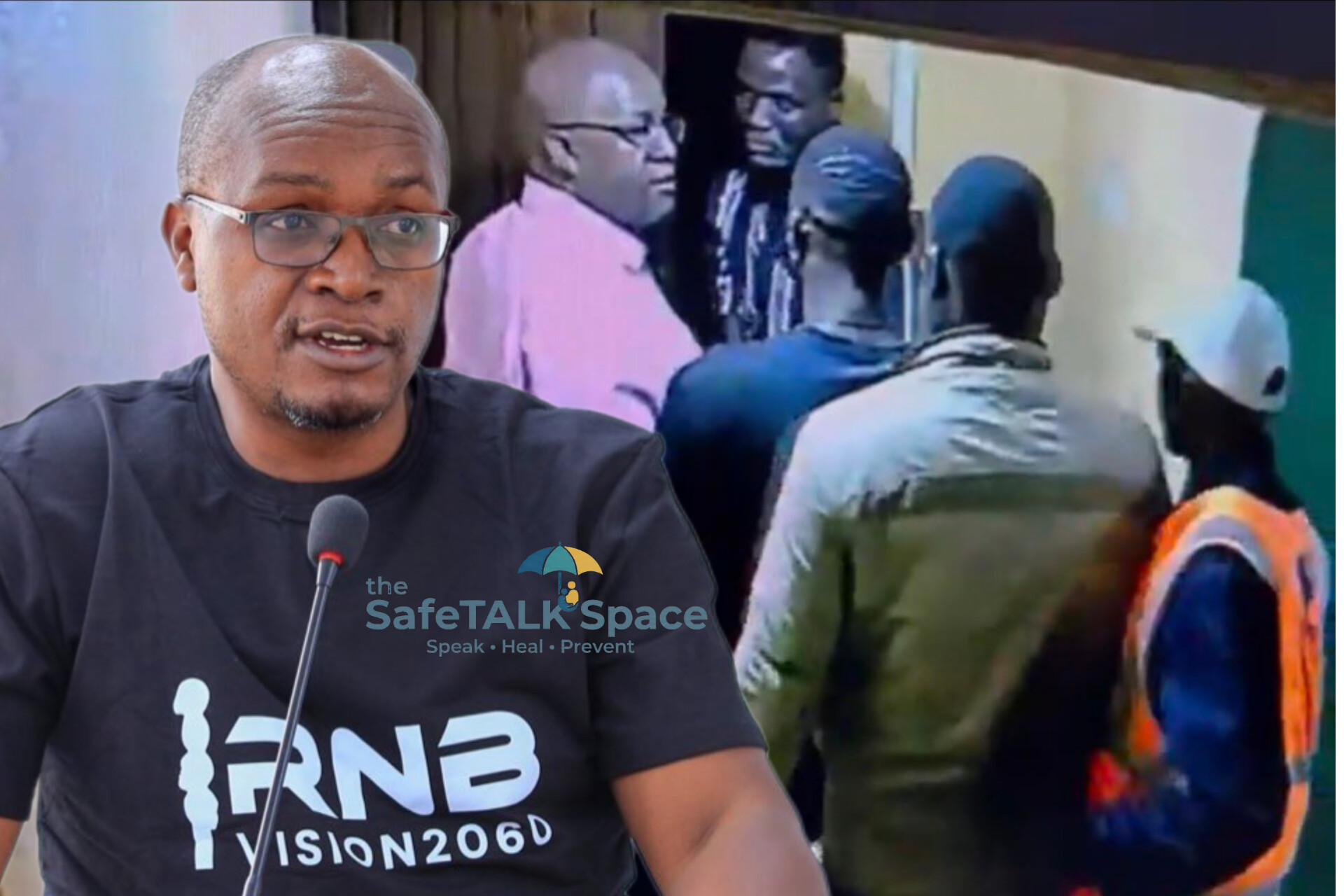
The station also shared surveillance footage which appeared to show masked individuals moving through an entrance area of its premises.
However, the footage and accounts circulating publicly do not, on their own, establish the identities of the men or the agency they may have represented.
The incident occurred barely after two months when another political commentator, Charles Rwomushana was forcibly picked from a Radio station in Kampala.
On September 5, plain-clothed, armed men stormed Radio Simba and arrested Rwomushana, disrupting a live Saturday morning show: Gasimbagane N’ebanamawulire talk show, that was discussing political issues, leaving radio staff, show host and other panelists in shock. Rwomushana was released by security forces a day later without formal charges or an official disclosure of his detention location.
By Saturday morning, November 14, Egesa’s whereabouts remained unknown, according to the information available at the time of reporting.
There had been no public statement from the Uganda Police Force or other security agencies confirming the operation, identifying those involved or explaining whether Egesa was being held in connection with an investigation.
For Kaija, the incident has raised questions about the safety of people expressing political opinions in public, particularly those appearing on media platforms.
He said he initially feared that the men had come for him, recalling the recent appearance of lawyer Samuel Muyizi on Radio One.
His concern, he said, was less about the political discussion and more about the possibility of being taken away.
“I am still in shock. Egesa is not a politician,” he said. “Ooh Uganda. May God uphold thee.”
Lawyers demand answers
The reported incident has drawn condemnation from the Uganda Law Society (ULS), which described Egesa’s disappearance as an abduction rather than a lawful arrest.
In a strongly worded statement, the lawyers’ body said the reported seizure of Egesa from a media house raised serious concerns about respect for constitutional rights, the rule of law and media freedom.
“This was not a lawful arrest. It was a brazen invasion of a media house premises, an abduction, and an enforced disappearance,” the statement said.
The society argued that taking someone away without disclosing their whereabouts or the legal basis for their detention undermines constitutional protections and Uganda’s obligations under international human rights law.
It also expressed concern about what it described as a pattern in which plainclothes operatives using unmarked vehicles seize people, particularly those involved in public commentary, without following judicial procedures.
The ULS specifically pointed to the military leadership under Gen Muhoozi Kainerugaba, alleging that security operatives were using such operations to intimidate critics and restrict freedom of expression.
The allegations have not been independently established, and the security agencies had not publicly responded to the specific incident by Saturday morning.
The society made four demands: the immediate and unconditional release of Egesa; full disclosure of his whereabouts and physical condition; an explanation from the police and other security agencies about the operation; and an end to the use of plainclothes operatives and unmarked vehicles to seize people without due process.
It also called for media houses to be protected from intimidation and interference in the execution of their work.
Under Section 224 of Uganda’s Penal Code Act, a person who uses force to compel another person to leave a place commits the offence of abduction. ULII
A chilling message for public debate?
Beyond the fate of one political analyst, the incident has renewed concerns about the safety of journalists, commentators and other citizens participating in public discussions.
Radio talk shows have become important platforms for Ugandans to debate governance, political accountability and the country’s future.
But the reported events at Radio One have raised a troubling question: what happens when a person walks into a media house to express an opinion and does not leave freely?
For Kaija, the experience has changed what was supposed to be an ordinary evening of political discussion into an encounter he is unlikely to forget.
He had accepted the invitation because he wanted to engage with another political commentator whose views he admired.
Instead, he watched armed men enter a studio and take his fellow panellist away.
As calls for Egesa’s whereabouts continue, the immediate questions remain unanswered: Who took him? Where is he being held? And under what authority?
Until those questions are answered, his disappearance will remain a matter of concern not only for his family and colleagues but also for Uganda’s media and legal fraternity.