









By Leonard Kamugisha Akida
NATIONAL
The Forum for Democratic Change (FDC) has questioned the government’s decision to export electricity to neighbouring countries while millions of Ugandans remain without access to the national power grid.
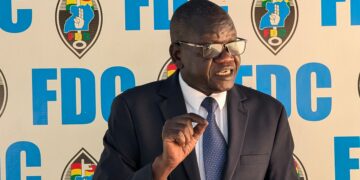
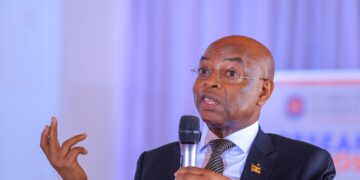
Robert Centenary, the FDC vice-chairperson for the western region, said the government should prioritise domestic electricity connections and affordability before celebrating power exports.
Speaking at a press conference at the party headquarters in Najjanankumbi on Monday, Centenary demanded accountability for unfulfilled electricity access commitments contained in the National Resistance Movement (NRM) manifestos for 2016-2021 and 2021-2026.
He questioned why some Ugandans had waited for up to two years for electricity meters despite the availability of power infrastructure in their areas.
“Electricity access must be measured by the number of people and households actually connected, rather than simply celebrating kilometres of transmission lines constructed,” Centenary said.
He argued that electricity should be treated as a driver of economic transformation rather than merely a commodity for regional trade.
According to figures Centenary cited from the Uganda Bureau of Statistics’ 2024/2025 Uganda Harmonised Integrated Survey presentation, only 29.5% of Ugandan households used grid electricity for lighting, with rural access standing at 11.4%.
He questioned the rationale for investing in electricity infrastructure to supply neighbouring countries while some rural communities continued to rely on paraffin lamps, candles and other expensive energy sources.
“Electricity is not a luxury. It is an essential service that directly affects people’s ability to earn a living, access healthcare, educate their children and operate businesses,” he said.
Centenary also demanded disclosure of the volumes of electricity exported and the revenue generated, saying Ugandans deserved to know whether the economic benefits of power exports were translating into improved domestic access and affordability.
He cited the 2021-2026 NRM manifesto commitments to extend electricity to underserved communities, construct more than 4,000 kilometres of medium-voltage lines and 6,000 kilometres of low-voltage networks under the accelerated rural electrification programme.
The manifesto also pledged to connect 620 previously unserved sub-county headquarters and target more than 300,000 household connections annually.
However, Centenary said communities continued to wait for connections, questioning the implementation of the rural electrification programme following the rationalisation of the agency responsible for it.
He further criticised the cost of electricity, saying the government’s promises to make power affordable and reliable had not sufficiently addressed the burden on households and businesses.
FDC demands action
Centenary called for a comprehensive national electricity connection programme targeting underserved villages, parishes, sub-counties and trading centres.
He also demanded affordable connection charges, lower electricity tariffs for households and small businesses, and accelerated electrification of rural health facilities, schools, markets and agricultural production centres.
He singled out West Nile, Buhoma Island, Obongi and Karamoja for special attention.
Centenary said electricity exports should be based on genuine surplus generation capacity, with domestic consumers prioritised.
He urged the government to publish a comprehensive report detailing the implementation of its electricity commitments and the public funds spent on the projects.