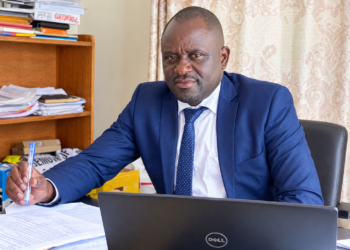















By Leonard Kamugisha Akida
LUZIRA
The Minister of Internal Affairs, Prof. Ephraim Kamuntu, has called for a shift towards crime prevention to reduce Uganda’s prison population, saying the ultimate goal should be to have a country where prisons are no longer necessary.
Kamuntu said the Government should prioritise measures that prevent crime rather than continue expanding prison facilities to accommodate increasing numbers of inmates.
“The ultimate goal must be to make Uganda a crime-free country where prison buildings would not be necessary. They would become shopping malls,” he said.
He was speaking on November 13, 2026, at the pass-out ceremony of 559 Uganda Prisons Service (UPS) officers who completed various command and staff courses at the Prisons Academy and Training School in Luzira.
The minister said the Government would invest in technology, including forensic services, CCTV surveillance, canine units and artificial intelligence, to strengthen crime detection and prevention.
He also called for closer collaboration between the police, Office of the Director of Public Prosecutions and the Judiciary to improve criminal investigations, expedite trials and reduce unnecessary detention.
Kamuntu said alternative dispute resolution, non-custodial sentences and increased use of parole should be explored to ease congestion in prisons.
He, however, acknowledged the immediate need to expand prison infrastructure to accommodate inmates already in custody, pledging to work with the Commissioner General of Prisons, Cann. Dr Johnson Byabashaija, to mobilise resources for additional accommodation.
Kamuntu further commended the Prisons Service for balancing its correctional mandate with production activities, including manufacturing furniture, uniforms and producing cotton for the textile industry.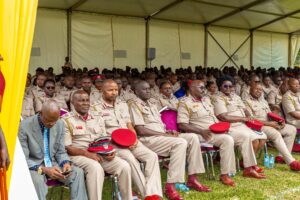
He described the service as both a security and productive force contributing to national development.
The minister also emphasised the importance of professionalism, discipline and respect for human rights among security personnel, warning against torture, extrajudicial killings and other abuses.
He said officers must ensure that people in custody are treated humanely and in accordance with the law.
A total of 559 officers graduated from four training programmes, comprising 52 from the Intermediate Command and Staff Course, 194 from the Junior Command and Staff Course, 161 from the Senior Non-Commissioned Officers’ Course and 152 from the Junior Non-Commissioned Officers’ Course.
The graduates included 430 men and 129 women.
The training covered institutional management and leadership, administrative law, peace-building and conflict transformation, alongside the Prisons Service component.
The courses were conducted in partnership with the Uganda Management Institute, Makerere University School of Law and Makerere University’s College of Humanities and Social Sciences.
Speaking at the ceremony, Byabashaija said the service currently has about 38,000 inmates, with an incarceration rate of 168 prisoners per 100,000 people.
He attributed the increasing prison population partly to improved efficiency in policing and the administration of justice, noting that the growing number of arrests and prosecutions was putting pressure on available prison facilities.
Byabashaija said the service would continue investing in professional training to improve leadership, institutional management and service delivery.
Kamuntu wants Uganda to become crime-free, prisons turned into shopping malls Oops😬
Meanwhile, Makerere University College of Humanities and Social Sciences principal Prof. Helen Nambalirwa Nkabala said the training went beyond classroom instruction to equip officers with practical skills in conflict transformation, social and emotional intelligence, psychological support and alternative dispute resolution.
She said the officers were also trained in youth-related issues, urban crime, gender, peace and diplomacy, as well as trauma-informed approaches to handling inmates.
Kamuntu urged the graduates to apply the knowledge acquired, maintain discipline and uphold high moral standards in the execution of their duties.