












By Gilbert Akampa
NATIONAL
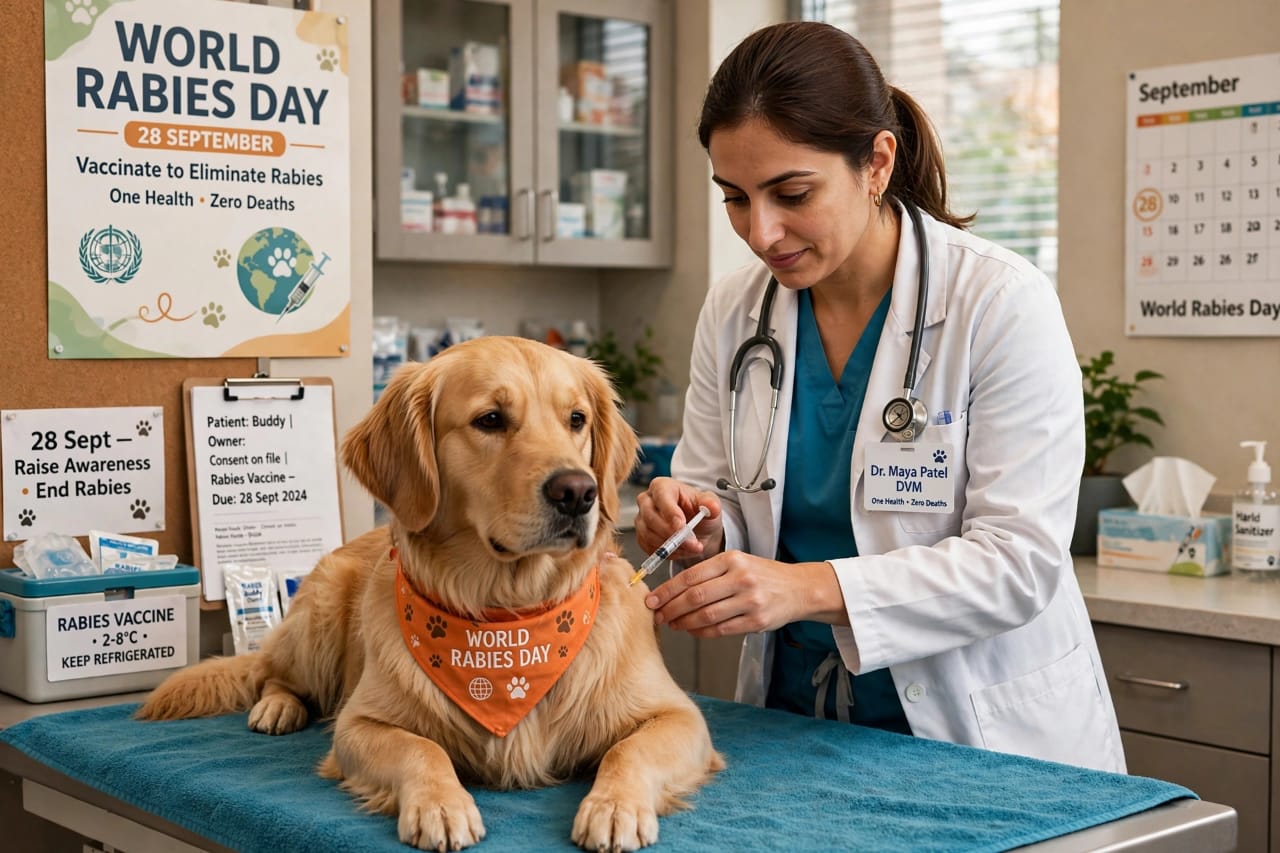
On 28 September, WHO, health agencies, veterinarians and community groups around the world are observing World Rabies Day, an annual reminder that while rabies is one of the deadliest viral diseases, it is also entirely preventable when communities work together.
This year’s theme, “Stronger Together,” underscores a simple truth: stopping rabies requires coordinated action from doctors, veterinarians, governments, schools, and families.
Rabies continue to claim thousands of lives globally each year, most of them children and most resulting from bites by infected dogs.
Rabies is transmitted through the bite or scratch of an infected animal, commonly a dog. Once symptoms appear such as fever, confusion or difficulty swallowing, the disease is almost always fatal.
Health experts stress that early action is the difference between life and death, making public awareness essential.
Public Health experts are urging communities to take practical steps that dramatically reduce risk.
Routine vaccination of dogs remains the most effective way to stop transmission while immediate wound care by washing a bite or scratch thoroughly with soap and water for about 15 minutes can slow down the virus from progressing to body organs.
Anyone bitten by a stray dog should seek care immediately for post‑exposure treatment.Child safety by teaching children not to touch unknown or sick animals also reduces the risk.
WHO has called on the general public to share verified information to help counter myths and delays in seeking care.
“Protecting Animals Protects People” experts emphasize that rabies control is not only a medical issue but a community responsibility.
Strengthening animal health systems, improving access to vaccines and educating families all contribute to safer environments.