













MBARARA
A wave of relief swept through the 33rd Mbarara University of Science and Technology (MUST) graduation ceremony after the Minister of State for Primary Education, Hon. Phyllis Chemutai, confirmed that the long‑standing standoff over the Bachelor of Pharmacy program has finally been resolved.
Addressing thousands gathered at Kihumuro Grounds, Chemutai announced that the disagreement between MUST and the Pharmaceutical Society of Uganda (PSU) had been conclusively settled, restoring confidence among students, parents, and the wider academic community.“The degrees being awarded remain fully valid,” she reassured, clearing months of uncertainty that had cast doubt over the future of Pharmacy graduates.
Representing President Yoweri Kaguta Museveni, Second Deputy Prime Minister Rt. Hon. Dr. Crispus Walter Kiyonga delivered the Presidential message to 1,670 graduates, emphasizing government’s unwavering investment in science and technology as engines of national transformation.Kiyonga highlighted that 70% of government‑sponsored students are now channelled into science‑based programs a deliberate policy aimed at building a robust, job‑creating human resource base capable of driving Uganda’s socioeconomic agenda.He urged the class of 2026 to apply their knowledge toward wealth creation, innovation and productivity across key sectors of the economy.

MUST Chancellor Prof. Jack H. Pen‑Mogi Nyeko in his speech cautioned graduates and parents against lavish spending on graduation celebrations.“Why should you invite 100 people to your graduation? What contribution have they made?” he asked, urging families to prioritize investment in the graduates’ future rather than one‑day festivities.His remarks echoed broader concerns about financial discipline and responsible celebration.
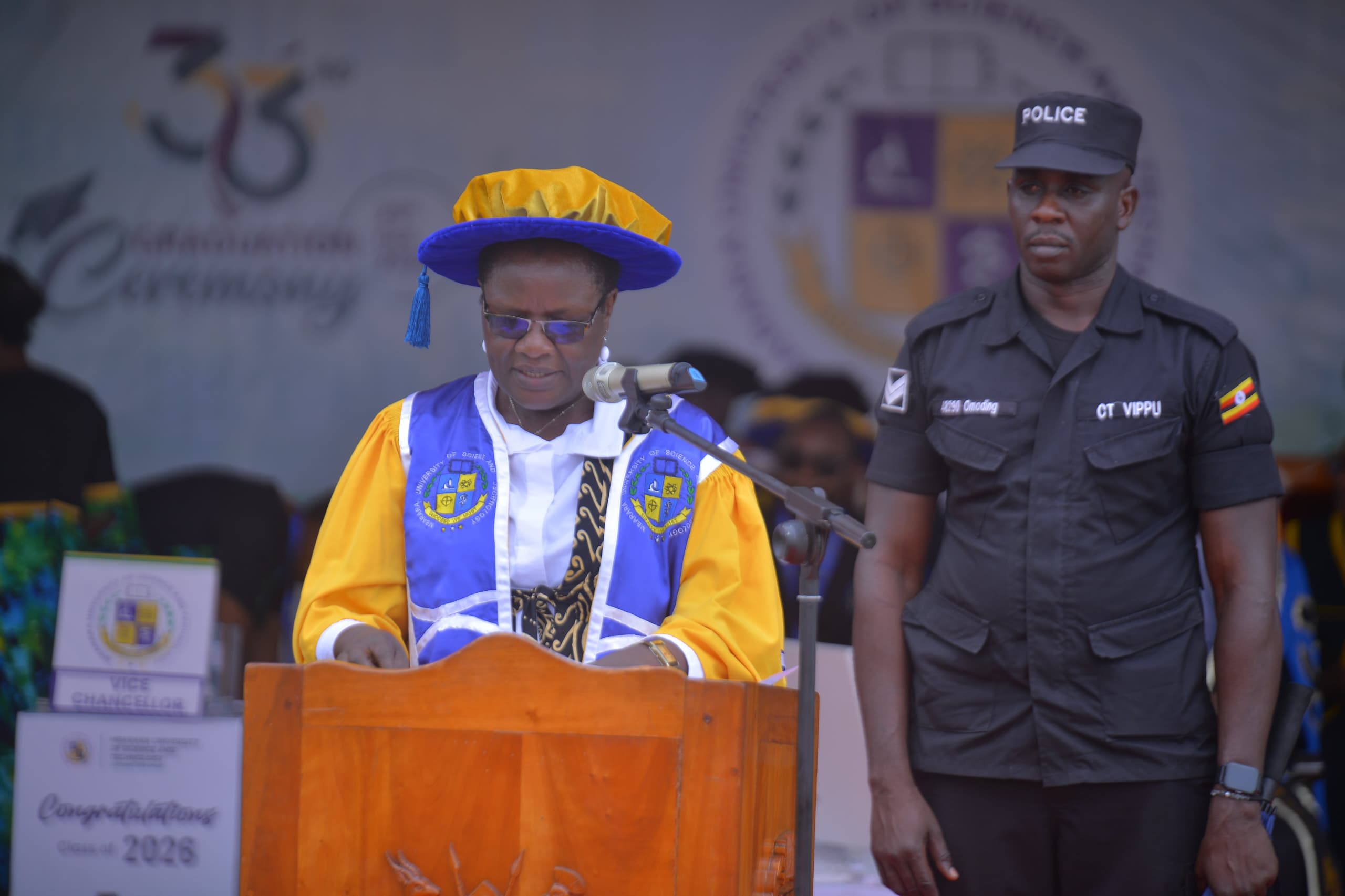
Prof. Pauline Byakika, the university vice Chancellor, reminded graduates that while academic qualifications open doors, character, competence, commitment, and work ethic ultimately determine long‑term success.Her message reinforced the institution’s emphasis on producing graduates who are not only knowledgeable but also ethical and dependable ambassadors of MUST.
Among the standout graduates was Dr. Kiconco Rita, who earned a PhD in Medicine. She shared insights from her groundbreaking research on why some people living with type 2 diabetes develop kidney disease while others do not.Her study explored genetic variations that may influence blood sugar control. Although these variations were not directly linked to kidney damage among Ugandan patients, her research revealed critical gaps.
She said many diabetic patients do not undergo regular kidney screening due to limited awareness, high costs and access challenges.Kidney disease often develops silently, long before symptoms appear.
Uganda needs affordable kidney tests, stronger patient education and routine kidney screening integrated into diabetes care. Dr. Kiconco expressed hope that her work will contribute to earlier detection, improved diabetes management and fewer cases progressing to kidney failure.