







By Leonard Kamugisha Akida,
KAMPALA
Thousands of parishes and sub-counties in Uganda do not have public primary and secondary schools making access to government education difficult for millions of Ugandan children from vulnerable families, new Uganda Bureau of Statistics (UBOS) Baseline Education Census 2025 report has revealed.
The report which was released on Thursday at Statistics House in Kampala, revealed that a total of 3,887 out of Uganda’s 10,860 parishes have no government primary school, representing nearly 28 percent of all parishes nationwide.
The report also exposed serious shortages in secondary education infrastructure. UBOS found that 1,007 out of 2,209 sub-counties and town councils, representing 45.5 percent, do not have a government secondary school.
In addition, 1,208 sub-counties and town councils, about 54.7 percent, lack any secondary school, whether government or private.
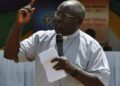
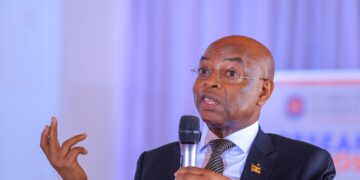
Presenting the report, UBOS Executive Director Dr Chris N Mukiza said the census exposed major inequalities in access to education despite government policies aimed at ensuring universal access to schooling.
“We found that government has a policy that every parish should have a government primary school, but 3,887 parishes still do not have one,” Mukiza said.
However, UBOS noted that private schools are helping to fill some of the gaps. When both government and private institutions are considered, 1,373 parishes, equivalent to 12.6 percent, still have no primary school at all.
Mukiza said the census further revealed unequal distribution of government schools, with some parishes having several public schools while others remain underserved.
“What is interesting is that there are some parishes that have more than one government primary school, which are over-served, while others are under-served,” he said.
The census paints a picture of an education system heavily dependent on private institutions at all levels.
At pre-primary level, UBOS recorded 38,347 schools with more than 2.37 million learners. Most of the schools are privately owned, with only 3,193 attached to public primary schools.
Johnstone Galande, the UBOS Principal Statistician and Head of Demography and Gender Section said early childhood education remains critical for brain development and future learning outcomes.
“We are told that pre-primary is very fundamental. This is the age where the brain grows faster than any other time in a child’s life. What happens at this stage determines what the child becomes,” Galande said.
The report revealed that 22.5 percent of learners in pre-primary schools are aged six years and above, while thousands are below the recommended entry age of three years, indicating major age misalignment.
Galande also pointed to a widening mismatch between pre-primary completion and Primary One enrolment.
“If we had a smooth transition, we would expect similar numbers from Top Class to Primary One. Instead, we see about 1.7 million in Primary One alone,” he said.
The findings suggest that many children are joining Primary One directly from home without attending pre-primary school.
At primary level, the census identified 43,567 schools serving over 9.1 million learners. Of these, 31,010 are private schools while only 12,557 are government-owned.
Girls slightly outnumber boys in primary enrolment, accounting for 50.3 percent of learners.
Additionally, findings contained in the report indicate that the national pupil-to-teacher ratio in primary schools stands at 34 pupils per teacher. However, the pressure is much higher in government schools where one teacher handles 48 pupils, exceeding the UNESCO-recommended ratio of 40 learners per teacher.
Private schools recorded smaller class loads, averaging 24 pupils per teacher.
The report also highlighted congestion in classrooms and sanitation facilities.
Nationally, there are 31 pupils per classroom at primary level, but the figure rises to 50 pupils per classroom in government schools. Public schools also recorded 61 pupils sharing one sanitation stance (pit latrine) compared to 30 in private schools.
At secondary level, UBOS recorded 5,498 schools with over two million learners, most of them privately owned.
The national student-to-teacher ratio stands at 40 students per teacher, higher than the recommended standard of 25 to 30 students per teacher.
Government secondary schools recorded 41 students per teacher while private schools averaged 40 students per teacher.
Galande said the bureau also observed overcrowding at secondary level, with about 45 students sharing one classroom and around 40 students using one sanitation stance.
The census further identified irregular progression patterns in primary education, particularly in Primary Four where enrolment peaks before sharply dropping in upper classes.
Galande said the trend raises concerns about repetition, retention and school dropouts.
“We see congestion in Primary Four and Primary Two. Something is happening in the system, but our questionnaire did not capture the cause,” he said.
Speaking at the release of the report, Dr Kedrace Turyagyenda, the Ministry of Education and Sports Permanent Secretary said the census findings will help government improve planning and trace learners across the education system.
“There is no effective planning without data. Having this data will help us regarding the teachers, classrooms and infrastructure that we need,” PS Turyagyenda said.
She said government is working with the National Identification and Registration Authority to assign National Identification Numbers to learners from birth to improve tracking and reduce school dropouts.
UBOS Board Chairperson, Dr Albert Byamugisha said the report provides a stronger foundation for improving education planning and achieving equitable access to schooling.
He called for increased investment in educational infrastructure, teacher welfare, digital learning, science and innovation, as well as improved school retention for girls and vulnerable children.
The Baseline Education Census 2025 Report is expected to guide government planning, budgeting and resource allocation in the education sector as Uganda seeks to improve equitable access to quality education services across the country.