













NATIONAL
About 61.3% of Ugandan women have experienced spousal violence in their lifetime, with the figure rising to 69.2% in Karamoja, according to figures released by the United Nations Population Fund (UNFPA) and the Austrian Embassy.
In the Lango sub-region, 48.6% of women have experienced spousal violence, while four in 10 girls in Karamoja marry before the age of 18.
Only 28% of health facilities in Karamoja provide comprehensive clinical management of rape, highlighting gaps in services for survivors of sexual violence.
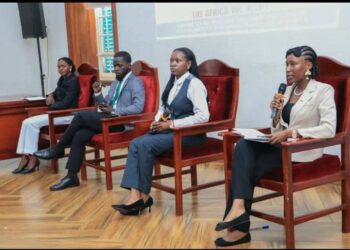
The figures were revealed on Sunday at JLOS House in Naguru, Kampala, during the launch of a partnership between Austria, UNFPA and the Ugandan government to address gender-based violence and improve access to justice and sexual and reproductive health services.
The €3.2m initiative, known as the Sexual and Reproductive Health, Access to Justice, Freedom, Equality and Rights (SAFER) project, will run from September 2026 to February 2029.
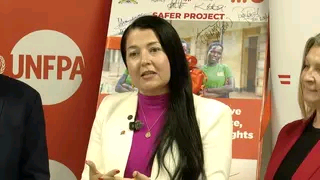
Austrian Embassy Head of Mission Dr Katja Kerschbaumer said the statistics represented people whose rights and dignity must be protected.
“These figures are not just statistics,” Kerschbaumer said.
She said gender-based violence extended beyond physical assault to include economic, psychological, emotional, cultural and technology-facilitated abuse.
SUMMARY: Austria has committed €3.2m (about Shs15.45bn) to a new project aimed at tackling gender-based violence, child marriage and barriers to sexual and reproductive health services in Uganda, where more than six in 10 women have experienced spousal violence.
Economic abuse, she explained, occurs when women are denied control over their earnings or household resources, leaving them financially dependent and potentially unable to seek help.
Kerschbaumer also warned that child marriage deprives girls of education and exposes them to health complications, sexual violence and economic dependence.
“Addressing gender-based violence is both a human rights obligation and a development priority because violence limits women’s participation in education and the economy, while placing additional pressure on families, healthcare providers and justice institutions,” she said.
The project will target the Karamoja, Acholi and Lango sub-regions, reaching about 830,000 people directly, including 432,000 women and girls and 398,000 men and boys. An additional 186,000 people at risk of gender-based violence are expected to benefit.
UNFPA representative Diene Keita Blokhus said Uganda had recorded progress in taking gender-based violence cases through the justice system, although significant challenges remained.
She said the proportion of reported gender-based violence cases brought before courts increased from 40.6% in 2022 to 45.6% in 2024.
The proportion of sexual-offence cases disposed of by courts also rose from 5% in 2020 to 19% in 2024.
Blokhus said lessons from these efforts had informed the Judiciary’s fast-track approach under the Justice for Her programme.
The SAFER project will integrate services for survivors, strengthen institutional capacity, address female genital mutilation and child marriage, and improve access to sexual and reproductive health services for adolescents, persons with disabilities and other vulnerable groups.
Blokhus emphasised that justice for survivors should extend beyond court rulings to include healthcare, psychosocial support and protection from further harm.
“Rights on paper must translate into protection in practice,” she said, calling for the integration of project interventions into government systems to ensure sustainability.
Ministry of Justice permanent secretary Robert Kasande reaffirmed the government’s commitment to coordination and measurable results.
He said access to sexual and reproductive health services was a matter of human rights, dignity, equality and justice.