












By Leonard Kamugisha Akida
NATIONAL
Students at Princess Diana Secondary School in Munyonyo, Kampala, have developed alternative cooking technologies and other products in response to the Government’s controversial crackdown on charcoal use.
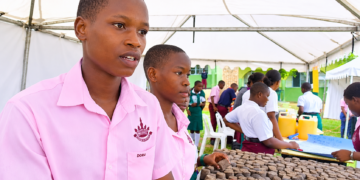
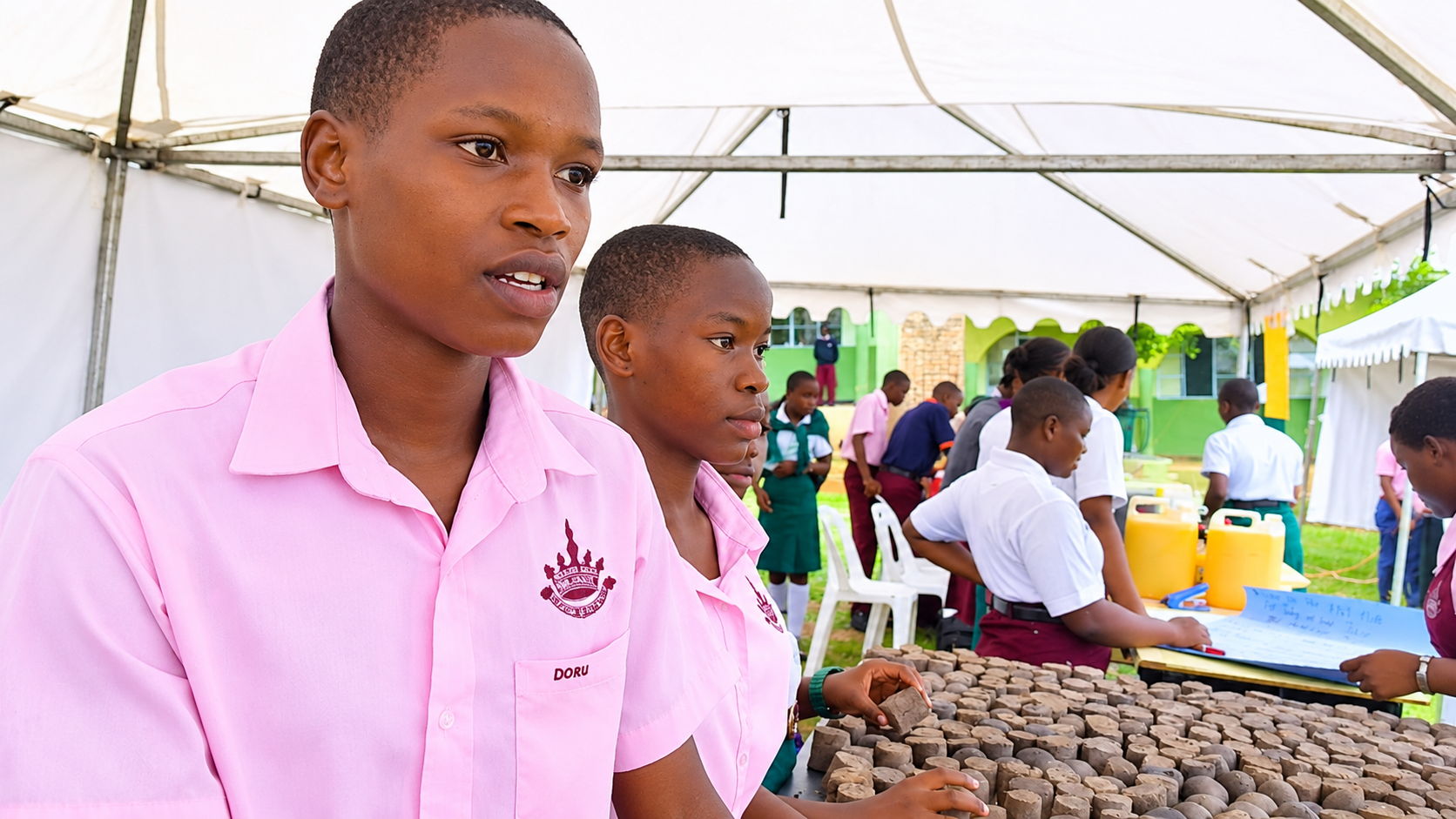
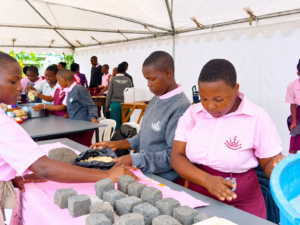
The innovations include fuel briquettes made from clay, cassava flour and sawdust, an oil stove that uses waste engine oil, and an online marketplace designed to help schools sell products made by students.
The students showcased their inventions during the school’s Beyond Charcoal Expo 2026, held under the theme: From Crisis to Creativity.
The exhibition comes amid a national debate over the Government’s efforts to curb charcoal production and trade, with critics questioning the availability and affordability of alternative cooking fuels, particularly for low-income households.
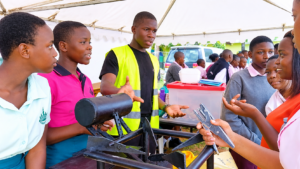
Raihan Kakooza, a Senior Two student, said the Government’s proposed restrictions had highlighted the need to develop affordable alternatives for Ugandans who depend on charcoal for cooking.
“When the Government banned charcoal, they did not give us what to use. But as Princess Diana SS, we came up with briquettes, which can be used as an alternative source of energy for cooking and other daily activities so that our lives can go on as though we were using charcoal,” Kakooza said.
She explained that the briquettes, developed by students in the agriculture, arts and design departments, use clay, cassava flour and sawdust instead of charcoal dust.
According to Kakooza, the alternative is intended to reduce dependence on wood fuel and make cooking energy more accessible to households that cannot afford electricity or liquefied petroleum gas (LPG).
She called on the Government to support the development and commercialisation of the products.
“I appeal to the Government, President Museveni and the Energy Ministry, especially Hon. Phionah Nyamutoro, to support our project so that we can generate revenue and students who have financial challenges can get school fees, while girls can get money to buy sanitary towels and improve their menstrual hygiene,” she said.
Oil waste turned into cooking fuel
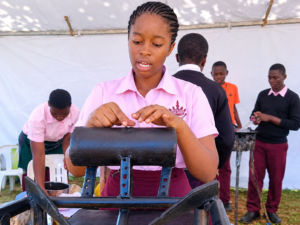
Another innovation is an oil stove developed by students to use waste engine oil that might otherwise be improperly disposed of.
Aureli Bulonza, a Congolese national and Senior Two student, said the stove was designed to provide an alternative to charcoal while addressing concerns about oil pollution.
“We are destroying our environment. We have to start using this alternative stove to conserve our environment,” Bulonza said.
She added that waste oil discharged into water sources could harm aquatic life, making its safe management an important environmental concern.
However, the stove’s practical safety, emissions and suitability for household use would need to be independently assessed before it could be recommended for widespread adoption.
Online marketplace
Beyond cooking technologies, students in the information and communications technology department have developed a website called Beyond Charcoal School Marketplace.
The platform is intended to connect schools producing goods with potential customers, including parents, teachers and other buyers.
Alpha Matonda, a Senior Two student involved in the project, said schools would be able to register, log in and upload products made by their learners for sale.
“If the school is selling something that does not use charcoal and someone needs it but he/she is far, they can use this site, either call or pay, and then the product can be delivered to the client,” Matonda said.
His colleague, George Ngonga, said the platform also includes a calculator tool designed to help customers and sellers establish prices and reduce the risk of being cheated.
The website is still under development and has not yet been launched.
The students said a lack of funding was delaying their work, appealing to the Government and other partners to support the completion and launch of the platform.
Crackdown sparks debate
The students’ innovations come amid a wider debate over the Government’s efforts to restrict charcoal production and trade in parts of the country.
Recently, police spokesperson ACP Kituuma Rusoke warned that operations against illegal charcoal trade would continue in northern Uganda, West Nile and Karamoja as part of implementing the Presidential Executive Order No.3 of 2023.
He said security teams were targeting charcoal burners, roadside dealers and motorists transporting charcoal, including people carrying small quantities for domestic use. Citizens were urged to switch to alternatives such as gas and electricity.
The enforcement drive prompted concerns about the affordability and accessibility of alternative energy sources, particularly in rural communities not connected to the national electricity grid.
Parliament subsequently suspended the enforcement temporarily.
“For between now and Wednesday, let us first suspend the enforcement. I do that not because I support charcoal, but because I am aware of how difficult it is going to be for the enforcers,” speaker Jacob Oboth Oboth said, while announcing the suspension.
School calls for government support
Peter Kilembwe, the school’s dean of curriculum and instruction, said the exhibition demonstrated how learners could apply classroom knowledge to real-life challenges under Uganda’s competence-based curriculum.
He said the school had encouraged students across different departments to develop practical solutions to environmental and other community challenges.
“The content of what we teach in the syllabus is supposed to cohere with the challenges we face in real life, and then tune the learner to taking the initiative to find responses in the form of solutions,” Kilembwe said.
He added that private schools faced financial constraints in providing practical and vocational training because the raw materials required for student projects were expensive.
Kilembwe called on the Government to consider allocating additional funding to private schools to support skills development and innovation.
“We ask the Government to provide supplementary budget funds to private schools to tap into the availability of vocational skills training for students, so that it becomes integral to what we teach. That is what the Government is demanding from schools under the competence-based curriculum,” he said.
The students said they hoped financial and technical support would help them refine their inventions and bring their products to market.
Their projects, however, will need further testing from the Uganda National Bureau of Standards (UNBS) and other relevant authorities to establish their safety, efficiency, affordability and environmental benefits before they can provide viable alternatives to charcoal on a wider scale.