












By Hellen Tusiime
KAMPALA
Young African leaders have been challenged to move beyond calls for African unity and take practical action towards building a continent driven by shared responsibility, visionary leadership and collective development.
The call was made during the UBUMWE Summit 2026 held on Friday, November 13, at Makerere University Main Building under the theme, “The Africa We Want: Uniting Young Africans and Emerging Leaders to Collaborate in Shaping the Future of Africa.”
Organised by the Makerere University Rwandan International Students Association (MURISA), the summit brought together students from different universities, including Kampala International University, Victoria University and Islamic University in Uganda, alongside emerging leaders and other stakeholders.
Discussions focused on Pan-Africanism, national cohesion, reconciliation and the role of young people in shaping Africa’s future, with speakers drawing lessons from Rwanda’s history.
Call for unity and accountability
Panelists urged young Africans to embrace Pan-Africanism by looking beyond national boundaries and taking collective responsibility for the continent’s development.
Mwalimu John Abaho, a student at Kampala International University and one of the panelists, said Pan-Africanism required Africans to put shared interests above individual concerns.
“Pan-Africanism means going beyond oneself and being concerned not only about me personally, but also about my neighbours and fellow Africans,” Abaho said.
Another panelist, Kega Moses, challenged young people to take personal responsibility for building the continent rather than relying on opportunities elsewhere.
“It starts with me as an individual. What are we doing to make Africa better?” Moses asked.
Drawing lessons from Rwanda’s history, panelists highlighted the dangers of ethnic discrimination and division, stressing the importance of reconciliation, accountability and visionary leadership.
Moses said Rwanda’s experience demonstrated the importance of a shared national vision and clear development goals, citing Vision 2050 and investments in infrastructure, healthcare and technology.
Turning ambitions into leadership
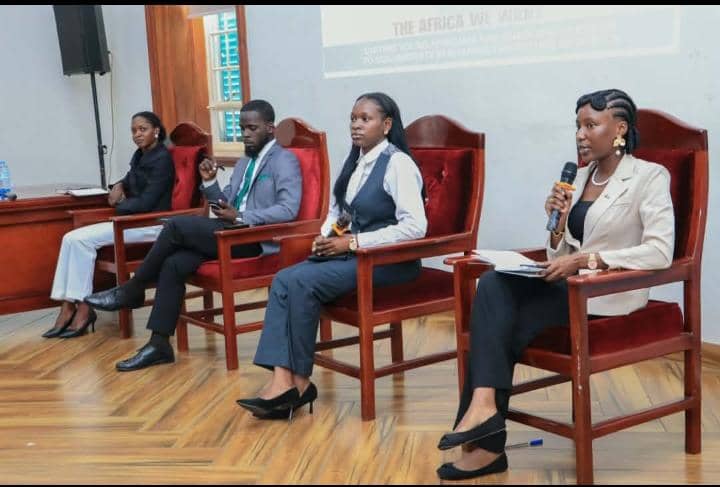
During a panel discussion titled “Agenda 2063: Are Youth Preparing Leaders or Just Producing Aspirants?”, young Africans were challenged to move beyond attending events and making speeches to taking practical action that transforms communities.

Makerere University Guild President Gracious Kadondi said many young people were pursuing positions and titles instead of embracing leadership as a responsibility to serve.
“Africa does not need more Honourables. Africa needs more servants,” she said, urging young people to draw inspiration from Pan-African leaders such as Julius Nyerere, Kwame Nkrumah and Nelson Mandela.
Clever Peter Kyajja said leadership should be measured by the lives people improve rather than the speeches they deliver.
“Impact is not measured by how well you speak on a microphone. It is measured by how many lives you change,” Kyajja said.
KIU vice guild president Vanessa Mutesa criticised the tendency among young people to attend events without following up with meaningful action.
“We have a generation of event tourists. We take a picture, we post ‘it was an honour to attend’, and we go home. Nothing changes,” she said.
The panel emphasised that achieving Agenda 2063 requires young people to embrace service, accountability and practical leadership rather than pursue positions for personal recognition.
Leadership begins with service
Dr Suzie Nansozi Muwanga, executive director of the Julius Nyerere Leadership Centre and keynote speaker, challenged students to become responsible leaders equipped with knowledge, integrity and courage to shape Africa’s future.
She said Africa’s aspirations for peace, economic prosperity, good governance and technological advancement required committed people, not just policies and plans.
Muwanga urged universities to equip students with critical thinking and problem-solving skills while encouraging them to use their education and cross-border relationships to strengthen African cooperation.
Drawing on Mwalimu Julius Nyerere’s legacy, she emphasised that leadership begins with everyday actions and called on young people to prioritise service and collective progress over personal gain.
“The more you create opportunities for others, the more you are likely to actually gain from it,” she said.
She added that building the Africa people want was a shared responsibility that must begin immediately.
Representing Makerere University’s Dean of Students, Dr Winifred Kabumbuli, Zainabu Kabuyonjo from the Dean of Students’ Office called for greater attention to challenges affecting young people and society.
Kabuyonjo expressed concern about behaviours and social trends among young people, saying the situation was worrying for parents, educators and communities.
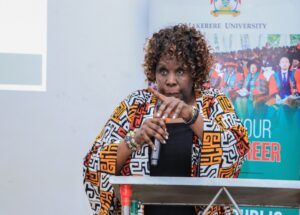
“This is what is happening in our society today. This is what is happening to our children, to our brothers and sisters, and to our roommates everywhere,” she said.
She challenged participants to recognise that building the Africa they want must also involve protecting and guiding the younger generation.
Speaking at the function, Crispus Welcome, head of mobilisation and partnerships at the Parliamentary Forum on East African Community Affairs, urged students to embrace Pan-Africanism and support East African integration.
Referring to the 1884–1885 Berlin Conference, he said Africa’s borders were shaped by colonial powers, making regional cooperation essential to overcoming historical divisions.
He cited Pan-African leaders such as Kwame Nkrumah, Thomas Sankara, Patrice Lumumba and Julius Nyerere, urging students to learn from their vision of African unity and take an active interest in the East African Community’s journey towards political federation.
As the summit concluded, participants were challenged to translate discussions into action by taking responsibility for improving their communities and contributing to Africa’s development.